
The German government has announced that its increased border controls will stay. Interior Minister Alexander Dobrindt attributes the checks at the frontier to a reduction in the number of migrants and asylum seekers in the country, but some migration experts believe the two are not linked, and that stricter controls could even have an adverse effect in the future.
Germany’s current government entered office a year ago this month, with promises to increase border controls and toughen migration policy. Now, Alexander Dobrindt, Germany's interior minister, has announced that he wants to retain these controls and attributes his policies to a reduction in the number of migrants and asylum seekers in the country.
Germany’s Interior Ministry released data it says show that "illegal migration has been reduced by 70 percent" since 2023 through a "combination of many different policies."
According to data released by Germany’s Federal Police (Bundespolizei), which is responsible for patrolling the borders, German authorities have prevented almost 47,000 migrants from entering Germany without papers, and around 34,000 migrants were either turned back at the borders or deported over the last year.
In fact, many of the current border controls were already instated under Dobrindt’s predecessor, Nancy Faeser, a member of the social democrat SPD party. Since controls were increased in September 2024 to all borders, the Federal Police say they have prevented 81,500 people from entering Germany without permission; 56,000 of these were stopped at the border or deported in that time period.
Data from May until the end of April this year also shows that 1,346 people who sought asylum were stopped from crossing the border, and 69 were deported. In some cases, this might be because they already had an open asylum application in another EU country, and so they were prevented from crossing the border and applying again because of this.
Read AlsoGermany: More deportations to Afghanistan raise criticism over collaboration with Taliban
A shortage of police officers?
According to the German Police, up to 14,000 police officers are needed to cover all the German borders properly and operate checks and deportations where necessary. The police answered a question from the Green party regarding this, admitting that since the orders to step up controls came at the beginning of last May, they increased the number of officers working at the borders from 13,000 to 14,000.
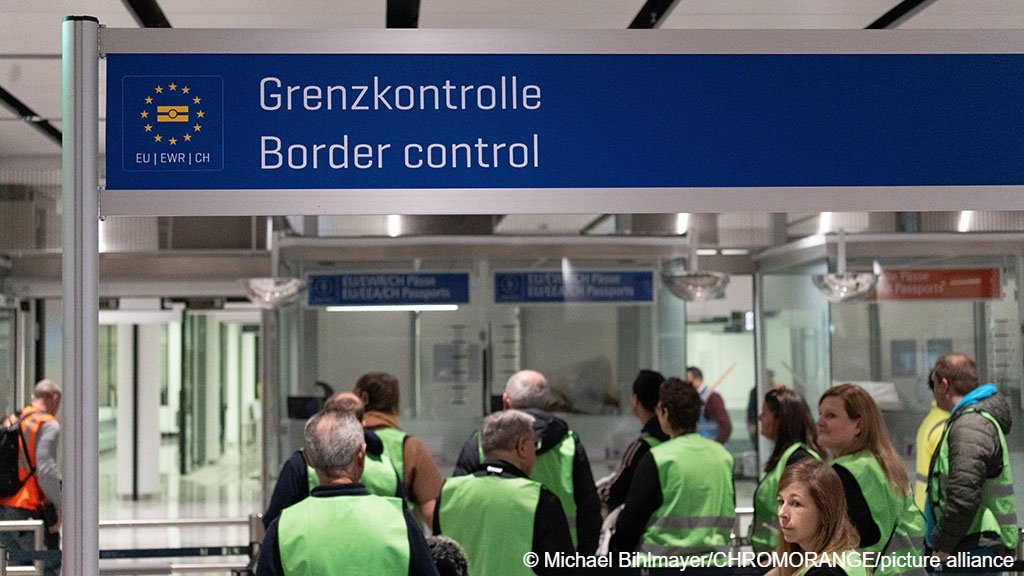
However, this increase in the number of officers needed at the borders has been met with criticism even from within the police force itself. Andreas Roßkopf, leader of the Police Union (Gewerkschaft der Polizei), told Germany’s Redaktionsnetzwerks Deutschland (RND), "we are missing about 5,000-6,000 police officers to work in train stations. We have a high level of crime in the stations and we need more police officers here too." The officers that might have previously been deployed in stations are often working at the borders now, explained Roßkopf.
"Around 800-1,000 officers a week are now deployed at the border." Roßkopf called for more technology to be deployed at the borders, which he believes would allow for faster and more flexible controls, which would require fewer officers. However, he said, up until now, the police had not seen many technological advances being brought in.
Read AlsoNearly one in four asylum applicants in the EU are minors
Are border controls harming the economy?
A spokesperson for interior policies from the opposition Green Party, Marcel Emmerich, said that his party believes that "the border blocks are affecting traffic at the borders, which is damaging our economy and also is against our laws."
Emmerich added that the border controls were affecting deliveries and merchandise at a time when Germany was already "in the middle of an economic crisis," and that the officers needed for the border controls were being diverted from fighting crime in other places, like stations, airports and organized crime. Emmerich added that although "Dobrindt has been selling these controls as a measure of 'law and order' it was infact detracting from the overall security situation in Germany."
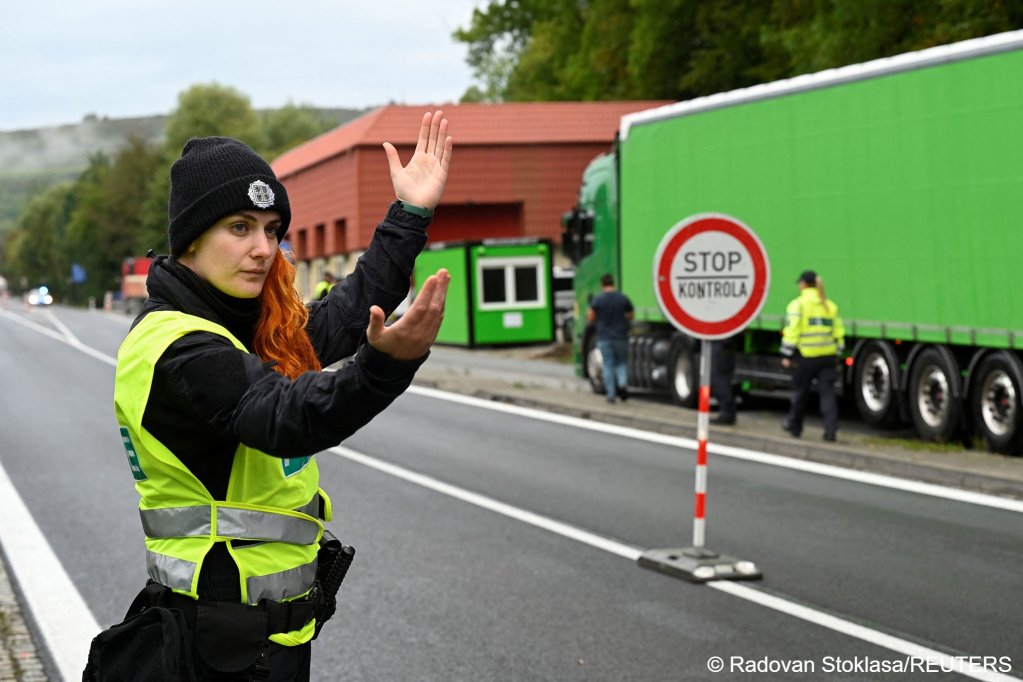
The Green party continues to insist that turning people back at the borders, especially those who might want to apply for asylum, is breaking the law. The Green party is campaigning to end the practice.
Read AlsoGermany deports 25 criminal offenders to Afghanistan
'Stricter controls has only a limited effect on asylum applications'
At a press conference in Berlin on Tuesday (May 5), Dobrindt said that he was hopeful that once the new EU Migration and Asylum Pact entered into force on June 12 this year, fewer asylum seekers would enter the EU overall and that then the internal borders could eventually be opened once again.
However, at least one migration expert, Gerald Knaus, the founder of the thinktank European Stability Initiative and who was responsible for advising the EU on the EU-Turkey deal, told the Protestant News Agency EPD that the reduction in the number of migrants, asylum seekers and refugees in the EU has little to do with the migration policies the government is pursuing.
What’s more, added Knaus, the stricter migration policy risks having a "boomerang effect" on the situation.

According to Knaus, one of the main reasons for the reduction in the number of asylum applications in Germany since the end of 2024 is actually the fall of the Assad regime in Syria. In 2024, according to Knaus, 77,500 Syrians were granted protection in Germany; in 2025, this figure was fewer than 400. Since Assad lost power, fewer Syrians are making their way to Europe and Germany overall.
Knaus believes that turning people back at the German borders or refusing entry has only a "limited effect" on asylum numbers in the country. He says that since last May, between 100 and 200 people who had hoped to apply for asylum have actually been refused entry at the borders. The migration expert adds that no one knows how many times these people might then try to cross or apply for asylum until they finally enter Germany anyway.
Read AlsoGermany: Court paves way for deportation of criminals
Legal problems
Continuing to refuse entry at the borders to someone who intends to apply for asylum is only possible when a country faces an "emergency" or "crisis." Knaus told EPD that "even the lawyers at Germany’s Interior Ministry know that at the moment there is no argument suggesting that Germany is facing that kind of crisis," and therefore some of these people could take their cases to the European court where it is likely the judges would say that Germany is now going against the law. Just last week, a man successfully sued the German government at an administrative court in Koblenz regarding border checks at the frontier between Luxemburg and Germany.
Knaus believes that when German government policy is tested in the courts and found to be wanting, this will feed parties like the AFD (Alternative for Germany), who already are pushing for Germany to leave Schengen. If they were to ignore what the European Court of Justice might decide, then they would further weaken the idea of the rule of law and European law. This in turn would weaken support for mainstream parties and feed support for parties like the AFD.
Knaus says that the German government should seize the opportunity to remove some of the controls this summer. Knaus also cautions that Dobrindt’s faith that things will start working once the new European Asylum system kicks in in June this year (GEAS) could be misplaced. Knaus points out that the Dublin system, designed to allow countries to send asylum seekers back to the first point of EU entry, has never worked, and if that continues under the new rules, then the solidarity idea will also not work.
Read AlsoGermany: Multiple raids carried out against Syrians suspected of smuggling and misuse of passports
Rwanda, an opportunity?
A solution could be deals between EU countries with safe third states, where migrants are sent to have their asylum claims assessed, according to Knaus. If the first deals are struck this summer, Knaus believes that more would follow, and this could "drastically reduce the number of asylum seekers making their way to Europe." This would also reduce the number of people crossing and, therefore, the number of deaths on migration routes like the one between North Africa and Europe, where since 2014, more than 20,000 migrants have lost their lives.
Knaus underlines that finding safe third countries to send these people to would require help from the UNHCR. But, if for example, every migrant setting off from Libya towards Greece was taken immediately to a safe third country to have their asylum application assessed, then this could stop the traffic very quickly.
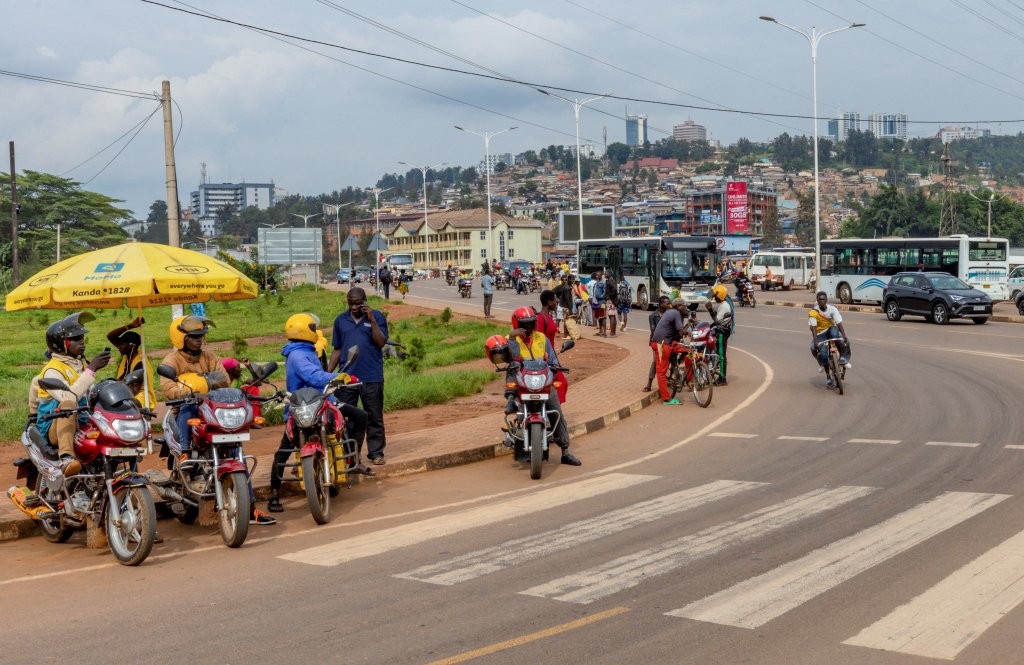
The expert underlines that these kinds of agreements would need to be in place on all four routes into the EU to really have an effect. Knaus told EPD that he believed a country like Rwanda could be the way forward, since UNHCR already operates a program there for asylum seekers.
Knaus thinks that this kind of strategy should begin this summer, to avoid the possibility that in the autumn, EU internal border checks are blocked by court decisions and that the GEAS system is shown not to be working as intended, leaving European governments with opposition and problems to answer as to how to manage migration going forward.
With KNA, AFP, EPD
Read Also'Being isolated is not easy': Migrants anxious after Germany cuts access to integration courses