
Recognition rates for Afghan nationals in the UK have fallen from 96 percent to 34 percent. Last year, at least 370 women and girls were denied asylum. Between the second quarter of 2021 and the second quarter of 2025, 96 percent of Afghans granted refugee family reunion visas were women and children.
Recognition rates for Afghan women and girls seeking asylum in the United Kingdom have dropped sharply, raising concerns among rights groups that those fleeing Taliban rule are being denied protection despite clear evidence of persecution.
According to an April 2026 report released by Amnesty International and the Gender Action for Peace and Security (GAPS) network, the proportion of successful Afghan asylum claims has fallen from 96 percent to just 34 percent since the current UK government took office. Last year, at least 370 Afghan women and girls were refused asylum.
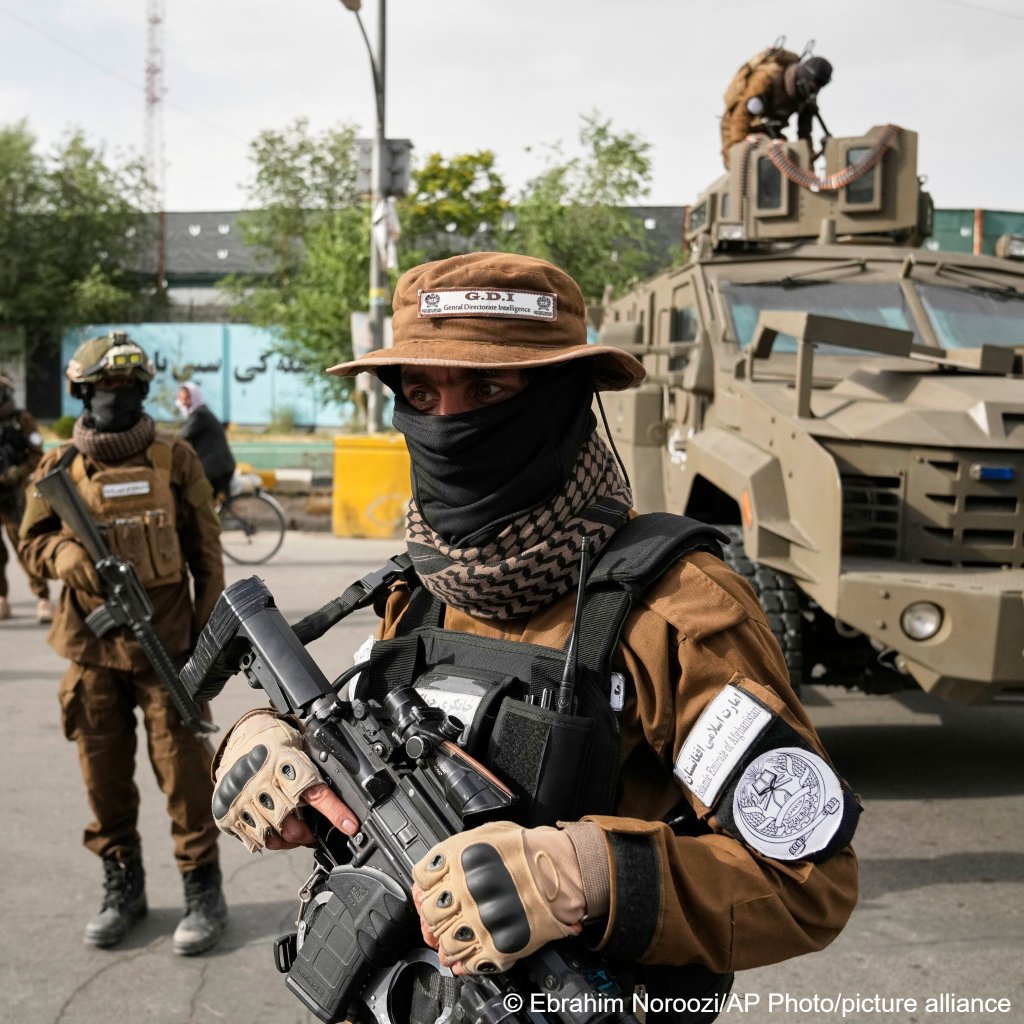
Amnesty International warned that the consequences are severe. Since the Taliban took back control following the fall of Kabul in 2021, restrictions have been placed on the civilian population. Women and girls are most affected by measures that have been described as aiming for their total erasure from public life. A UNHCR report released in March stated that the conditions in Afghanistan continue to deteriorate, with women having been largely removed from public life, through bans on education above sixth grade and high-level jobs, and movement restrictions.
Karla McLaren, Amnesty UK’s Head of Government Affairs, said the decline in granting international protection is impossible to justify given the conditions in Afghanistan.
"Afghanistan is one of the worst places in the world to be a woman," she said in a statement.
"Women have been systematically erased from public life, denied education, autonomy, and even the most basic right to be seen or heard. Yet as the Taliban tightens its grip, the proportion of women granted safety here is falling. That is indefensible."
She added that denying protection to Afghan women "shows the extent of the moral and practical collapse in the UK's asylum decision-making," warning that prolonged uncertainty for applicants amounts to cruelty rather than deterrence.
Read AlsoWill Europe's bid to deport Afghans legitimize the Taliban?
Humanitarian routes
In response to the report, a spokesperson from the Home Office told InfoMigrants, "Since the Taliban takeover, the UK has resettled almost 38,000 Afghan men, women and children through humanitarian routes. Women and girls in Afghanistan have faced severe danger, so asylum decision makers continue to give close and careful consideration to claims involving gender‑based persecution."
"The Home Secretary has also announced plans to open new safe and legal routes. These will prioritise integration and reflect public expectations for people to build independent lives and contribute to their local communities," added the spokesperson.
A study by the Migration Observatory, an Oxford University-based think tank, indicates that the demographic profile of Afghans arriving in the UK differs depending on the resettlement scheme used. The UK has several main programs for the resettlement of Afghans:
- Afghan Relocation Route (ARR): more recent and less formalized pathway used to bring eligible Afghans to the UK outside the main schemes. It has been used in specific cases, often involving people linked to UK operations or identified as at risk. Became operational in April 2024, and was discontinued on 4 July 2025.
- Afghan Relocations and Assistance Policy (ARAP): Launched in 2021 to protect Afghans who worked directly with the UK government, particularly with British armed forces. Relocation included family members
- Afghan Citizens Resettlement Scheme (ACRS): A broader humanitarian program aimed at vulnerable Afghans opened in 2022, including women and girls at risk, human rights defenders, and minorities. It works partly through referrals from organizations like the UNHCR, now closed
Through these schemes, arrivals have generally been gender-balanced among adults, with children making up nearly half of those resettled, indicating that these schemes were largely designed to support families rather than individuals.
The Migration Observatory noted an exception through the ACRS Pathway 2, which focuses on vulnerable individuals referred by humanitarian agencies. Under this pathway, most adult beneficiaries were women, reflecting the UNHCR’s prioritization of "women and girls at risk" as a key selection category.
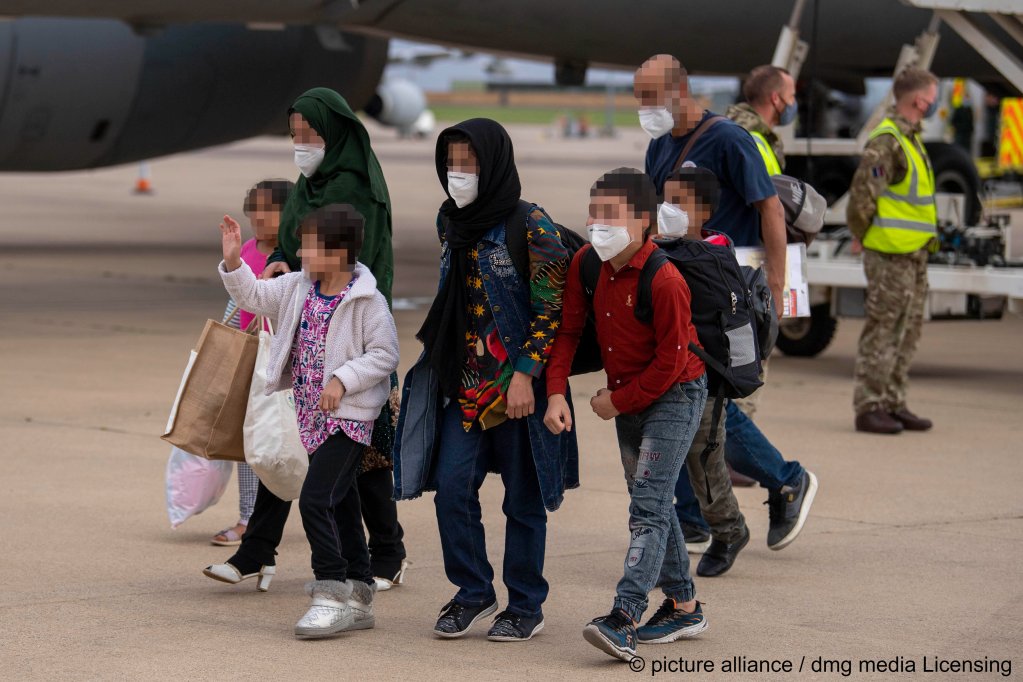
This contrasts with the profile of Afghans granted asylum through the regular UK system, where the majority have been adult men.
This pattern is consistent across many nationalities and reflects the reality that men are more likely to undertake dangerous and irregular journeys first, before later seeking to reunite with their families through legal channels.
Between the second quarter of 2021 and the second quarter of 2025, 96 percent of Afghans granted refugee family reunion visas to reunite with family in the UK were women and children However, this route was suspended in September 2025 and is expected to be replaced by a more restrictive system in 2026, raising concerns about reduced access to safe pathways for families.
More refused protection but unable to return
The number of Afghans irregularly arriving in the UK increased after the Taliban takeover in the summer of 2021.
For 2022 and 2023, more Afghans arrived by small boat than through the humanitarian visa routes. Yet this pattern was reversed in 2024 and the first half of 2025. In the first half of 2025, Afghan nationals were the second-highest number of nationals coming into the country by small boat. Afghans made up 12 percent of small boat arrivals and 6 percent of all asylum applications.
However, as the number of arrivals increased, approval of asylum applications dropped.
Grant rates for Afghan asylum seekers nosedived from roughly 99 percent in 2023 to just 38 percent in the first half of 2025, which was also reported by Amnesty International. Overall grant rates also fell during the same period, from 67 percent to 43 percent.
Migration Observatory attributed the drop to a higher standard of proof for recognition as a refugee that was introduced in 2024 under the Nationalities and Borders Act rules. Additionally, in August 2024, the Home Office issued new guidance stating that the security situation in Afghanistan was no longer considered as severe as previously assessed, and that risks must now be judged on an individual basis.
The lower grant rate means that more Afghan asylum seekers are refused protection. Since the UK does not recognize the Taliban government, it remains unable to return refused asylum seekers to Afghanistan. Unless they leave voluntarily, such people will remain in the UK without any legal status.
A spokesperson from the UK Home Office explained to InfoMigrants that each asylum claim is considered on its individual merits and the evidence provided. Under the new Asylum Policy Statement, there is no automatic right to family reunification and each case is assessed individually.
"The approach balances protection from persecution with control of UK borders. It creates a fairer system, aligns with European partners, and reduces incentives for asylum seekers to travel to the UK illegally. The situation before the pause was unsustainable," said the spokesperson.
Between 2015 and 2022, around 5,500 family reunion visas were granted each year. In the year ending September 2025, 20,876 family reunion visas were issued – the highest on record – and projections showed further increases if the government failed to take necessary action.
"People with protection status can still turn to alternative family routes to bring a partner and child to the UK, helping loved ones find a safe and secure way to reunite," the spokesperson added.
The UK ranked fifth in Europe in the number of asylum applications from Afghan nationals in 2024, recording fewer applications compared to Germany, Greece, France, and Switzerland.
Read AlsoThe UK has deported nearly 60,000 people since the Labour Party came to power
Concerns over legitimizing the Taliban
Concerns have deepened following comments by UK Home Secretary Shabana Mahmood, who has not ruled out the possibility of returning rejected Afghan asylum seekers, the British newspaper The Guardian reported last week (April 24).
She said the government is "monitoring very closely" discussions between Kabul and European countries regarding a potential returns program and confirmed that “additional conversations” are taking place within the government.
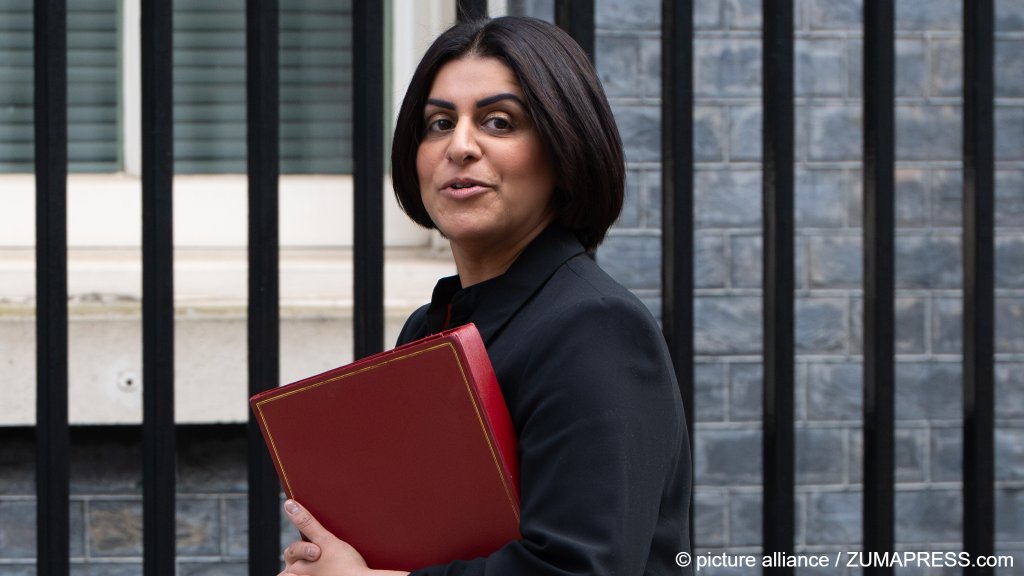
Weeks after, in March, UK officials, which included the Minister for Women and Equalities, stated at a UN Security Council that they were "appalled by the continued restrictions imposed on the women and girls of Afghanistan".
For rights groups, the issue has become a test of the UK’s stated commitment to defending women’s rights globally.
"Ministers cannot claim international leadership on women’s rights while turning away women fleeing persecution. The UK’s treatment of Afghan women seeking protection is a total betrayal of the principles it claims to stand for," McLaren of Amnesty International said.
Read AlsoGermany: More deportations to Afghanistan raise criticism over collaboration with Taliban