
Deportations to Afghanistan are based on a framework between the Federal Ministry of the Interior and the de facto government of Afghanistan. However, an investigation by the German public broadcaster ZDF indicates an alleged closer collaboration with the Taliban to facilitate the deportations, raising concerns about the legitimization of the Taliban.
A report by the German investigative TV program ZDF Magazin Royale, released on Friday (May 1), indicates that deportations of Afghan nationals were facilitated through several meetings between Taliban representatives and German authorities, raising concerns about the implicit legitimization of the group, which functions as Afghanistan’s de facto government.
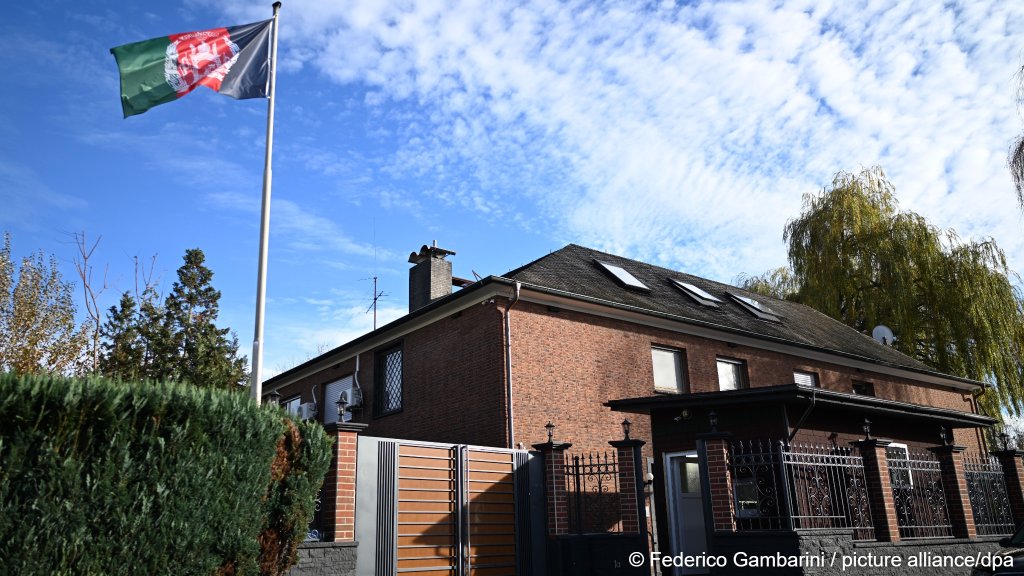
The investigation indicates that Afghan citizens were presented to the two Taliban representatives sent to Germany last year in preparation for the issuance of their deportation documents. Meetings between the Taliban and German federal officials reportedly took place over the past few months during several meetings at the Bonn branch of the Federal Office for Migration and Refugees (BAMF) and at Berlin Brandenburg Airport. A parallel investigation by Norddeutscher Rundfunk (NDR), a regional broadcaster within Germany’s ARD public broadcasting network, corroborated the existence of these meetings.
The Federal Ministry of the Interior stated that these were "federal police measures" and that the Federal Office for Migration and Refugees (BAMF) only provided the premises.
In mid-April, ZDF Magazin Royale filmed what appeared to be a deportation-related meeting at the BAMF Bonn office. Vehicles transporting Afghan nationals arrived, followed hours later by a limousine from the Afghan consulate. Footage showed a man identified as a Taliban-linked consular official leaving the premises. The individuals had been accredited as diplomats in 2025, though reporting by NDR suggests they now effectively control Afghan missions in Germany. Authorities declined to comment, with officials citing operational secrecy and stating such processes occur below ministerial level.
The meetings were reportedly conducted to prepare for a group deportation as well as further deportations, prioritizing those who had been convicted of crimes. However, the report alleged that the authorities were also targeting single Afghan men who had not broken any laws.
Criticism rising
Deportations to Afghanistan are covered by the agreement between the Federal Ministry of the Interior and the de facto government of Afghanistan regarding regular deportations. Deportations to Afghanistan were taking place even under the previous government, which ceded to the conservative CDU party under Merz in February 2025.
That same month, 20 Afghan nationals were returned to Afghanistan, in what was the first direct repatriation flight to Kabul arranged without mediation by a third country, such as Qatar, under a new operational arrangement between Berlin and the de facto authorities in Kabul.
Following that, in March, two Afghans, convicted of crimes in Germany, were deported from Hamburg to Kabul. All of the deportees were reported to have been convicted of crimes.
Germany’s Interior Ministry has defended deportations to Afghanistan as part of a broader tightening of migration policy. In an official statement, Interior Minister Alexander Dobrindt said deporting criminal offenders was a "crucial element" of a stricter approach, adding that such returns must continue "safely" in the future. The ministry has acknowledged that deportations require coordination with Afghan authorities, but insists that contacts remain at a "technical level" and do not constitute recognition of the Taliban.
Read Also'The deportation offensive will continue:' Austrian government returns Afghan convict to Kabul
Dilemma over deportations
Since taking back rule over Afghanistan in August 2025, the Taliban have stood as the country's de facto ruling government. Human rights organizations have characterized the Taliban regime as a systematic widespread attack on the basic freedoms of citizens, specifically targeting women and girls. Amnesty International reported the systematic suppression of dissent through extrajudicial execution and torture and other ill-treatment.
Last year, nearly 20 European Countries called on the Commission to engage with the Taliban and find a way to deport Afghan nationals without a legal residence permit, or who are deemed a security risk. The countries included Bulgaria, Cyprus, Germany, Estonia, Finland, Greece, Hungary, Ireland, Italy, Lithuania, Luxembourg, Malta, the Netherlands, Austria, Poland, Slovakia, the Czech Republic, Sweden, and non-EU member Norway.
Belgian Minister for Asylum and Migration Anneleen Van Bossuyt said at the time that not being able to return Afghan nationals even after conviction "undermined public trust in asylum policy and poses risks to our security." The move highlighted the struggle in the EU to coordinate and organize the deportations of Afghan nationals.
Meanwhile, in April, a special envoy of the European Union (EU) to Afghanistan visited Kabul and reports emerged that a Taliban delegation might be hosted in Brussels this summer.
European lawmakers and rights groups are concerned that coordinating with the Taliban in Kabul will lend the militant group legitimacy.
Read AlsoWill Europe's bid to deport Afghans legitimize the Taliban?
Sending to danger
Human rights organizations have strongly criticized deportations of Afghan nationals, warning they may breach international law. More than 250 NGOs have also accused the German government of failing to uphold protection commitments to Afghans, many of whom are women and children. Legal advocates and Afghan rights groups further warn that deportations risk being carried out without proper individual assessment, while humanitarian organisations stress that conditions in Afghanistan remain unsafe for return.
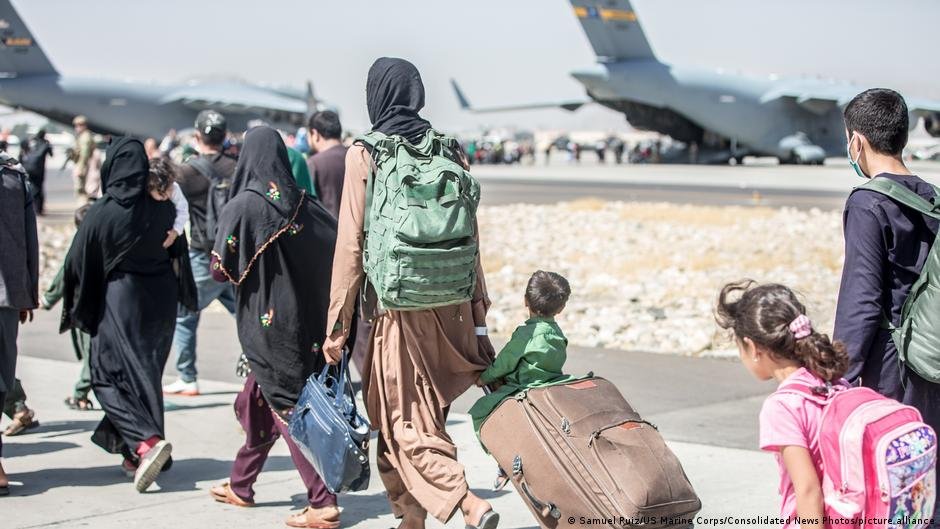
A legal complaint filed with the UN Human Rights Committee by the Society for Civil Rights (GFF) on behalf of a family comprised of an Afghan couple and their 8 children, alleges that Germany arbitrarily revoked their admission under a resettlement programme in December 2025, leaving them stranded in Pakistan and at imminent risk of deportation. The family, headed by a former Afghan judge, warns they face arrest, forced return to Afghanistan and likely persecution or death by the Taliban. The complaint argues violations of the right to life and protection from torture, citing Germany’s withdrawal of support, expired visas and impending eviction as creating an immediate, life-threatening situation.
The plea also cited the previous position of the petitioner as a judge and the threats received from formerly sentenced Taliban members who are now in high-ranking positions.
Read AlsoGermany stands firm on revoked Afghan promises amid lawsuits and Taliban crackdowns
Regular deportations
Twenty-five Afghan nationals, all male, were deported from Germany to Afghanistan via a charter flight last week (April 28), the German Federal Office for Migration and Refugees (BAMF) said in a statement.
The group of 25 who were served deportation orders were reported to have committed crimes while in Germany. The list of offenses included manslaughter, rape, aggravated assault, and illegal narcotics.
"The regular and systematic deportations of criminals to Afghanistan are a key element of the migration transition," Federal Interior Minister Alexander Dobrindt said in a statement.
"People who have abused our protection and committed crimes here must leave our country. That is why we are expanding deportations step by step. We will consistently continue down this path of control, consistency, and a firm stance," he added.
An estimated 377,000 individuals of Afghan origin currently live in Germany, with many of them having arrived as refugees. Just under 11,500 Afghans are registered as required to leave the country, according to data from the Federal Office for Migration and Refugees (BAMF) in May.
Read AlsoGermany: Young Afghan men rarely granted protection status