
Across Europe, economies are feeling the dual burden of an aging population and labor shortage compounded by low birth rates. The European Commission has identified the talent development trap as another factor. Some countries in the EU are regularizing undocumented migrants while stepping up efforts to recruit from abroad to cope.
Across Europe, economies are feeling the dual burden of an aging population and labor shortage compounded by low birth rates. The European Commission has identified the talent development trap as another factor. The talent development trap is where European countries are losing their own nationals needed to sustain and grow its economy due to migration to another EU State or outside Europe.
According to a report by the European Data Journalism Network (EDJN), Europe is losing its most educated youth who are leaving for better opportunities abroad. Citing a survey conducted in 2023, the EDJN stated that 41 percent of young people are planning to or would like to move abroad. In Ireland, Cyprus, Hungary, Spain, Italy, Greece, more than half of the young people said that they would like to leave their country of origin.
It is noteworthy that two of the five countries have the lowest average salaries recorded in the European Union (EU). According to Eurostat, the EU’s official statistical agency, Hungary has an average annual salary of 18,500 euros, followed by Greece at 18,000 euros. Bulgaria was recorded to have the lowest average annual salary at 15,400 euros.
Among the EU countries, the highest average annual full-time adjusted salary was recorded in Luxembourg (83,000 euros), followed by Denmark (71,600 euros) and Ireland (61,100 euros).
In 2024, the average annual full-time adjusted salary for employees across the EU was estimated at about 39,800 euros, or a 5.2 percent increase from 37,800 euros in 2023.
To manage the outflow or outward migration of its nationals, the EU has turned to recruiting from abroad to plug in gaps in its workforce. InfoMigrants breaks down the talent development gap and the recruitment programs some EU states have implemented as a response.
What is the talent development trap and where is it most concentrated?
The European Commission has identified 46 regions across the EU already entangled in a "talent development trap", areas where there just aren't enough skilled workers to fill in gaps in the workforce. These regions, which account for 16 percent of the EU population, are typically less economically developed than the rest of the EU, with about 31 percent of their population living in rural areas, compared to 21 percent on average in the EU.
Data compiled by the EDJN indicate that these regions are mainly concentrated in southern Italy, Romania, Bulgaria, Hungary and parts of eastern Germany and France. The EC characterized these regions as facing a "shrinking working-age population and lagging level of tertiary education".
This then translates to a migration cycle. As populations age and birth rates fall, fewer workers are available, making local economies slow down. Meanwhile, without enough graduates and skilled professionals, businesses struggle to expand. Jobs became more scarce and career paths become more vague, prompting younger nationals to leave in search of better opportunities elsewhere.
To offset this, several EU member states are in a race to recruit more skilled talent from abroad, easing recruitment processes and creating migration pathways.
Europe’s push to attract global talent
Europe is working to make itself more attractive to a younger workforce from outside the bloc, combining EU‑wide initiatives to draw skilled workers -- such as the EU Blue Card and the EU Talent Pool -- with national programs designed to fill labour shortages in specific sectors.
At the center of Europe’s strategy is the EU Blue Card, a work and residence permit designed to attract highly skilled non-EU workers. In 2023 alone, around 89,000 Blue Cards were issued across the EU, with Germany accounting for 78 percent of all permits. By the end of 2023, over 113,000 Blue Card holders were living in Germany, more than double the number five years earlier.
The trend continued in 2024, when about 78,100 highly qualified workers received Blue Cards. Again, the largest number of Blue Cards were issued in Germany, which issued over 56,000 permits.
The EU Talent Pool is a digital platform adopted in 2025 to connect European employers directly with pre-screened candidates abroad, streamlining recruitment and reducing bureaucratic delays.
Other initiatives meant to retain people already in the EU include the hundreds of thousands of permits for students and researchers, forming a key pipeline for future skilled migration. Within Europe, the United Kingdom launched a Graduate Visa allowing students to stay in the UK after finishing a graduate or postgraduate degree for another 18 months to secure a job.
National recruitment strategies -- a selection
Spain:
Under a new regularization scheme launched last month, some 500,000 undocumented migrants are set to acquire legal residence and work authorization upon meeting certain conditions.
Germany:
Germany in 2024 launched the Opportunity Card, a points-based system inspired by Canada, which makes it easier for professionals and university graduates to enter the country, study and search for work.
The German government is also instigating plans designed to fast-track the integration of asylum seekers into the workplace. In future, asylum seekers should be able to start work within three months of making their application without first needing to apply for permission.
Additionally, Germany rolled out the new Work-and-Stay Agency as a flagship initiative to simplify and accelerate skilled immigration to Germany.
France:
The French government released an updated list of sectors "under strain" (métiers en tension) or those facing labor shortages to usher in the regularization of undocumented workers. In addition, the métiers en tension, updated in May 2025, facilitates expedited work permits for foreign nationals. In parallel, it allows for the easier legal regularization for workers in sectors like construction, healthcare, and hospitality.
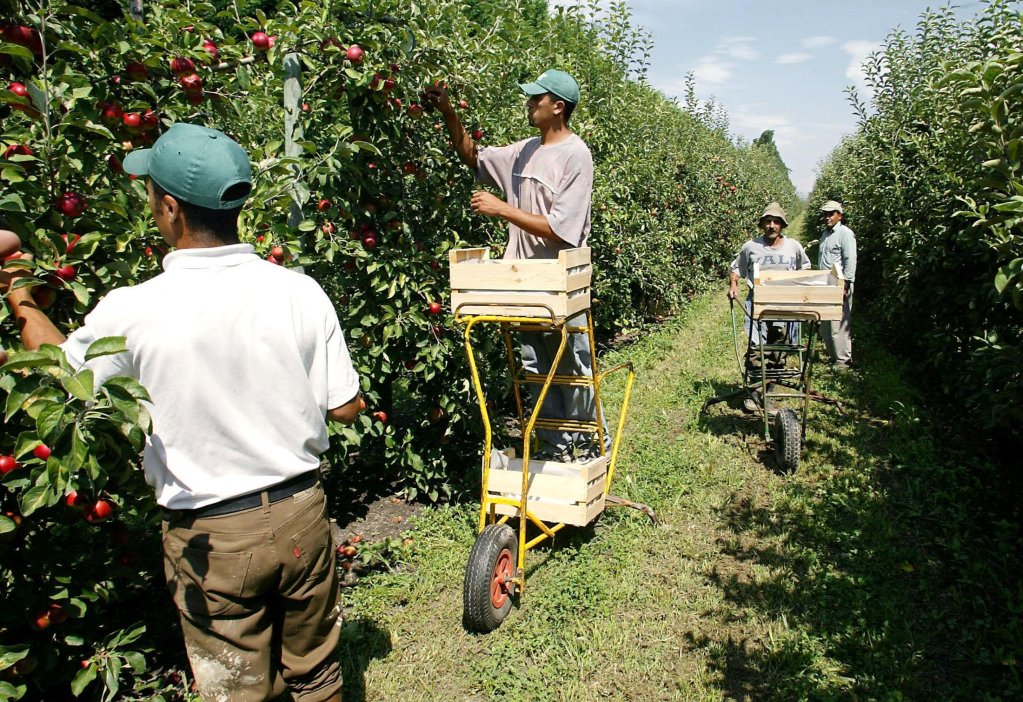
The 80 professions needed included agricultural employees, nurses, housekeepers, cooks, domestic employees, market gardeners/horticulturists, hotel employees and construction workers.
For undocumented workers, a government program allows foreign workers employed in these areas to claim a residency permit in France if they can show 12 months of pay slips from the past 24 months and prove they have lived in France for at least three years.
On top of this, the government implemented the multi-year "passeport talent" residence permit. To be eligible, individuals must have an employment contract that exceeds 3 months and their stay in France must also be over 3 months. The Passeport Talent allows a person to stay for a maximum of four years. Family members may also be issued with multi-year residence permits if certain qualifications are met.
The Netherlands and Sweden rely on fast, employer-driven systems that prioritize speed and flexibility, making it easier for companies to recruit internationally.
These countries share a common feature: strong labor markets, higher wages and established innovation ecosystems. They are able not only to attract talent but also to retain it.
Southern European countries such as Portugal have also stepped up efforts, introducing digital nomad and golden visa schemes aimed at attracting remote workers and investors.
Read AlsoSpanish Prime Minister: 'Our model of regular migration works'
The countries at risk of being left behind
Yet the geography of Europe’s talent recruitment reveals a stark imbalance. Many of the countries most affected by the talent development trap, particularly Romania and Bulgaria, have struggled to compete in this global race for skills.
Both countries participate in the EU Blue Card system, but unlike Germany or France, they lack strong "talent visa" branding or large-scale recruitment campaigns.
The result is a structural mismatch. Countries attracting the most talent are already economically strong. Countries losing talent lack the tools to replace it. This translates to regions already caught in the talent development trap facing a double disadvantage of losing their own skilled workers to internal and external migration and struggling to attract replacements from abroad.
Read AlsoIs the rise in internal border controls ending the EU dream?