
Last year, a total of 158,400 asylum applicants in the EU were under the age of 18, representing about 24 percent of all first-time claims. Studies show that asylum applicants who are minors are at increased risk of becoming unhoused.
Minors accounted for almost a quarter of first-time asylum applications in the European Union in 2025, according to data released on Wednesday (April 29) by Eurostat, the statistical office of the European Union. A total of 158,400 applicants were under the age of 18, representing about 24 percent of all first-time claims.
Among those minors, 13.3 percent were unaccompanied minors -- that is, 3.8 percent of the total number of first-time asylum applicants.
An unaccompanied minor is a minor (below 18) who arrives on the territory of an EU member state unaccompanied by the adult responsible for them, or is left unaccompanied after they have entered the territory of the EU member state.
The share of minors was highest in Austria (57 percent), Germany (45 percent), and Finland (31 percent). Meanwhile, the proportion of unaccompanied minors among child applicants was particularly high in Slovenia, Latvia, and Bulgaria.
Austria remains a key destination for unaccompanied children, receiving a significant share of such applications in Europe in recent years.
Read AlsoUN criticizes Austria's treatment of asylum seekers
Increasing number
The most recent data published by Eurostat, which first started tracking around 2022, reflects a wider trend of an increasing number of unaccompanied minors seeking asylum. In 2022, almost 40,000 unaccompanied minors applied for international protection across the different European Union (EU) member states.
According to a 2025 report by FEANTSA, a non-profit that focuses on eradicating homelessness, unaccompanied minors in Europe face multiple, often overlapping factors that can put them in a state of being unhoused. These factors are often driven by gaps in housing, legal systems, and protection frameworks. One of the most immediate causes is the shortage of safe and adequate accommodation. Many reception centers are overcrowded or lack child-friendly conditions, forcing minors to live in precarious environments or leave altogether, according to the report. Some children choose to exit these facilities due to safety concerns, poor living conditions, or lack of trust in staff, increasing their risk of ending up on the streets.

Another major structural factor is ageing out of the child protection system. When minors turn 18, they often lose access to shelters, social services, and legal protections, with little preparation for independent living. Without transitional support offered by housing assistance, education, or job opportunities, many struggle to secure stability and fall into homelessness shortly after reaching adulthood.
Additionally, the asylum and immigration process itself is characterized by lengthy procedures. This state of "limbo" can trap minors in temporary accommodation for extended periods, while rejected claims or unclear legal status can leave them without any housing options.
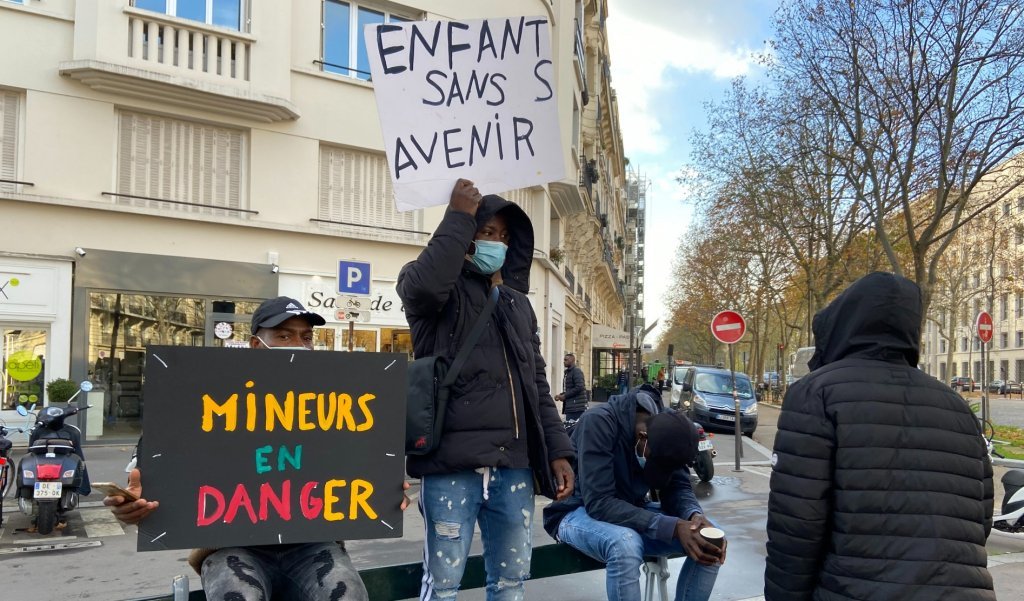
Another pathway stems from exploitation and abuse within reception environments. Experiences of violence, neglect, or economic exploitation, such as informal work outside centers, can push minors to run away, even if it means facing homelessness. Parallel to this, many have experienced trauma during migration, leading to mental health challenges that make it harder to navigate complex bureaucratic systems or seek help.
Limited staff capacity and inadequate care structures often exacerbate these risks.
The FEANTSA Report also highlighted the concept of "hypermobility", which reflects the nomadic life of being an unaccompanied minor who moves repeatedly within and across borders in search of better opportunities or legal status. While hypermobility can be a way of reclaiming control, it frequently exposes minors to further instability and a state of being unhoused, creating a cycle between temporary shelter and life on the streets.
Read AlsoWhat happens when migrant children turn 18?
Missing minors
Experts say the same structural gaps that push minors into homelessness also increase the risk of disappearance. In Europe, an investigation by Lost in Europe found that more than 51,000 migrant children went missing between 2021 and 2023, following earlier findings of over 18,000 disappearances between 2018 and 2020. Faced with uncertainty, fear of detention or deportation, or the need to reunite with relatives elsewhere, many children move on independently. In doing so, they become more exposed to exploitation, trafficking, and abuse, and often slipping entirely out of official protection systems.
Across Europe, effective support for unaccompanied minors at risk of being unhoused increasingly relies on a holistic approach that combines mental health care, stable housing, and long-term integration. Several examples of best practices were highlighted in the FEANTSA report.
Transitional support to adulthood
The report found that access to trauma-informed psychological services is a key component. In Greece, ZEUXIS provides both therapy and educational activities to support recovery and skill-building, while Hungary’s Cordelia Foundation offers specialized care through multidisciplinary teams, including mental health professionals and interpreters.

Safe accommodation is another critical pillar. Finland uses structured group homes followed by family-style housing, while Norway promotes supported independent living with foster care and professional supervision.
Community-based housing models further support integration. In Germany, sponsorship programs connect young migrants with local hosts, and in Belgium, co-housing initiatives pair refugees with peers to encourage social inclusion and language development.
Read AlsoPractical tools: Handbooks for guardians working with unaccompanied minors