
A court in Libya has sentenced members of a criminal network for smuggling, kidnapping and torturing migrants. Greece's foreign minister, meanwhile, travelled to Tripoli to push for stronger coordination between Greek and Libyan authorities to reduce irregular migration flows from the North African country across the Mediterranean.
In Libya, authorities have bolstered efforts to dismantle human trafficking and smuggling networks amid growing international concern over irregular migration flows across the Mediterranean, routes that Greece says are continuing to inflict mounting pressure.
A court in Tripoli on Tuesday (April 28) sentenced four members of a criminal network to prison terms ranging from 12 to 22 years for crimes including migrant smuggling, abduction for ransom and torture.
According to prosecutors, the group operated along the western coastal corridor near Zuwara, a known departure point for smugglers leading migrants to attempt the perilous sea crossing to Europe.

Read AlsoLibya: Over 220 migrants freed from underground prison
Family members blackmailed with videos of torture
The network reportedly kidnapped migrants and extorted their families, sending them "videos documenting the victims' torture" to force payments. One of the convicted individuals was sentenced in absentia, while authorities withheld the identities of those involved.
The ruling comes against the backdrop of a broader humanitarian and security crisis that has deepened since the 2011 NATO intervention in Libya. In the years following the fall of longtime ruler Muammar Gaddafi, Libya has emerged as a popular transit hub for migrants fleeing conflict, insecurity and poverty across Africa and the Middle East.
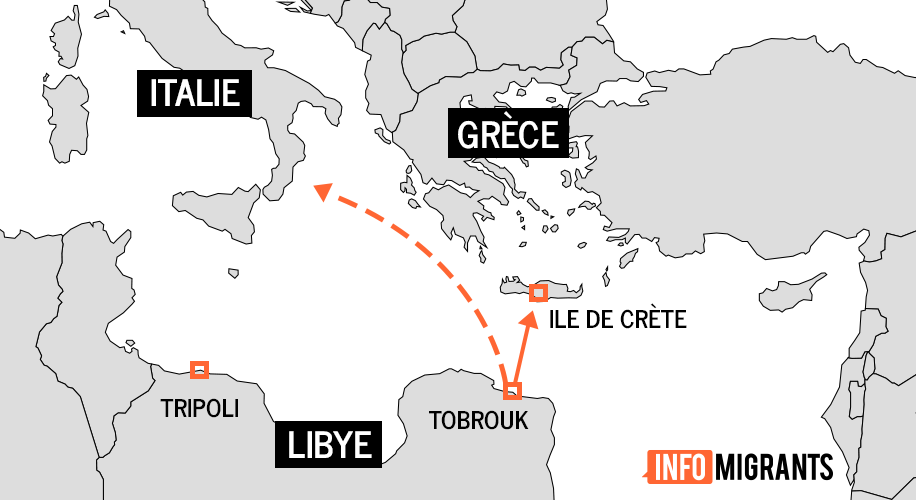
Just earlier this month, at least 17 bodies believed to be migrants were recovered along the Zuwara coastline. In a separate case, prosecutors on Monday ordered the arrest of another trafficking group accused of sending migrants from the city of Tobruk aboard an unseaworthy vessel that later overturned, killing 38 people from Sudan, Egypt and Ethiopia.
Greek island of Crete reports surge in irregular sea arrivals
Human rights organizations have long warned of abuses within Libya’s migrant detention system. At a United Nations meeting in Geneva last year, several countries, including Britain, Spain, Norway and Sierra Leone, called on Libyan authorities to close facilities where migrants are subjected to torture, violence and in some cases death.
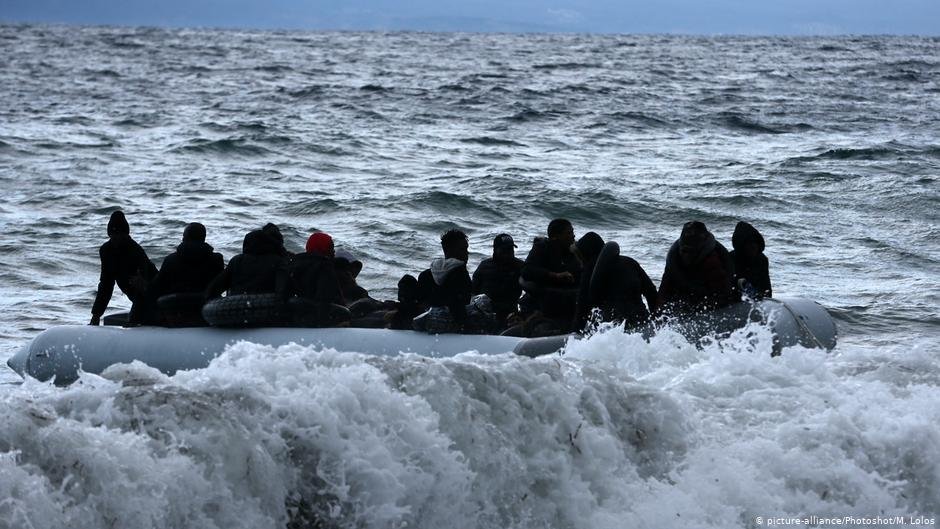
The consequences of Libya’s instability and widespread corruption are being felt acutely across the Mediterranean, such as in Greece and Italy. In the past year, the Greek island of Crete has reported a surge in irregular arrivals from Libyan shores, with migrants typically arriving on overcrowded and unsafe vessels. In late March, 22 people died during one such journey, with survivors reporting that bodies were thrown overboard before rescue teams intervened. Earlier in April, more than 300 migrants were rescued in just a few days.
Read AlsoGreece: Smuggling suspect arrested at land border with Turkey
Migrants in Libya suffer cycle of endemic corruption and violence
Against this backdrop, Giorgos Gerapetritis, Greece’s foreign minister, travelled to Tripoli on Monday for talks with his Libyan counterpart Taher al-Baour. Talks focused on strengthening cooperation to curb migrant smuggling and manage migration flows.
Both sides have agreed to pursue a "global approach based on burden-sharing" and enhanced security coordination, according to Libya’s foreign ministry. The ministers also reaffirmed "their commitment to continuing a constructive dialogue in a positive spirit, based on the rules of international law.”
Longstanding tensions, however, remain over maritime boundaries in the Mediterranean, particularly after Libya signed a controversial agreement with Turkey in 2019, an accord Greece says infringes on its sovereign rights around Crete.
Libya remains politically fragmented, divided between a UN-recognized government in the west and a rival administration in the east backed by military commander Khalifa Haftar.
Gerapetritis also held separate talks with Haftar in Benghazi last month, showing Athens' efforts to engage all sides to curb irregular migration flows to Greece.
As trafficking and smuggling networks adapt and instability endures, fueled by corruption, bribery, and ties between Libyan actors and criminal groups, migrants remain trapped in a cycle of exploitation on land and life-threatening journeys at sea, while various actors continue to profit from their vulnerability, hopes, and desperation.
With AFP and Reuters
Read AlsoTobruk-to-Crete migrant crossings intensify as Greece enforces strict sea patrols