
A non-binding decision from the European Court of Justice (ECJ) says that Italy's controversial migrant deal to send some migrants to Albania for processing is not in breach of EU law. The ruling offers a lifeline to Italy's policy until a binding ruling is issued later in the year, and could form the basis for other EU countries to roll out similar initiatives.
ECJ Advocate General Nicholas Emiliou published a legal opinion on April 23, saying that Italy's scheme to transfer some migrants to Albania while their case is being processed is compatible with EU legislation — as long as "the individual rights and guarantees of migrants under the European asylum system are fully maintained."
According to a press statement, he found that "EU law does not prevent a member state from establishing a detention centre for return procedures outside its own territory."
In its essence, the non-binding ruling says that if a person decides to apply for international protection while they are detained at such a return hub, they will not automatically be entitled to being brought back to the EU while the application is pending, in accordance with EU law.

Read AlsoEU commissioner says Italy-Albania accord falls within new rules
This opinion by Emiliou will form the basis for a more comprehensive decision yet to be issued at a later date by a broader panel of judges convening at the Court of Justice of the European Union (CJEU).
While the advocate general's opinion may not be binding, the CJEU court's judges will take Emiliou's decision strongly into account, as CJEU judges generally tend to side with such preliminary ECJ rulings, as the ECJ forms part of the CJEU.
A specific date for that ruling has not yet been given.
The ECJ legal opinion is the latest in a series of opinions and rulings that support the legal justification for migrant processing facilities outside the European Union.
Read AlsoECJ issues rulings interpreted to be in favor of outsourcing asylum procedures
Italia's uphill battle with enforcing the Albania scheme
The ECJ opinion came in response to two non-EU nationals filing a complaint for being detained for being in Italy illegally and then taken to an Albanian centre, where they had to apply for international protection.
EU member Italy had launched two such centers in non-EU state Albania in 2024, which have commonly been dubbed "return hubs," as they are designed with the intention of returning as many potential immigrants as possible if they do not qualify for asylum.
The facilities, run by Italian authorities under Italian jurisdiction, were primarily intended to be used for the processing of asylum seekers who were intercepted by Italian naval vessels in the Mediterranean who were considered unlikely to qualify for protection based on their nationality.

However, the two centers have barely been put to use after a number of court injunctions halted nearly all attempts to fully make use of the facilities.
Advocate General Emiliou's decision will now likely disincentivize Italian and EU judges from interfering in future.
The ECJ announcement is seen as a win for Italian Prime Minister Giorgia Meloni, who has repeatedly pledged to turn the centers into fully functional instruments for asylum management.
Meloni said last November that the Albanian return hubs would become fully operational from mid-2026 at the latest, as new EU migration and asylum laws, which further facilitate extraterritorial detention, will take effect then.
Meloni welcomed the ECJ opinion, issuing a statement saying that this development "confirms the validity of the path we have chosen," while condemning "two years lost due to forced and unfounded judicial interpretations."
She added that "tackling illegal immigration requires seriousness, courage, and concrete solutions."
Read AlsoMeloni stands firm on 'Albania model' for managing migration
Migrants' rights under EU law must be protected in non-EU detention
Emiliou stressed however that EU members are obliged to take all necessary measures to ensure that the rights of migrants and asylum seekers are upheld in such detention centers which are outside the bloc.
This includes the right to access a judge and to be given legal counsel, as well as language assistance.
Healthcare, education for minors and the right to have contact with family are also part of the rights enshrined in EU asylum law, though minors and infirm individuals are excluded from the Albania scheme.
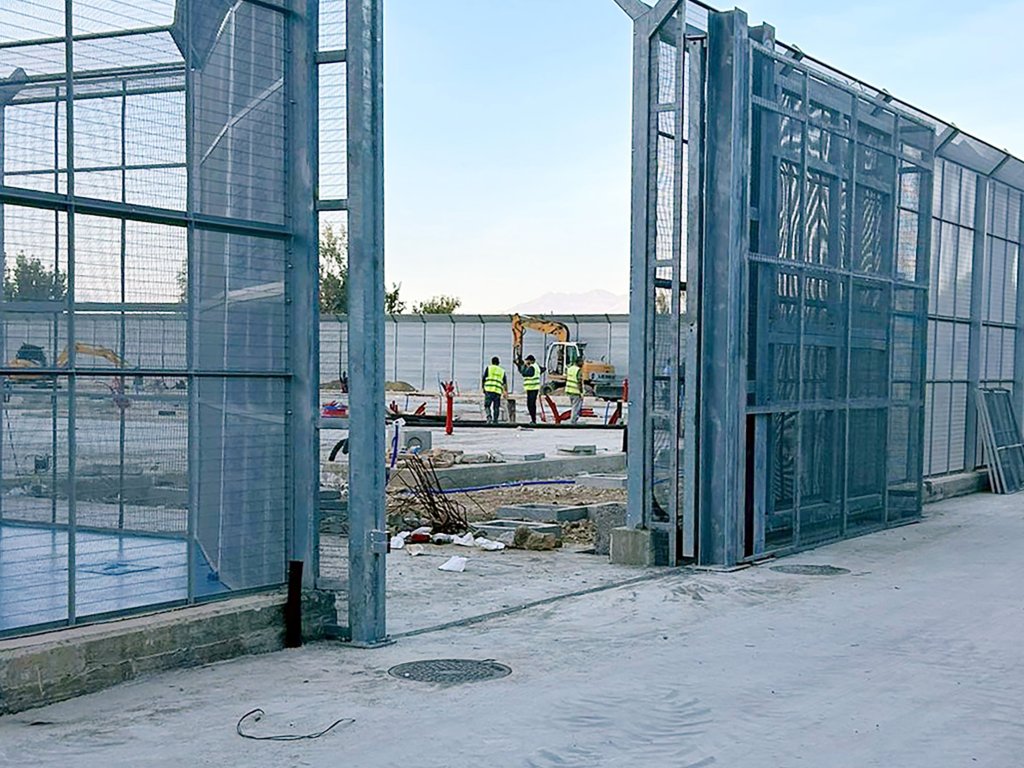
The advocate general also stressed that the opinion was only related to Albania and to the fact that Albania is located near Italy and is an EU candidate country, which is successfully working towards fulfilling its human rights obligations to become a full member.
He said he may not reach the same conclusion in the case of a non-EU country located further away — or one that was seen to be unstable.
Read AlsoMeloni, migration and the EU Parliament's vote on 'return hubs'
Italy's hardline approach
Since taking office in 2022, Prime Minister Meloni has adopted a hardline approach to irregular immigration to Italy. Her government has promised to curb the number of arrivals by sea from North Africa.
She pushed the plan to build return facilities in Albania as a means to deter people from trying to reach Italian soil as part of her pledge to reduce the number of migrants who land each year on Italy's beaches each year.
Meloni's overall stance combines incentives, such as higher payments for voluntary returns, with deterrence through tougher legal barriers, such as narrowing eligibility for international protection and making it easier to reject asylum claims.
She has also significantly limited the capabilities of private NGO rescue ships in the Mediterranean through legislation, and has broadened the list of "safe third countries" of origin.

Read AlsoItaly: Migrant arrivals halved in January compared to last year, says Piantedosi
EU states monitoring ECJ decision closely
In the course of the past year, several other EU nations have expressed an intention to create similar facilities outside the EU, which has resulted in Brussels incorporating allowances for extraterritorial detention and processing centers into the wording of upcoming legal changes under the EU's new pact for migration and asylum.
Under the new law, the EU will not directly be involved in funding and building such hubs but will allow member states to do so, and will encourage cross-national collaboration to ensure a built-in system of checks and balances.
Last month, EU lawmakers also approved tougher penalties for certain irregular migrants as well as their potential deportation to so-called return hubs outside the bloc.
The ECJ opinion is therefore being closely watched by several other EU nations such as the Netherlands, Austria, Denmark, Greece and Germany, who have expressed that they are considering to follow a similar approach as the Italy-Albania scheme.
Read AlsoEU votes in favor of migrant 'return hubs'
with AFP, Reuters, dpa