
The Dutch Senate has approved a two‑tier asylum system that limits family reunification and reduces protections for many refugees. The move has drawn sharp criticism from rights groups.
A law establishing a two-tier asylum system in the Netherlands was passed by a majority of votes in the Dutch Senate on April 21, reported the online Dutch newspaper NL Times. This law allows the Dutch authorities to place new asylum seekers into one of two categories: people fleeing persecution due to their sexual orientation, ethnicity, or religion, and people fleeing from war and the consequences of climate change.
This two-tier system reflects the procedure in France and other European countries, which distinguishes between refugee status and subsidiary protection. New asylum seekers in the Netherlands will soon be assigned either an A or B status when applying. People escaping persecution will be attributed A status, and will have more rights than people escaping war and natural disasters, who will have B status.
The first category offers more protection than the second one. Asylum seekers with B status will have a limited residency permit and no right to family reunification, according to the NL Times.
Shorter residence permits and the end of permanent residence
Until now, all asylum seekers who received international protection were granted five-year-long residence permits, regardless of their category. At the end of these five years, it was possible to file for permanent residency.
The new law foregoes the previous system by limiting the validity of the initial residence permit for A status refugees from five years to three years. At the end of the three years, the asylum seeker's status will be re-examined before being renewed.
The new law also means the end of permanent residence permits, according to the platform RefugeeHelp, which offers practical information to asylum seekers. Refugees who already have a permanent residence permit can keep it, since the new laws will only apply to recent arrivals. They won’t be implemented until June 12, when the provisions of the European Pact on Migration and Asylum take effect, implementing a new procedure for filtering people at the borders.
The rules of the Pact will be discussed in May by members of parliament to better integrate them into the national legislation of the respective countries, according to the Dutch press.
Read AlsoEU migrant 'return hubs' – explained
Limiting family reunification
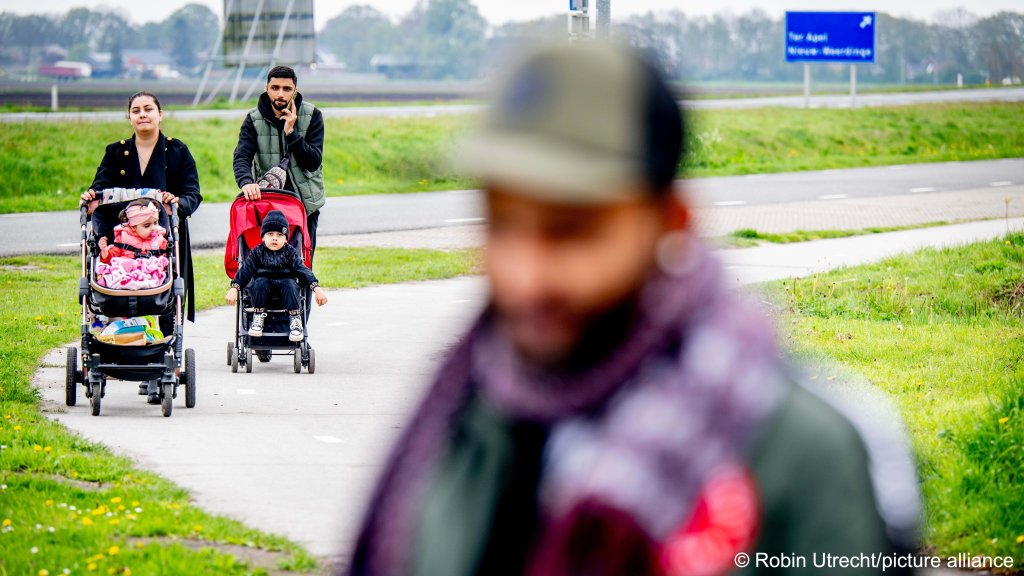
"The main reason the government wants to introduce a two-tier system is to limit the possibilities of family reunification," said the Dutch Council for Refugees in a statement released on December 19.
Until now, all asylum seekers who obtained international protection have had the same rights to family reunification. Yet now, all asylum seekers who fall into Status B will face stricter conditions for reuniting with their families. This includes waiting two years before even being able to apply, having a suitable living space for the entire family and demonstrating the existence of a suitable revenue.
"We all know how difficult it is to find suitable accommodation for one person -- and even more so for an entire family. It also often takes a long time for those with refugee status to meet the income requirements, as they first need to learn the language," wrote the Dutch Refugee Council.
"Families [could be] separated from each other for years. During this time, family members who remain in the Netherlands find themselves in a difficult and dangerous situation. This situation is a source of additional stress, even depression, for refugees in the Netherlands."
Read AlsoDutch lawmakers reject proposed hardline asylum bill
Syrians and Eritrians at the top of family reunification lists
At least 85,000 residence permits linked to family reunification have been granted since 2014, with most of the holders being Eritreans and Syrians, according to Statistics Netherlands. The average waiting time for these individuals to obtain a residence permit is 175 days.
Among Syrians, who have been one of the leading nationalities requesting asylum in the Netherlands for years, "the percentage of permit holders who brought family members [to the Netherlands] is higher than the average (34 percent)”, according to Statistics Netherlands.
Refugee Help considers that the implementation of the European Pact could bring about further changes. "The government wants to take advantage of the implementation of the Migration Pact to implement stricter rules on family reunification. The number of people coming to the Netherlands under family reunification will likely be restricted. For example, unmarried partners and children aged 18 or older will no longer be able to come to the Netherlands through family reunification," said the platform.
Read AlsoSyrians in Germany continue to face hurdles in returning home
The strictest measures rejected by the Senate
The Netherlands receives approximately 30,000 asylum applications per year. The figure has been "very stable over the past ten years", noted the Dutch Refugee Council, sweeping away the notion of an asylum crisis put forward by the ruling coalition.
"In recent months, we have worked hard to lay the foundations for the strictest asylum policy ever," said the Asylum and Migration Minister Marjolein Faber in a video posted on the social network X on December 20, with a Christmas tree in the background. A member of the far-right Party for Freedom, Faber has advocated for "a fundamental policy change to limit the influx and promote returns."
Two other bills were then proposed by the coalition to tighten asylum rules. Among the most controversial measures was to make being undocumented in the country a criminal offense. Several non-governmental organizations (NGOs) pointed out that this could result in ordinary citizens facing criminal charges for helping undocumented people. Dutch lawmakers ultimately rejected the hardline asylum bill and only adopted the two-tier system.
Longer waiting times, more pressure
The Dutch Council for Refugees said that a two-tier asylum system is nothing new in the Netherlands. It already existed in 2000, before the single asylum status was introduced. The NGO considers the new law a step backward. "Determining who gets which status is complicated. This creates a heavier workload for the Dutch Immigration and Naturalisation Service, leading to even longer waiting times," said the NGO.
Furthermore, "it has become clear that a two-tier system puts more pressure on judges. Migrants without refugee status often request the possibility of family reunification," said the NGO. The Dutch Council of State also expressed concern about the surge in appeals that the dual-status system could generate.
Read AlsoGermany: Multiple raids carried out against Syrians suspected of smuggling and misuse of passports