
The beginning of 2026 was the deadliest year in over a decade for migrants using the Mediterranean route to reach Europe, according to the International Organization for Migration. Experts say a combination of increasingly restrictive border policies and limits placed on private rescue operations at sea are making the already perilous route even more dangerous.
At least 1,003 people have died in the Mediterranean Sea since the beginning of this year while trying to reach Europe, according to the UN's Organization for Migration (IOM). The IOM hasn't recorded such a high number since it began keeping a record of migrant deaths and disappearances in 2014.
Experts say overcrowded boats, longer distances, increasingly restrictive border policies, tighter border controls and limits imposed on the capacities of private rescue organizations at sea are all factors heightening the danger for migrants attempting a Mediterranean crossing.
Soazic Dupuis, the director of operations at maritime rescue charity SOS Méditerranée and Arnaud Banos, migration specialist at France's National Center for Scientific Research (CNRS) spoke to InfoMigrants about the rising risks for migrants along the Mediterranean route.
Read AlsoLibya: Over 400 migrants intercepted at sea off the coast of Tobruk
IM: Have crossings of the Mediterranean become more dangerous?
SD: During our missions at sea, we see inflatable boats more often. They were abandoned around 2023 and 2024 in favor of "iron boats" or "metal boats," but they are now back. These vessels are dangerous because they are even less adapted than the metal boats for a long trip across the sea.
The boats are also increasingly overcrowded, which increases the risk of a shipwreck.
AB: Border and coast guards increasingly prevent migrants from leaving the European Union’s (EU) external borders. This practice of blocking migrants has become widespread in recent years.
At the same time, crossings have indeed become more dangerous. Fewer people are reaching European shores, but more are dying.
Some 66,000 migrants irregularly entered Italy in 2025. A similar number of migrants reached Italy in 2024, but the number was more than twice as high in 2023, with over 150,000 arrivals recorded.
When people are prevented from leaving, they look for the shortest possible route to reach their destination as well as the least dangerous conditions. People don’t necessarily give up crossing if the conditions for an optimal departure don’t exist. Instead, they look for alternatives, which are often riskier. People board vessels, even in problematic condition (boats in poor condition, overloaded vessels..) because they have no choice.
Read AlsoAlmost 8,000 died on migration routes in 2025 worldwide, estimates IOM
IM: Does this include crossing attempts in the winter?
AB: Departures now take place in both summer and winter. When governments try to stop migrants from leaving, migrants may attempt a crossing during a storm to avoid being noticed. This also heightens the risk of a shipwreck.
Nearly 30 vessels left the coast of Tunisia while Cyclone Harry battered southern Italy and Malta in January 2026. Humanitarian organizations estimated that as many as 1,000 people went missing at sea due to the storms brought by the Cyclone in the Mediterranean. The IOM for its part estimated that at least 380 people went missing.
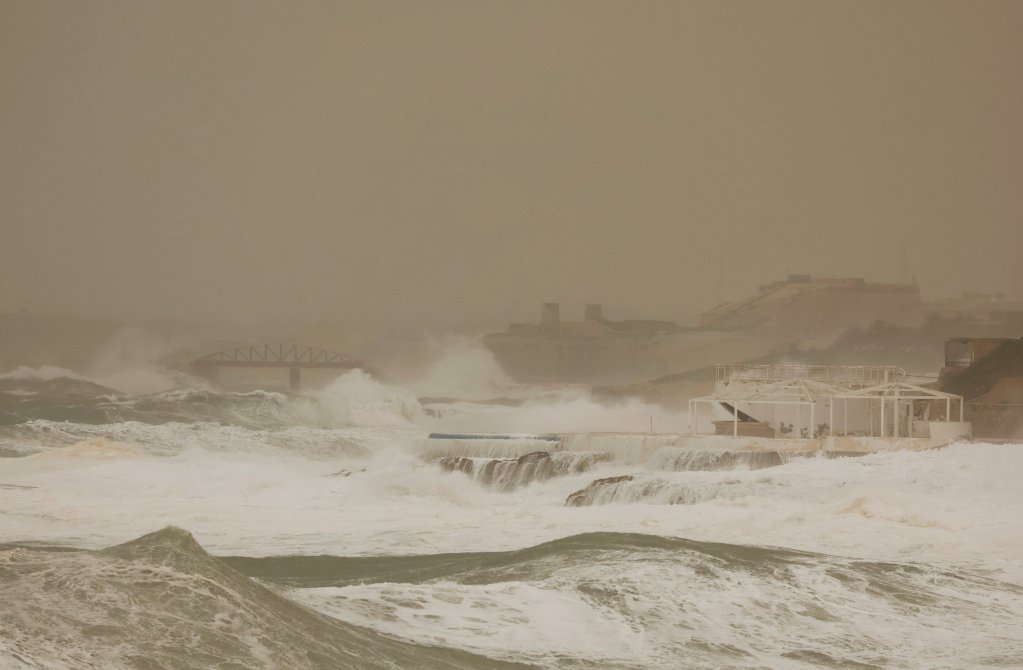
SD: Rescue NGOs are less present at sea in the winter. There is a fleet of civilian sailing boats moored in Lampedusa that patrol only during the summer and they can only go out in good weather. It's too dangerous for them to go out at sea during storms.
Read AlsoLibya: multiple bodies discovered along coast, believed to be migrants
IM: Has stricter surveillance in the central Mediterranean influenced migratory routes and the risks migrants take?
AB: People are covering increasingly longer distances to reach Europe. The classic route from western Tripoli [the cities of Zouara or Zaouïa, editor’s note] toward the Italian island of Lampedusa are carefully monitored. Departures are now taking place east of Tripoli, toward Benghazi, or even east of Tobruk.
The Tobruk route, connecting the eastern Libyan city to Crete, has seen a significant increase in traffic in recent months. More than 18,000 people irregularly entered Crete in 2025, compared to just over 5,000 in 2024, according to statistics provided by the Greek authorities. This represents a 200 percent increase.
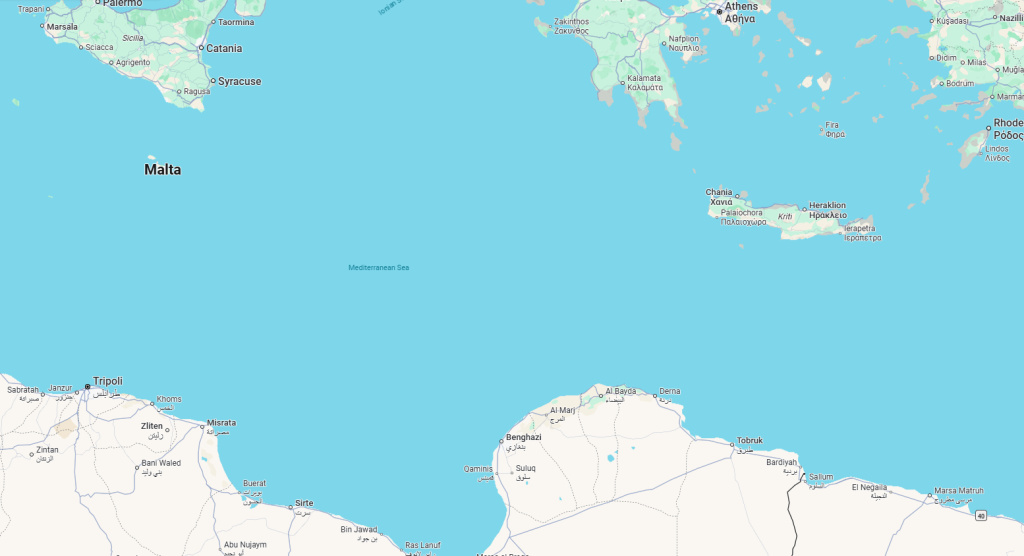
The route is now three or even four times longer than before. From Tobruk, migrants cross the entire central Mediterranean to reach Europe. No rescue ships patrol this area.
The vessels which find themselves adrift after leaving Tobruk have no chance of being rescued.
Read AlsoDeath toll of migrants in the Mediterranean nears 1,000 in 2026
IM: Are Italian laws also a cause of the rising number of deaths at sea?
SD: The Piantedosi Decree has without a doubt complicated our activities. We have lost 591 days of operations at sea in 10 years. Any excuse is enough to push us out of the SAR zone [search and rescue zone, editor’s note].
The Piantedosi Decree, named after Interior Minister Matteo Piantedosi, introduced a series of new measures at the end of 2022 restricting the activities of rescue ships in the Mediterranean. The decree requires non-governmental organizations to proceed "without delay" to the port of disembarkation designated by the Italian authorities immediately after an initial rescue. This means ships can't carry out another rescue operation – unless Rome grants them exceptional permission to do so.
The decree is three years old, but the rules have been implemented progressively. Several humanitarian ships have stopped their activities at sea since the decree was introduced, or started using smaller boats.
Médecins Sans Frontières (MSF) announced in December 2024 that it was ending its rescue operations in the central Mediterranean after three years at sea with the Geo Barents. According to the aid workers, restrictions imposed by Italian authorities prevented them from properly utilizing the capabilities of their ship. MSF decided to relaunch its activities at sea a year later by chartering a new rescue vessel: the Oyvon. Smaller and faster than the Geo Barents, the vessel is "a strategic response to the restrictive and obstructive laws and practices imposed by the Italian government", said the NGO in a press release at the time.
Read AlsoLibya: More bodies of presumed migrants wash up on beach
The presence of the Ocean Viking [a vessel chartered by SOS Méditerranée] has become almost symbolic. Our ship has a capacity for 400 people, but we never reach that number. We usually have only about 60 migrants on board, and we need to leave the zone, to reach a faraway port hundreds of kilometers away.
The ports assigned by Rome are usually very far from the SAR zone, forcing ships to travel long distances at sea and to desert the central Mediterranean for many days.
Before the decree in 2021, humanitarian ships were almost always patrolling the zone. Now the Mediterranean Sea has practically emptied of its civilian flotilla.
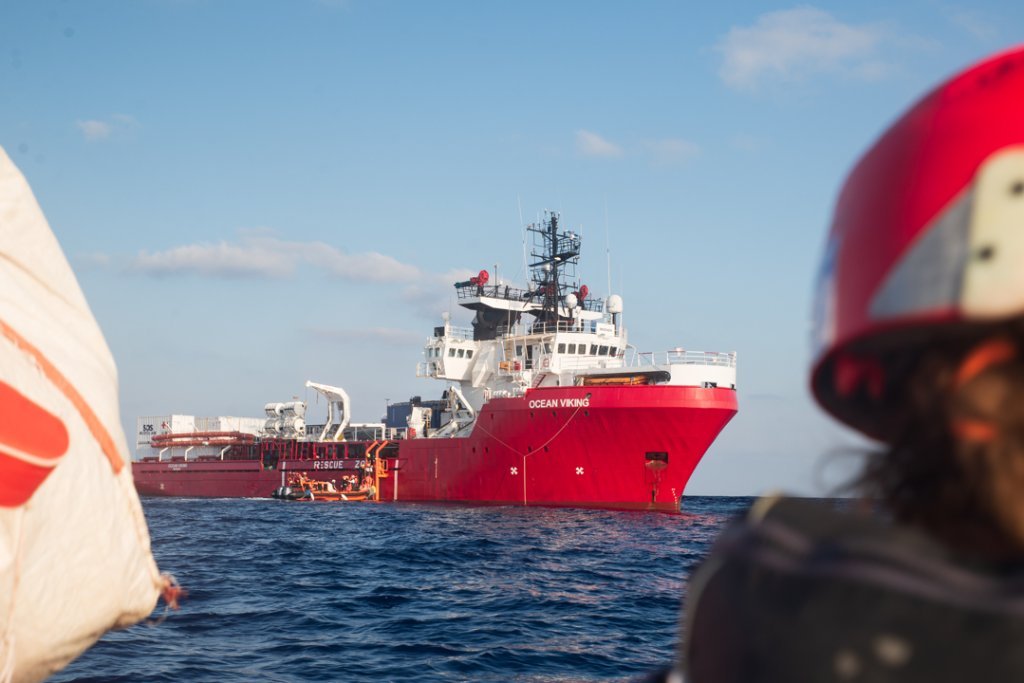
AB: The current situation is completely different from 2021 and 2022, when a flotilla of civilian vessels was present throughout the entire Libyan and Tunisian SAR zones. Italy has now implemented limitations on rescue capacities.
SD: The EU is clearly prioritizing border protection over rescues. The objective is no longer hidden: the goal is no longer to respect maritime law by saving people in distress.
This policy has inevitably led to more shipwrecks.
Read AlsoDozens missing after migrant boat capsizes in Mediterranean
IM: Yet the EU has participated in the creation of a Libyan and Tunisian SAR zone in the central Mediterranean with the stated objective of "saving lives"..
AB: The EU asks countries on the other side of the Mediterranean to control borders and militarize sea rescues.
European authorities have created interception forces. The Tunisians and Libyans are not sailors; they do not conduct rescue operations. Any interception at sea carries risks since it is impossible to intercept a vessel without resorting to force. Manoeuvres by the Libyans and Tunisians can be dangerous when boats are overcrowded, and the passengers are panicked.
Read AlsoForced to swim to shore: Tunisian coast guard abandons migrants at sea
Many interceptions result in deaths, which we are not always aware of.
SD: With this policy, Italian ships remain in their territorial waters and no longer patrol their own SAR zone.
As a result, rescues are delayed. Also, if there is no pressure from civil organizations to launch an operation to rescue a boat in distress, the Italians do nothing. The EU has completely abdicated its responsibility for this task, leaving it to other actors, such as the Libyans or the Tunisians.
When we contact the Libyan authorities, they either don't respond or speak to us in Arabic. This makes communication difficult, if not impossible.
The liability of states is a huge question. When an alert is triggered after a shipwreck and nothing happens, who is responsible? Who is responsible when we provide the Libyans with millions of euros to manage this zone?
AB: Depending on who is on board, the operational responses are not the same. Significant resources are deployed when Europeans are in danger at sea; this is not the case when migrants are involved.
SD: The increased number of shipwrecks is the result of policies that consider these people unworthy of being rescued.
Read AlsoUp to 1,000 could be missing in Mediterranean after Cyclone Harry, NGO says