
The dance project "Wave", choreographed by Olivia Himmer, explores what it means to feel included or excluded. The project is made of several dances, or "waves," that draw from the personal experiences of the dancers.
On a March evening in a cultural center in Paris’s 19th arrondissement, four dancers moved together as one entity to pulsating music, becoming the waves of a furious, agitated ocean. They spun around, they ducked, they rocked back and forth, imitating the ebb and flow of water.
The latest creation by the contemporary dance company Entre 2 Souffles (Between 2 Breaths) is called "Wave, and our bodies become tides." Choreographed by Olivia Himmer and performed by Aly Negma, Krisildo Guce, Juliette Madinia Grand, and Himmer herself, the piece unfolds in a series of "waves" -- dances that explore belonging, being an outsider, and the shifting space between the two.
Read AlsoBody and soul: Expressing the refugee journey through dance
The project follows the Albatros collaborative dance project, performed during the 2024 Paris Olympics, which traced the arduous journeys of refugees, from persecution at home to starting a new life elsewhere. Wave was more of "an inner journey that we wanted to take," said Himmer.
Caught between two places
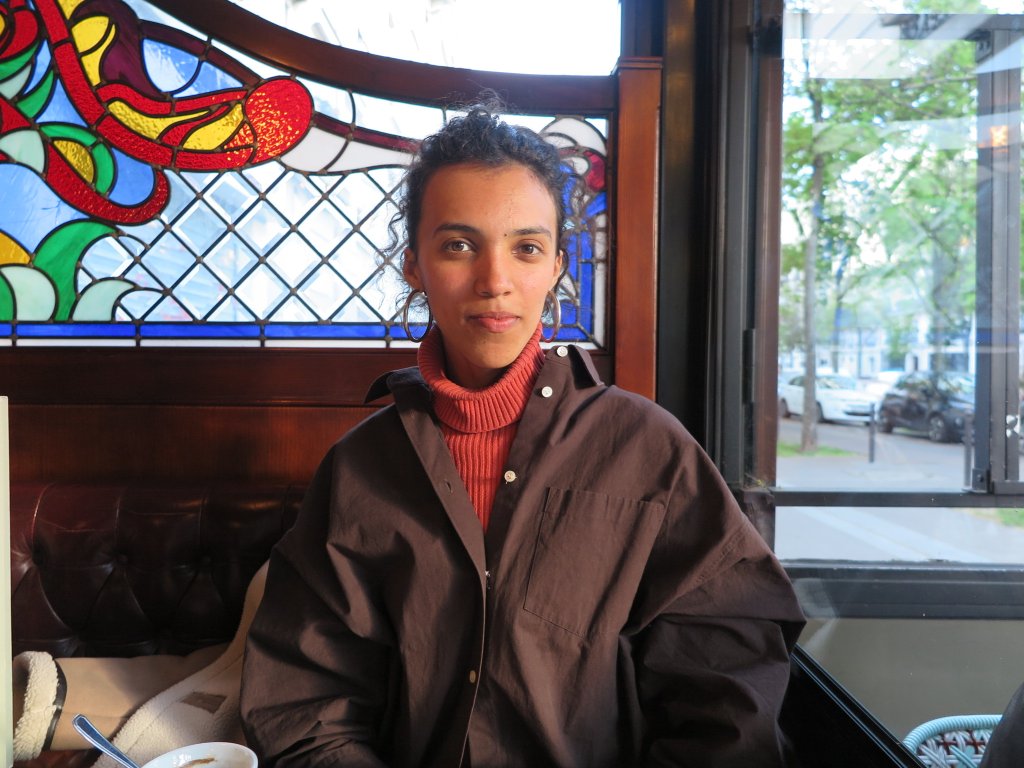
The impetus for the piece "comes from my personal history," Himmer said from an Irish pub near La République in Paris. With a father from mainland France, and a mother from Martinique, a Caribbean island colonized by France several centuries ago, Himmer often felt caught between the two places and "never really belonging to either".
She wanted the piece to evoke Martinique and what it felt like to float between two territories. "The economic conditions in Martinique are not favorable for people to stay at home, so they have to leave. Yet once they are in France, it’s difficult to make the reverse trip," she said.
During trips to visit her mother’s family on the island, Himmer felt like an outsider because of the language barrier. While French is the national language, most families prefer to use Creole at home. "My cousins would speak to me in Creole and when they saw I didn’t understand, there was a form of rejection. It wasn’t conscious but it was still there," she said.
There was also the tension between not being completely white, but not being completely black either; not being completely French, but not being completely Martinican either. "For the longest time, I thought of myself as white, because I have always lived here [in France] and I have always lived in ‘white contexts’. I wasn’t thinking about colors; I wasn’t thinking about the difference. I thought of it only when others referred to it."
While she was attending "a very white school", it was in the context of presidential elections that a far-right candidate from the National Rally began gaining ground. Himmer remembered how one of her classmates asked her if she planned to go home if he won. "It was a slap in the face, because I am at home here in France, and she was implying that I maybe didn’t have my place here.”
Wave addresses this feeling of alienation. During workshops, Himmer asked the dancers to express certain emotions through movements. They each reacted differently. "The simple question ‘where are you from?’ can sometimes set a basis for exclusion, because it implies someone isn’t where they belong," said the choreographer.
The far-right calls for a return to the past
The crowds that gather during far-right rallies in France like to repeat the slogan: "On est chez nous! On est chez nous!" ("We are at home"). They wouldn’t proclaim this so arduously if they were simply stating the obvious, wrote the demographic sociologist François Héran in his book "Facing immigration, the scholar and the politician".
"What they are calling for is a return to the past, that of a world where everyone is in their place, a world without immigrants, a world where locals (or those reputed as such) ruled. ‘We are at home’ is not so much of an observation as it is a demand," according to Héran.
Read AlsoEurope's far right: The systematic and well-funded manufacturing of fear of migrants
Himmer has a different vision. She often wonders how some people can feel so legitimate in their feelings of belonging that they exclude others from it. She admires the Franco-Senegalese slammer Souleymane Diamanka, who published a collection of poems in 2021 titled "Inhabitant of nowhere, originally from everywhere", which celebrates belonging to a community with no borders- that of humanity.
Calm after the storm
The same spirit of nomadism and mixing of different cultures with their traditions naturally found its way to the "Wave" performance.
Himmer, Guce and Madinia Grand recently performed the dance at the University of Nanterre, in the west of Paris. Natural light that flooded the atrium where they danced, and the sounds of bubbling, waves, and large amounts of water shifting created a sort of aquatic universe. In the first act, the dancers moved together like a school of fish.
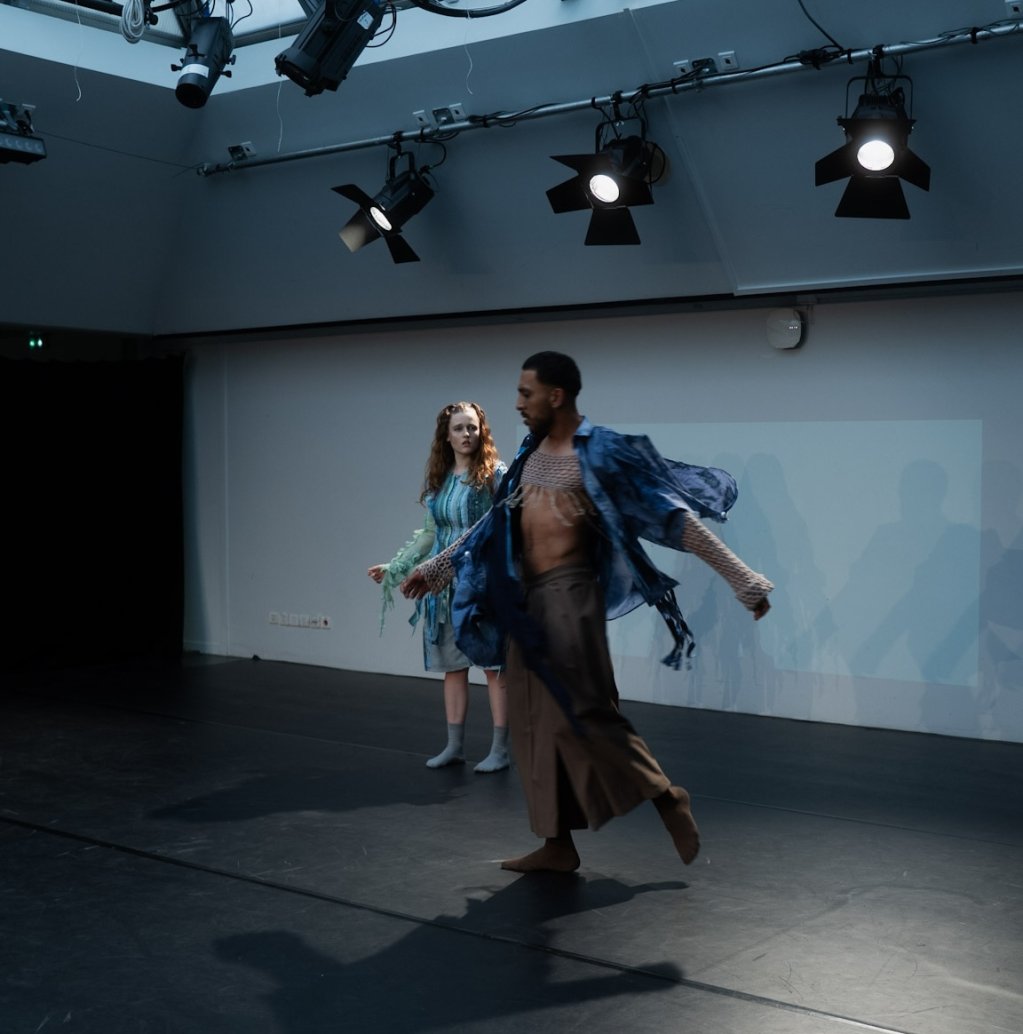
Their movements were sharp and rapid, as they veered from left to right, and from right to left, as if to avoid predators in the vicinity. “It’s always easier to be part of a group,” Himmer had said earlier. “Yet being excluded from the group pushes one to act, in some cases. It really makes you want to make waves and to assert one’s individuality.”
The next “wave”, titled “the trough of the wave”, represented the despair of not belonging. Guce danced tremulously, as if on the edge of an abyss. Madinia Grand caught him as he fell and even carried him at one point, like friends sometimes carry each other over troubled waters.
Read AlsoWestern Balkans: Managing migration and return hubs discussed at London summit
Then came a shifting of moods. Guce, who is from Albania, performed a traditional Balkan dance while wearing a shimmering blue scarf tied around his waist. His movements were nostalgic yet assertive, light but determined. Like the breeze that crosses over the ocean's surface, the dance held a promise of calm after the storm.
The body as the only source of truth
"We talked so much about these feelings (of belonging) that they left traces on our body," said Guce after the dance. “During the dance workshop, we were not just expressing ideas, but embodying them through gestures, tensions, releases and connections with others.”
The body is indeed a memory space. The major Polish plastic artist Alina Szapocznikow, detained in a concentration camp as an adolescent during World War II, refused to talk about her experiences there. Yet she later moved to France and began making molds from her body and from the bodies of her close ones. She famously said her work focused on the human body, in “its vaguest and most ephemeral sensations [. .. ] and the only source of all joy, all suffering and all truth”.
Dance contains the same power. If some memories are too difficult to express with words, dance "can become a beautiful tool to release them, reconnect with oneself, and in some way, begin to heal", Guce said.
Through its vitality and cyclical nature, "Wave" is a reminder that joy can come in conclusion of a personal history. A wave always turns over and rises again.