
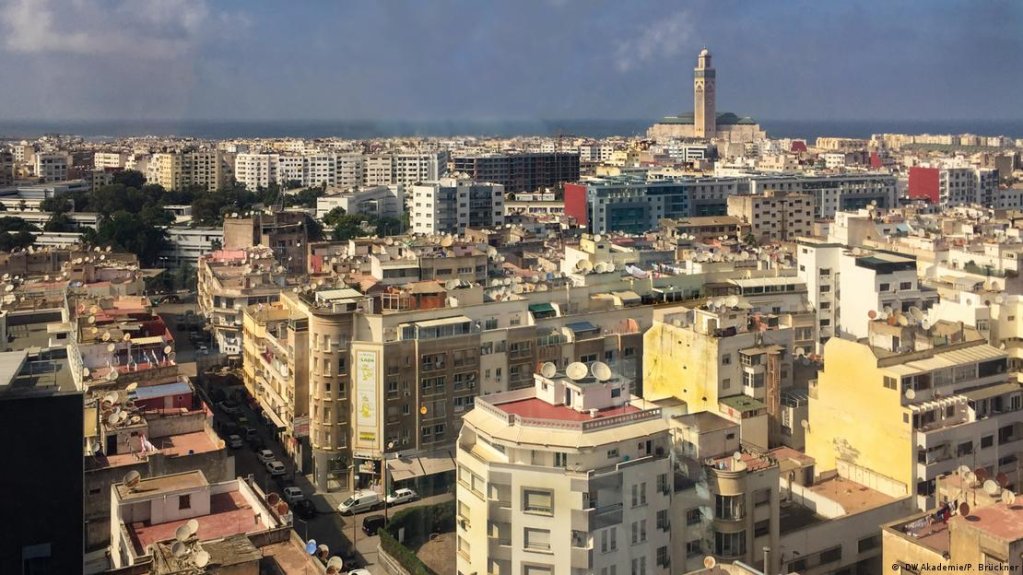
For years, Morocco has been a transit country for migrants — mostly from sub-Saharan Africa — hoping to reach Europe. But that is now changing, as more and more people are choosing to stay in the North African nation for longer periods, with some even establishing their permanent new homes there. The country's agriculture sector in particular has come to rely on these migrants, the majority of whom hail from other French-speaking nations in West Africa.
Morocco's gradual change from a transit nation to a destination for migrants is supported by certain demographic trends within the country, which affect broader migration patterns: the urbanization of the North African country has witnessed large numbers of people moving to cities to take up jobs, abandoning rural industries such as agriculture and farming, which in turn creates opportunities for migrants from other countries.
Heightened border controls at sea by Moroccan authorities, closely coordinated with European partners, have also made dangerous sea crossings to the European Union more difficult, resulting in migrants simply getting stuck in Morocco in the long term and trying to make the best of the situation by searching for work there.
Read AlsoMorocco intercepted fewer irregular migration attempts in 2025
The exact extent of the trend is difficult to quantify, as nearly three quarters of migrants who remain in Morocco engage in illegal work, as Moroccan authorities continue to show reluctance in regularizing people. Nor do official migration statistics reflect irregular migration numbers.
The Reuters news agency says however that according to farmers and officials in various rural regions of the country, changes in economic and social conditions have resulted in a notable shift of migration demographics.
Read AlsoMorocco's mounting role as EU-migration gatekeeper
'Forced' to find a home in rural Morocco
Reuters visited a particular agricultural facility near the coastal town of Agadir, where migrants now plug major shortages in the work force.
Over 24,000 hectares of greenhouse facilities fill the Chtouka plains in the Souss-Massa region, located about 50 kilometers south of Agadir, where over 80 percent of Morocco's fruit and vegetable exports are produced. The area's economic power is considerable.
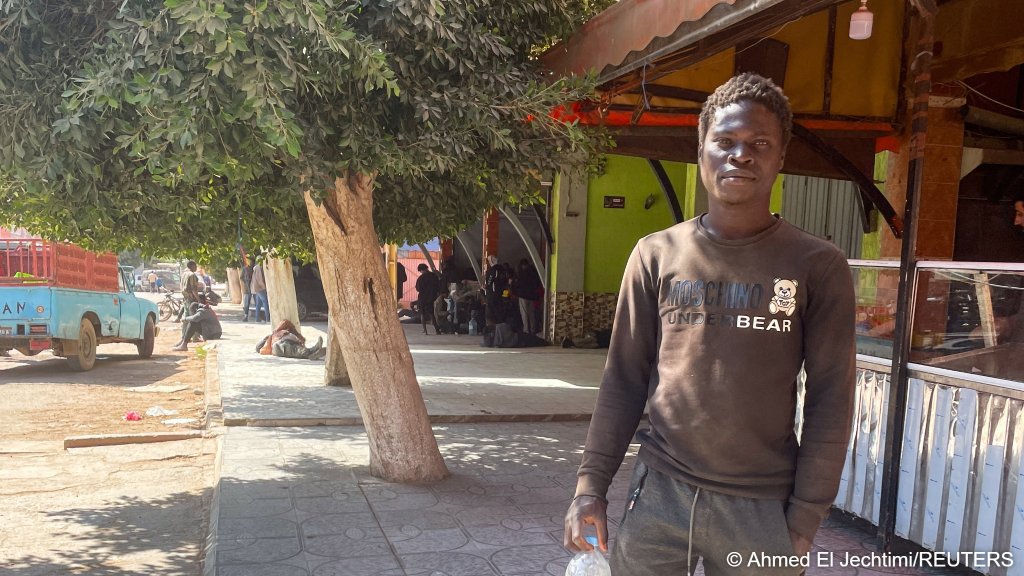
One of the migrants who has found work here is Abdulfattah Aliou, a 23-year-old migrant from Togo, whose story is similar to that of many irregular migrants stuck in Morocco.
Aliou told Reuters that he had originally tried to reach the EU by entering one of the Spanish enclaves in the very north of Morocco — where he was intercepted by Spanish border guards and sent back to Morocco.
Read AlsoCeuta migrant center overwhelmed as arrivals from Morocco increase
In Morocco, authorities packed Aliou and other migrants onto a bus and sent him further south in the country to discourage repeated attempts at crossing into the EU; some human rights groups have decried this practise as an "internal pushback," highlighting that it can interfere with the right to claiming asylum.
Once he found himself in the region, he heard of jobs being offered in agriculture and tried his luck.
"Working is better than asking for charity in the streets," he told Reuters after completing a work shift at a tomato farm.
'Europe can wait'
Alioun Dialou is another migrant who has set roots in the region: The 48-year-old Senegalese national has been working on farms across the region for nearly 20 years.
He has witnessed the demographic change in the region with his own eyes: Dialou lives in the town of Ait Amir in the Souss-Massa region, where the local population has quadrupled to 113,000 since the late 1990s, driven by an increase in migrant labor.
He is currently sleeping rough, trying to save money for some essentials, including a phone to keep in touch with his family back home and sturdy shoes for his feet; but he has no real designs on leaving the area, at least for the time being:
"I have to earn some money to live and rest a little bit," he told Reuters, musing about his future: "I will try Europe later."
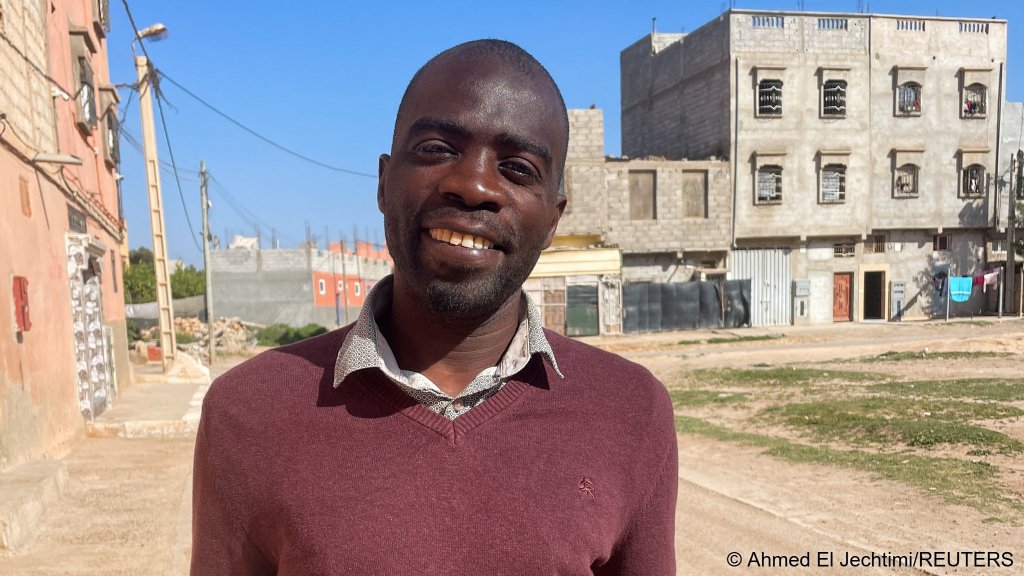
The Senegalese man had once hoped to make it to somewhere in Europe; now, he has an 11-year-old daughter in a local school in Morocco, who in addition to French speaks the regional Amazigh language and Moroccan Arabic.
For the vast majority of Dialou's adult life, this place has been his home; as Moroccan nationals abandoned the streets of Ait Amir over the years, people like him moved in — and are there to stay.
Moroccans hunger for the city
Many of the Moroccans who sought work in cities since the beginning of the century didn't do so voluntarily: Years of drought had nearly decimated the North African country's farming sector.
In Moroccan cities like Tangier, Rabat, and Casablanca, which have in recent years grown by one percent annually, many Moroccans have long forged new lives with little to return to in the countryside.
In total, 1.7 million jobs in agriculture were lost to the effects of drought since 2000, affecting those in subsistence farming in particular, according to official statistics cited by Reuters. The number of Moroccans actively involved in agriculture was halved over the past two decades.
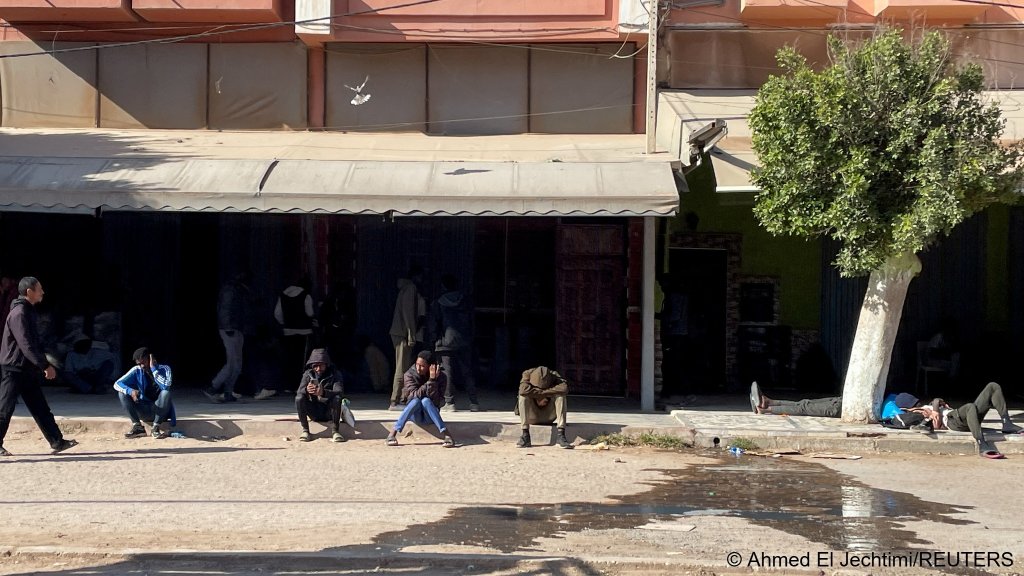
Rachid Benali, the head of the national farm producers' confederation, COMADER, said that there is little hope for reversal in this trend: "Once people get used to urban life, it is hard to bring them back to work on farms in rural areas."
But then after many years, the drought ended — and suddenly, farmhands were hard to find. The demand for workers also pushed up prices for their services, with many farmers reporting that Moroccan farmers would ask for higher wages.
Migrants like Aliou meanwhile work for a pittance: According to Reuters, they make less than a fifth of the going rate compared to Moroccans.
Abdelaziz El Maanaoui, the head of a producers' association in the Chtouka plains, told Reuters that the industry has come to rely on immigrant labor: "Without sub-Saharan labor, a number of farms could have shut down or been forced to reduce output," he explained.
Read AlsoMorocco, a reference point for EU on migrants and fight against terrorism
Initiative to regularize migrant workers
With agriculture relying on irregular migrant labor, there are calls now to ease the regularization of an estimated 150,000 people in Morocco; El Maanaoui says he supports the motion, pointing also at the future of the industry:
Fertility rates among Moroccans have sunk to new lows, with a population decline now actively in the making.
This means that labor shortages are going to continue to affect people like El Maanaoui even more in the future — something that could be mitigated with the help of foreign labor.
Furthermore, the urbanization trend only continues: Morocco's government has been investing heavily on boosting its urban infrastructure, building new railways, roads and airports.
Benali told Reuters that a "structural shortage of both qualified and unqualified agricultural labor across the country" puts the competitiveness of Morocco's agriculture at serious risk.
Advocating for the regularization of migrants to fill the gaps, he said, that "Morocco no longer has the advantage of cheap labor."
As more and more migrants continue to replace Moroccans in agriculture, that erstwhile 'advantage' of cheap labor looks increasingly like a luxury that the North African nation will not be able to afford.
Read AlsoEU-Maghreb ties: Reversing the old power asymmetry
This article was based on a feature from the news agency Reuters