
The French Minister of the Interior, Laurent Nuñez, unveiled a "comprehensive plan" to speed up the processing of residence permit renewals, while 930,000 people's files are currently waiting. With the digitization of procedures via the ANEF, thousands of migrants are struggling to renew their papers with the prefectures and find themselves deprived of their rights as a consequence.
The French Minister of the Interior, Laurent Nuñez, announced on April 10 in an interview with French newspaper Le Figaro a "global plan" so that foreigners who have a right to stay in France do not find themselves deprived of their rights when renewing their residence permits.
"The objective is to halve the processing time for residence permits: 55 days on average, compared to 117 last year," explains the minister. According to a state notice to prefects, for a third of the prefectures, this deadline even exceeds 120 days.
This five-page text underlines "the priority" of "the fight against rights violations” when renewing residence cards, "in particular for those who fall under professional immigration status.”
Simplify procedures
One of the key measures is the recruitment of 500 temporary workers, "an increase of more than 20 percent" in the workforce, as well as two million euros in overtime pay.
There are currently 930,000 files pending, according to the ministry. In 2025, 955,000 renewals of residence permits were granted, including 205,000 for economic reasons and 366,000 for family reasons.
The Minister of the Interior also wants to simplify procedures: thus, it is planned to no longer ask foreigners in a legal situation to declare their changes of address and to update the list of documents necessary for the renewal of their title.
In its instruction, the Ministry of the Interior also recommends automating the renewal of certificates.
The measures also plan to increase the validity of biometric fingerprints to ten years (instead of five), better management of case files, and puts special attention on local experiments in digital technology (conversational agents, software, etc).
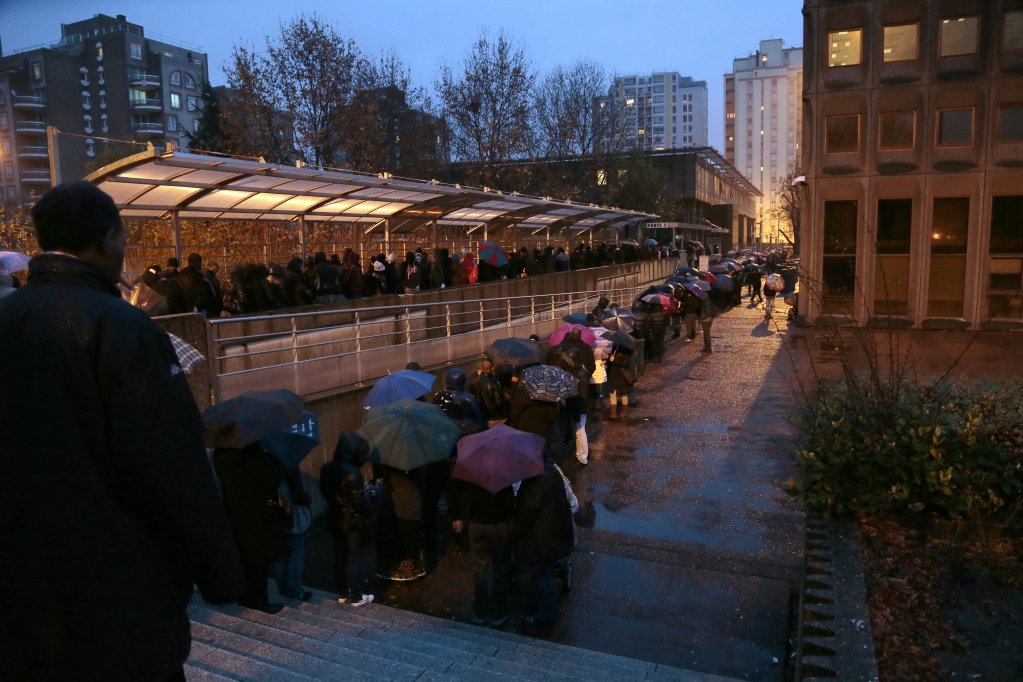
More broadly, it is planned that the first issuance of long-term titles will be "systematized when the basic conditions are met", and to "differentiate the degree of control of files" by adapting the procedures "according to exposure to fraud". This fight against fraud, as well as the preservation of security and public order, "will not tolerate any change," the text says.
ANEF 'dysfunction' challenged before the Council of State
The Ministry of the Interior's plan also hopes to "evolve" the platform of the Digital Administration for Foreigners in France (ANEF), an online portal established in 2021, and much criticized for its 'dysfunctions.'
Between computer bugs, administrative blocks and the lack of human response, the use of ANEF often turns into a nightmare for foreigners in France. "Thousands of foreigners are placed each year, despite themselves, in an irregular situation, even though they previously had a residence permit," the state ombudswoman said in her annual report, 45 percent of whose referrals now concern the rights of foreigners. With major consequences for their social, work and residence rights for those whose permit expires.
On April 10, the Council of State looked into the dysfunctions of the ANEF, at the request of ten associations, including Secours catholique and Emmaüs. "The stakes are not small" the public rapporteur said, emphasizing that it was also a question of "guaranteeing access to public services" for a category of "particularly vulnerable" users who "often have poor command of French, have few resources and may have experienced serious suffering during (their) migratory journey."
"ANEF deprives the users' rights of any effectiveness through dysfunction," the plaintiffs' lawyer, Me Alice Meier-Bourdeau, argued, welcoming "the firmness of the conclusions of the public rapporteur."
He recommended that the judge order the administration to "take all useful measures" to remedy several of the dysfunctions, in particular regarding the submission of applications for status, and on the deadline for issuing documents proving that an examination is underway to renew one’s immigration status. However, these receipts are crucial to certify the regularity of the residency.
At the end of 2025, nearly 4.5 million foreigners had a valid residence permit, or 8.1 percent of the population, according to Ministry of Interior figures.