
At the beginning of March, the Utopia 56 association criticized the seizure by the French state of the phones of unaccompanied minors who request accommodation. The organization states that many young migrants now prefer to stay on the streets rather than be deprived of their phones. Authorities operating in the area in question consider the measure necessary to protect young people who do not wish to stay in France.
It is a measure supposed to protect young migrants but which risks pushing them away from accommodation solutions. In an Instagram post published on March 9, the Utopia 56 association called out the seizure by the French state of unaccompanied minors (UMAs) phones it houses in Roubaix (northern France).
According to the association, the phones of unaccompanied minors have been being seized when they enter the accommodation at least since June 2025. "This is based on several testimonies from young people that we have received since this summer," Salomé Bahri, coordinator of the Grande-Synthe branch of the association, explained to InfoMigrants. "For all the people for whom we requested shelter, we noticed that the young people had to give their phone before getting into the car or when arriving at the home,” she said.
Questioned by InfoMigrants, the departmental authority confirmed this practice, specifying that "the withdrawal of mobile phones only concerns young people from the coast [i.e. 20 percent of shelters] who say they do not wish to integrate child protection systems but wish to go to England."
The department puts forward several reasons to justify this choice. The objective would be, first of all, to protect young people from smugglers, "who only receive the money once the young person is in England." This should also "allow them to be receptive to discussions on the interest of staying in France." Finally, it would still be a question of "protecting other young people who sometimes face pressure" to leave.
'Refusal to be accommodated'
But, for Utopia 56, the measure has in fact pushed many young people away from seeking accommodation, even temporarily. The association claims to have informed young people about these phone withdrawals. According to the Utopia 56 spokesperson, this information led to "young people turning down accommodation."
According to Salomé Bahri, Utopia 56 collected testimonies from at least 50 minors who preferred to stay on the street rather than give up their phones.
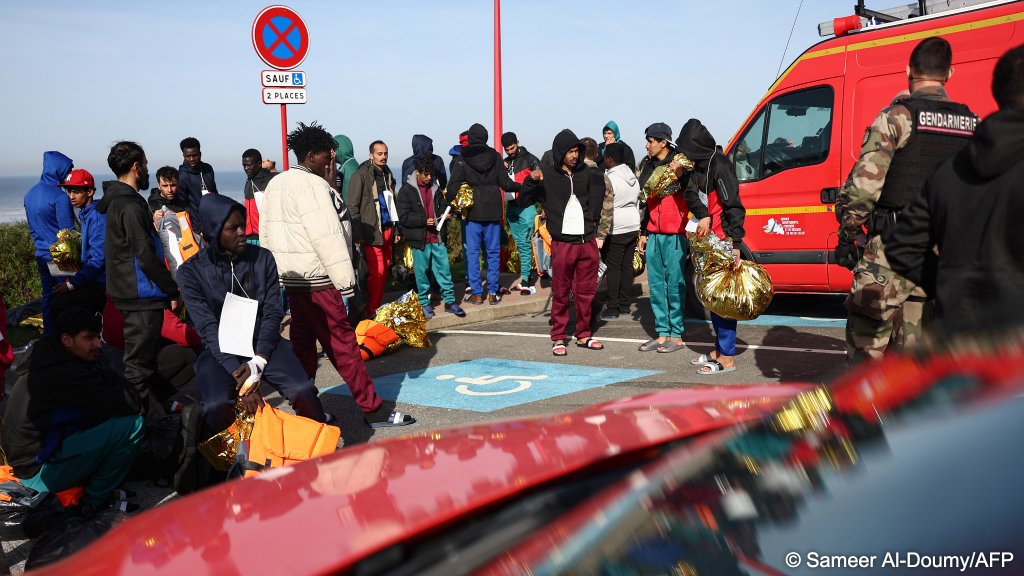
Refusals which would explain, according to the association, that for the first time in three years, the home which welcomes unaccompanied minors in Roubaix has not been over capacity. According to the department, "as of November 31, 2025, 981 minors were in care (including 60 on the shelter site), waiting for a place in a permanent shelter."
'Keeping links with family back home'
However, there are numerous testimonies from migrants, researchers and members of associations stressing the importance of mobile phones for migrants. For people on the street, a telephone is a precious possession. "This allows them to maintain a link with their families back home, to have fun, but also to get information," Salomé Bahri emphasized.
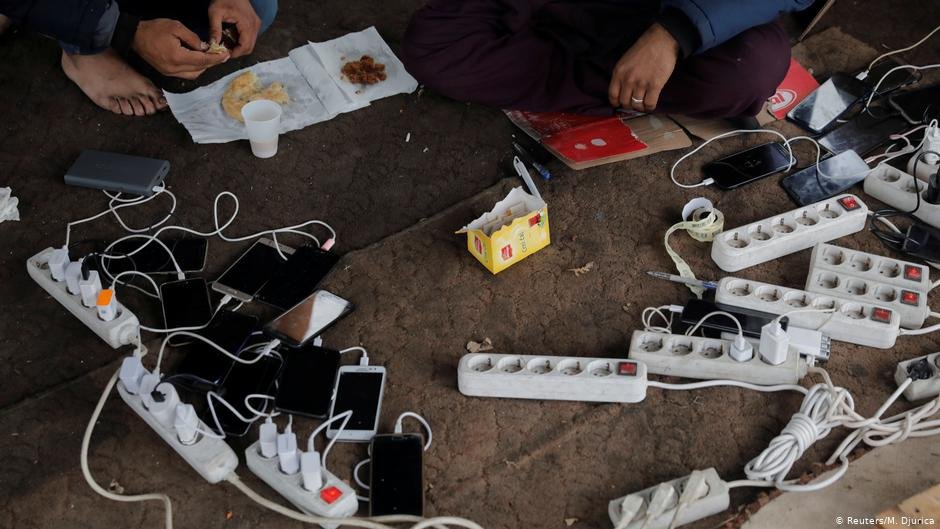
That is particularly the case in the north of France, where migrants are regularly pushed out from their informal living spaces by police, and scattered throughout the region. A precarious daily life which makes it difficult for them to access associations or food distribution points. Their phone thus serves to create a link between migrants and humanitarian workers, and allows this population to find places to meet their essential needs.
"I’m not comfortable giving my phone away. I’m sick and I might need to call someone," a young migrant told Utopia 56 via a text message.
France Terre d'Asile (FTDA) manages several accommodation structures for unaccompanied minors in the Pas-de-Calais region (département). For Serge Durand, in charge of the protection of foreign minors for FTDA, "it is essential that young people have a telephone. At first reception, we ask them if they would like us to call their parents to say that they have arrived," he explained.
For the manager, it is the role of the patrolling teams to offer accommodation to young people but also to "discuss child protection," "to talk about trafficking" or even "to remove young people from groups of adults where we know they can be put under pressure."
Finally, a mobile phone is also essential for carrying out administrative procedures in France or alerting emergency services in the event of danger when crossing the Channel.