
Afghan migrants in Poland are increasingly concerned about possible forced deportations after authorities restricted access to asylum procedures for those who entered via the Belarus border, a move rights groups say is being applied broadly and may conflict with international protections. The situation comes amid broader EU efforts to tighten migration policy and expand offshore return systems.
Afghan migrants held in detention centers across Poland report living in growing fear of forced deportations to Afghanistan, where they warn they could face persecution or death under Taliban rule. Migrant concerns have intensified after Poland moved to partially suspend access to asylum procedures at its eastern border, a policy rights groups warn is being applied far more broadly than initially stated, the news agency Associated Press (AP) reports.
Rights organizations say the measures, introduced in March 2025, have effectively blocked many people who entered via the Belarus border from even lodging protection claims. The policy is rooted in amended legislation allowing temporary restrictions on asylum applications at the frontier, justified by authorities as a response to what they describe as a hybrid migration pressure orchestrated by Belarus and its ally Russia. For those detained, the consequences are immediate.
Read AlsoEurope's far right: The systematic and well-funded manufacturing of fear of migrants
Suspending access to asylum undermines principle of non-refoulement
According to AP, the Polish Interior Ministry did not respond to their requests for comment on deportations of Afghans or how the restrictions are being implemented in practice.
Legal experts, including Poland’s Ombudsman and the UN refugee agency UNHCR, have warned the policy risks violating international obligations under the 1951 Refugee Convention, which requires individualized assessment of asylum claims. They argue that suspending access to asylum, even temporarily, undermines the principle of non-refoulement, which prohibits returning people to places where they face serious harm.
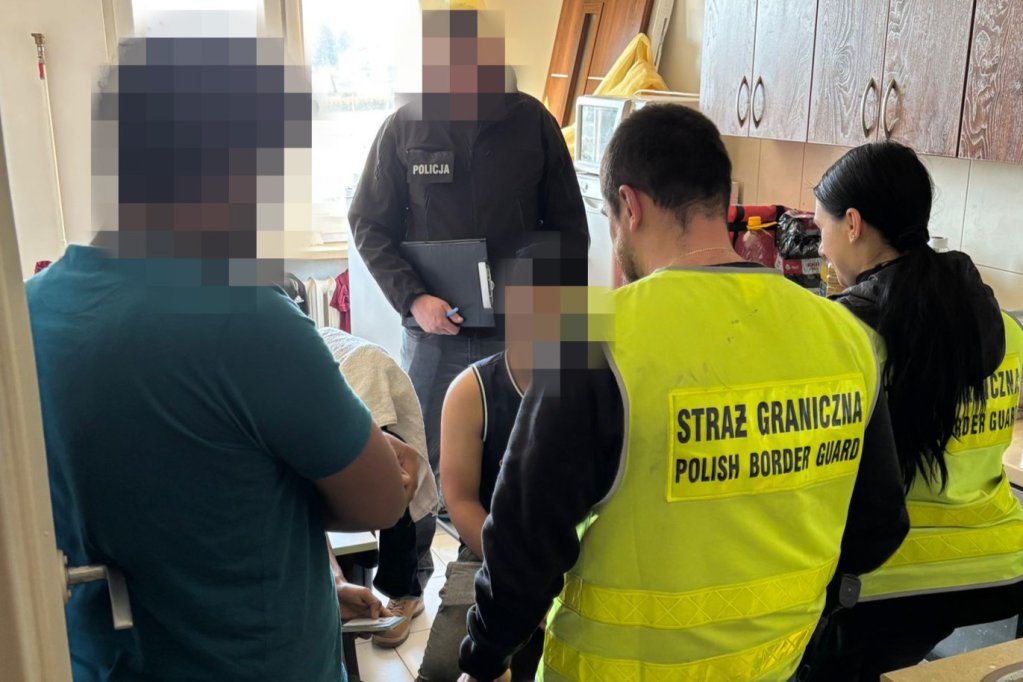
The Council of Europe’s Commissioner for Human Rights, Michael O’Flaherty, also raised concern in an April 1 letter, noting reports of removals of Afghans without access to asylum procedures. "In this regard, I note information about the recent removal of a group of Afghan nationals from Poland to Afghanistan, who were not provided with an opportunity to lodge asylum applications," he wrote.
Read AlsoEU reported to be considering 12 possible countries to site migrant 'return hubs'
'I tried more than a billion times to seek safety'
Polish authorities, including Prime Minister Donald Tusk, have defended the measures as necessary to address security risks along the Belarus border, where tens of thousands of migrants have attempted crossings in recent years.
A 20-something Afghan detainee said he believes the rules are being applied broadly, not only at the border but also inside the country. According to AP, he was apprehended after traveling onward to Germany and later returned to Poland under EU rules, only to face removal proceedings. "I tried more than a billion times to seek safety," he repeated, describing his situation as a legal dead end. He said Taliban fighters killed his father and that he himself had been detained and beaten before fleeing. The man, who asked not to be identified for fear of deportation, said his family remains in hiding in Afghanistan. The Afghan man interviewed by AP said he now believes deportation is imminent. A friend of his, he added, was recently returned to Afghanistan and has not been heard from since.
About 120 Afghans are currently held in Polish detention centers, even as EU-level data suggests Afghan asylum seekers have relatively high recognition rates across Europe. Roughly 65 percent of Afghans who apply for asylum are granted protection across Europe, according to data from the EU Agency for Asylum, meaning that their claims are generally accepted in other EU member states. However, according to Germany's Federal Ministry of the Interior, young men from Afghanistan are now rarely granted protection status in Germany. Though the adjusted protection rate for Afghan applicants aged 18 to 40 was still 66.6 percent in January 2025, it had dropped to 16.2 percent by January this year.
'Poland never analyzed their reasons for asking for protection'
Tomasz Sieniow of the Foundation Institute for the Rule of Law, a non-governmental organization, said he was present on a flight last Friday that Polish authorities intended to use to deport nine Afghans to their home country via Uzbekistan. Accordig to AP, he said that the European Court of Human Rights had issued orders requesting that Poland halt the removals. However, officials ultimately removed only six of the nine Afghans from the flight.
Sieniow added that many Afghans held in detention in Poland previously worked with the former US-backed Afghan government that collapsed when the Taliban took control in August 2021, or had ties to US or NATO forces. He argued that these individuals, along with their families, "should not be removed," and said that "Poland never analyzed their reasons for asking for protection."
Read AlsoRefugee numbers in Germany dip slightly for first time since 2011
Migrants enter Poland via tunnel in Belarus
Separately, the EU border agency Frontex has expressed concern over return operations. Its monitors previously withdrew from a deportation flight after questions were raised about whether asylum procedures had been properly followed. "We have to make sure that people that are returned have fully gone through the entire asylum procedure as per EU law," said Frontex spokesperson Krzysztof Borowski.
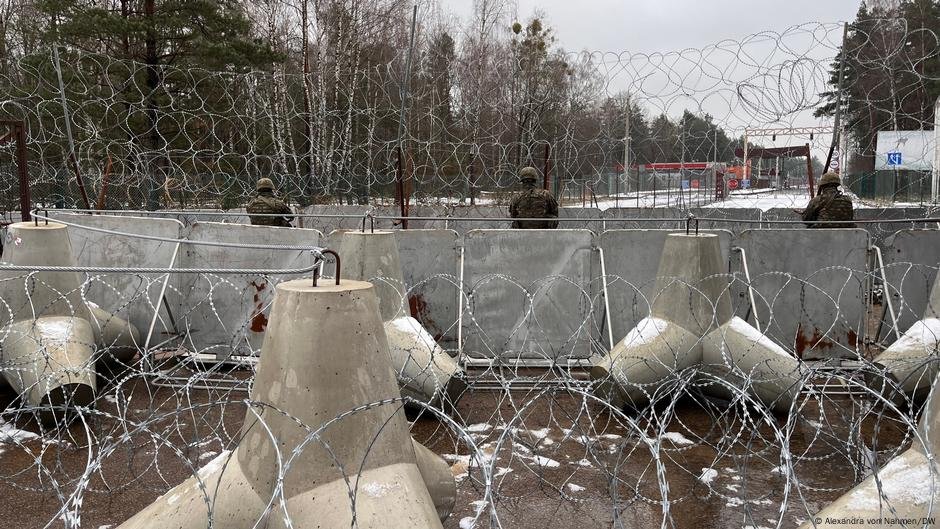
The current tensions come against the backdrop of continued irregular crossings further east from Belarus into Poland. In December 2025, more than 180 migrants entered Poland through a tunnel dug beneath the forested border area, with Polish border guards later discovering a narrow passage reinforced with wood and metal supports. Dozens were detained, while others initially escaped.
Poland has experienced sustained irregular migration arrivals along its Belarus border since 2021, and has accused Minsk and Moscow of encouraging crossings to destabilize the country and the broader European Union. Belarus and Russia deny the allegations.
Read AlsoLithuania: Operation launched after 30 migrants attempt to enter country from Belarus
EU shifts toward externalized 'return hubs'
The situation in Poland also reflects a broader shift in migration policy across the EU, where governments are increasingly seeking tactics to deport migrants and considering "return hubs" in third countries outside Europe to process rejected asylum seekers.
Under proposals discussed in Brussels, migrants whose claims are denied could be transferred to facilities in countries outside the EU, including on the African continent and other regions, as part of a wider effort to speed up deportations and reduce arrivals. The approach mirrors arrangements already being explored or implemented by several member states and has drawn criticism from human rights organizations, who warn it risks weakening legal protections and expanding detention systems beyond EU oversight.
Supporters argue the measures are necessary to deter irregular migration and manage political pressure across the bloc, particularly after a rise in support for anti-immigration parties in several European countries.
The combination of border pushbacks, accelerated removals, and offshore processing marks a significant shift in Europe’s asylum system, one that rights groups argue not only leaves vulnerable migrants, including Afghans in Poland, increasingly trapped between borders and bureaucracy, but also at risk of having their rights stripped and their safety compromised.
With AFP and Reuters