
For many newcomers in Germany, learning German is the first step toward building a new life. But Germany has now frozen access to free integration courses for many asylum seekers and refugees, leaving an estimated 129,500 people in limbo. Those stuck in reception centers say they fear becoming even more isolated.
For years, German lessons have structured the days of many asylum seekers housed in Germany’s initial reception centers.
Faced with movement restrictions and, in most cases, a work ban for at least six months, those stuck in limbo could at least hope to join government subsidized 'integration courses' involving 600 hours of German language class and a module on 'living in Germany'.
Access has always been uneven. But in February, the German Federal Office for Migration and Refugees (BAMF) informed integration course providers in a circular that no new participants could be admitted for the current fiscal year until further notice, unless they were legally required to attend the course.
"I feel lost, I can’t do anything without this," said a young man from Cameroon who applied for asylum in January, and did not wish to be identified for fear of impacting the outcome of his application.
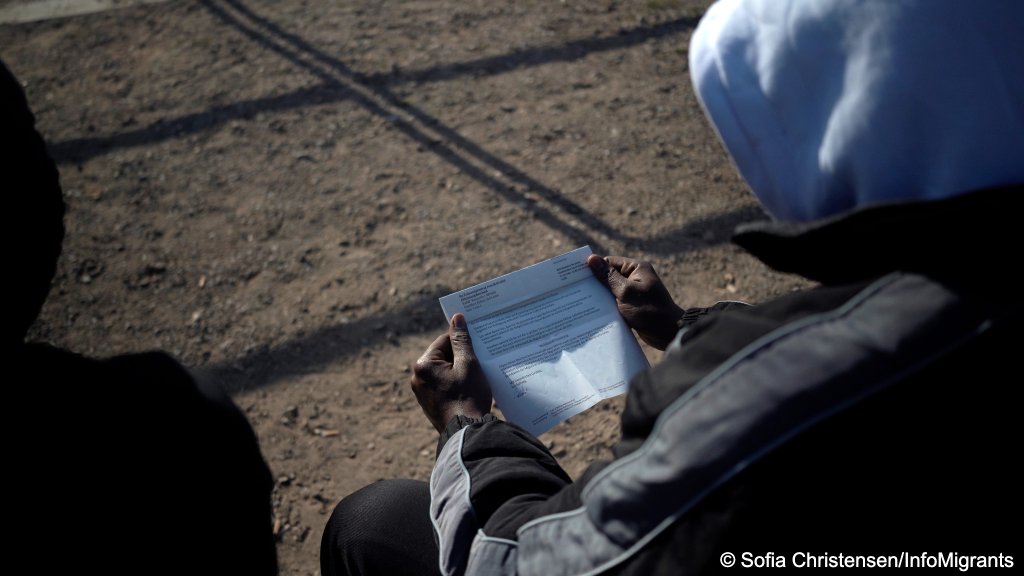
Clutching a letter from BAMF declining his request to join an integration course, he said he still tried to learn German through online videos and language apps. The full subsidized course costs 1,645 euros, more than eight times the monthly stipend he gets from the state.
"I bought a notebook and a pen to write down words… but my pronunciation is weak, it is not the same as learning in person," he said, nervously pulling up the hood of his sweater.
Read AlsoGermany cuts funding for integration of refugees
German government toughens stance on migration
The freeze is among a recent string of restrictions in Germany, underscoring a rise in anti-immigrant sentiment across Europe for the past decade that has bolstered support for the far-right.
Like many European countries, Germany’s conservative-led government has toughened its stance on migration since it took office in May 2025, pledging to speed up asylum procedures and deportations, curb irregular border crossings and cut asylum benefits.
A series of measures are being implemented, including expanding the scope for asylum procedures to be carried out directly at airports, removing funds for legal counselling and overhauling access to integration courses.
The latter is estimated to affect 129,500 people who would have been eligible but will now be prevented from starting an integration course, according to government figures based on calculations for the 2026 budget year. Of these, 55,800 are asylum applicants and 16,700 are Ukrainian refugees. The rest are EU citizens or non-EU citizens who are neither asylum seekers nor from Ukraine, as well as those holding a 'Duldung' (deportation ban).
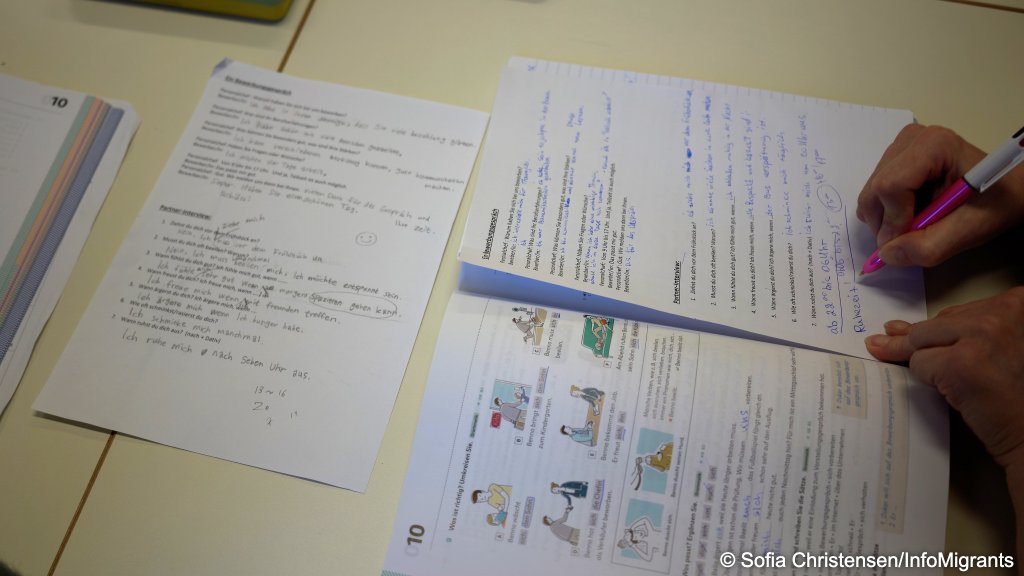
Another man from Cameroon, also affected, said he felt equally distressed. Both have university degrees and moved to Germany hoping to stay and find better paid work.
"There are people who arrived before us and took the integration course. Thanks to this they are able to get by, communicate and even find work," he told InfoMigrants.
"Not having integration courses prevents me from meeting people, and being very isolated is not easy."
Reducing the 'wrong type of incentives'
Germany’s interior ministry said integration courses would continue, but that access was being reviewed due to an overall drop in the number of arrivals, and because course budgets had regularly been exceeded in recent years.
Asylum applications fell by more than half in 2025 compared to the previous year, official figures showed in January. Interior Minister Alexander Dobrindt attributed the drop to a "clear signal" that migration policy has changed.
An interior ministry spokesperson told InfoMigrants that integration courses would "primarily be given to people with a positive long-term prospect of remaining in Germany."
"We are reducing the wrong type of incentives and setting priorities," the spokesperson said via email.
Around 650 million euros have been earmarked for 2027, according to the interior ministry website. In comparison, the government spent around 1.3 billion euros on financing integration courses last year.
Language skills and access to work
Meanwhile, Germany’s parliament approved a separate reform in February, allowing some asylum seekers to work after three months in Germany rather than the current six.
"Anyone who comes here should be able to work -- and preferably quickly," Dobrindt said via his press office. "The best form of integration is through the workforce. The goal: Participation through employment."
Labor market researchers have criticized the integration course cuts, saying it will probably make it more difficult for asylum seekers to find jobs – even if they are allowed to seek work sooner – and lower their salary prospects. This would lead to lower tax revenues and higher asylum benefits that could ultimately offset the short-term gains of cutting integration course budgets.
Maye Ehab, a researcher at Germany’s Institute for Employment Research (IAB), told InfoMigrants that women were more likely to suffer from integration course cuts as they typically find work that requires stronger language skills. Migrant men tend to work in transport, construction and logistics, she said, while women seek employment in health, education and cultural sectors.
Studies on employment among refugees show that "what has the most positive effect on women is whether they finished those integration courses," Ehab said.
But even in more manual jobs, "you still need German to speak to your colleagues and understand your contract," she noted.
Read AlsoGermany takes stock of 10 years of integration
'Time and potential of those seeking to integrate is wasted'
Integration courses were introduced in 2005 as part of Germany’s Immigration Act, a major immigration law reform to structure asylum regulations and integrate foreigners living in Germany. They are primarily taught in a vast network of public, non-profit adult education centers known as the ‘Volkshochschule’ (VHS).
More than 3.6 million people have taken part in almost 235,000 integration courses over the past two decades, according to the VHS. A spokesperson told InfoMigrants the BAMF’s moratorium had already triggered widespread course cancellations, and that this would probably affect around half of the courses planned for 2026.
The limbo and funding cuts risk dismantling a system that took years to set up, the spokesperson said, noting that 20,000 teachers could be furloughed or laid off.
"It is currently unclear how reliable and needs-based management of access to integration courses will be guaranteed in the future," the spokesperson said via email. At the same time, the "valuable time and potential" of almost 130,000 people seeking to integrate is being wasted.
Read AlsoGermany: Stricter asylum rules, deportations and rollback of fast-track citizenship
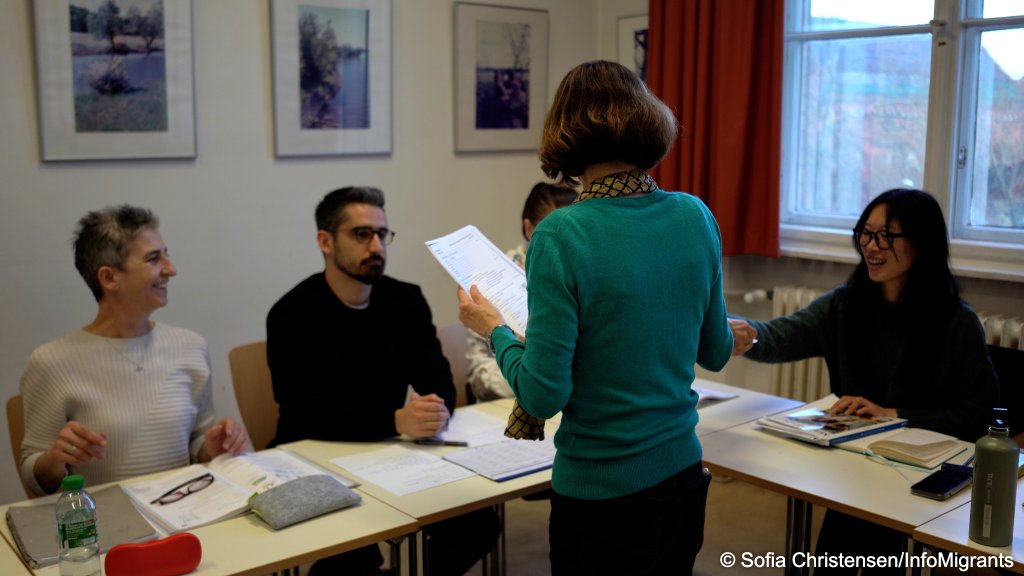
A roll-back in integration
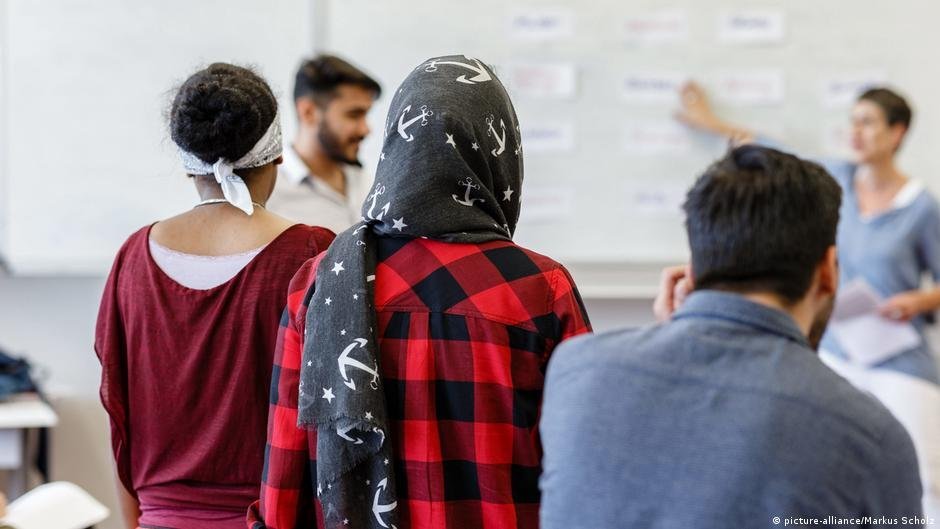
At a VHS in Berlin, integration course teacher Mira Köller fondly recalled how many of her students were then able to train as mechanics, nurses and elderly care workers. Others continued learning German and studied to become social workers.
"It's absurd," Köller said. "On the one hand the ministry of labor is trying to bring skilled workers to Germany from all over the world… and on the other hand, people who are already here in Germany, want to build a life and work, are not given the chance."
Shaking her head while wiping a whiteboard scribbled with German conjugations, Köller said it felt like "one measure among others to roll back the integration of immigrants".
The aim, she said, seems to be for as many people as possible to leave Germany again.
Read AlsoGermany: Integration courses for asylum seekers 'placed on ice'
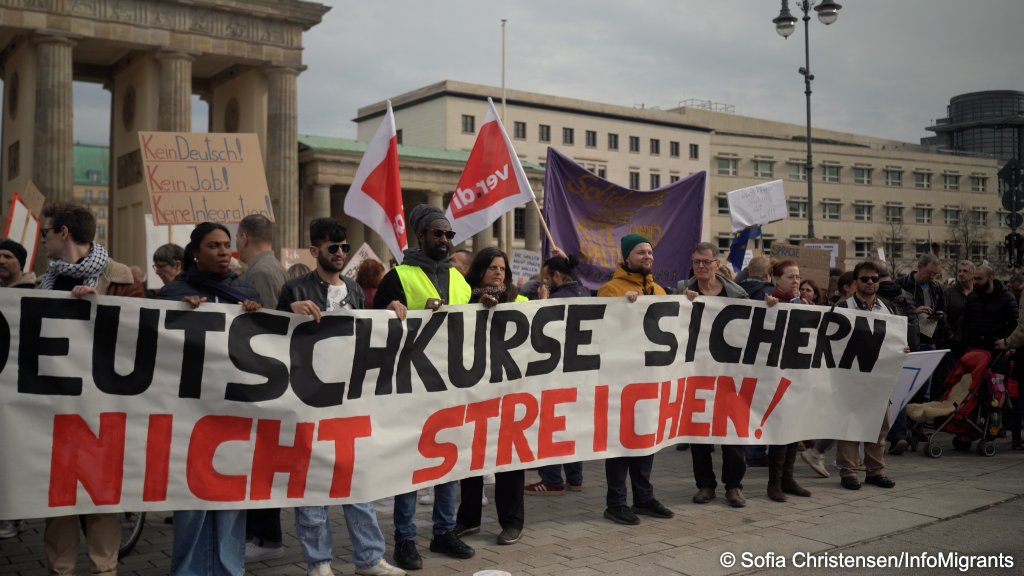
Protests in Berlin
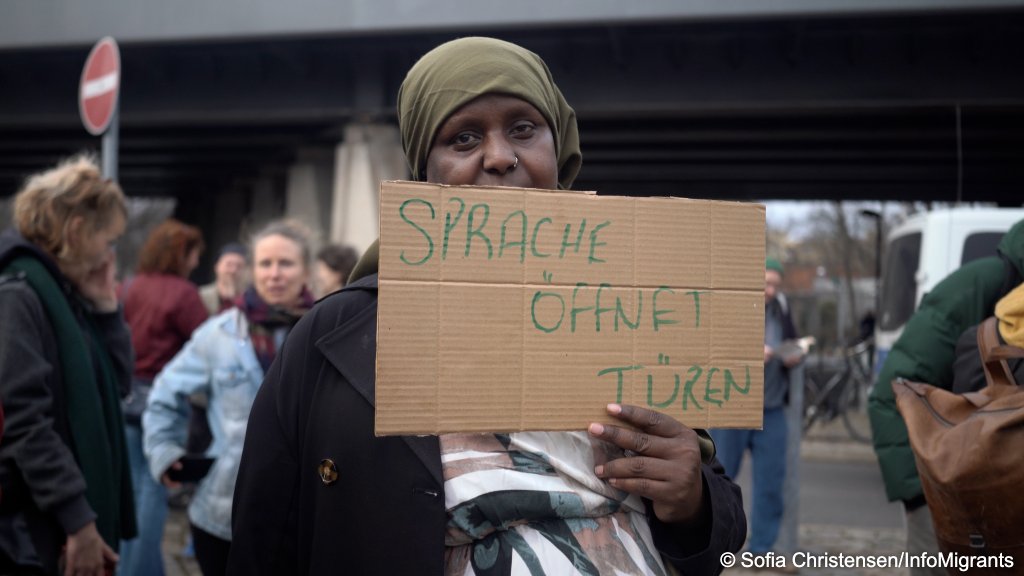
Last month, Köller joined two protests over the issue in Berlin. Dozens took to the streets to denounce the funding cuts and request integration courses for all asylum seekers, regardless of their status or prospects.
Among them was Mohammed Hassan, a Sudanese social worker who came to Germany in 2020 and studied at a VHS. Learning German proved essential to finding work, advancing his career and building a community, he said.
Concerned about political shifts in the country he now calls home, Hassan said he was demonstrating for those who are no longer given the same opportunities.
"They don’t even have the basics of the language, so it will be difficult for them to get a job," he said.
Read AlsoGermany trains immigrant teachers to fill gaps in schools