
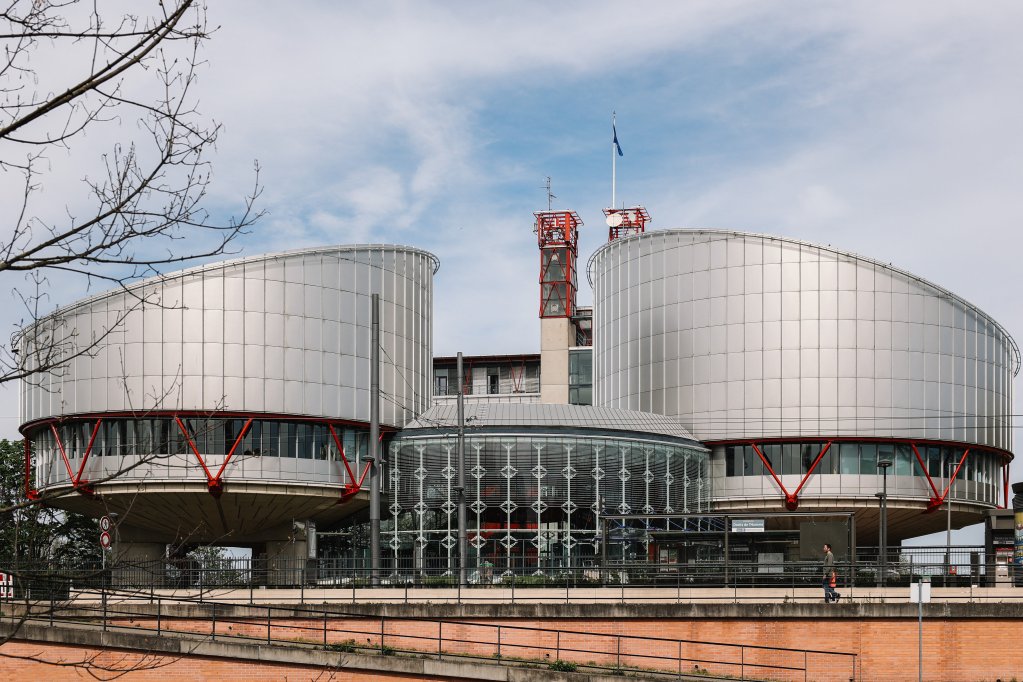
The European Court of Human Rights (ECtHR) has ruled that Belgium's treatment of four asylum seekers amounted to degrading treatment. The defendants had arrived in Belgium from Guinea, Angola, Cameroon, and China in 2022, and told the Strasbourg court that they had not received adequate assistance that year as well as the following year. The ECtHR decision could have implications reaching beyond Belgium.
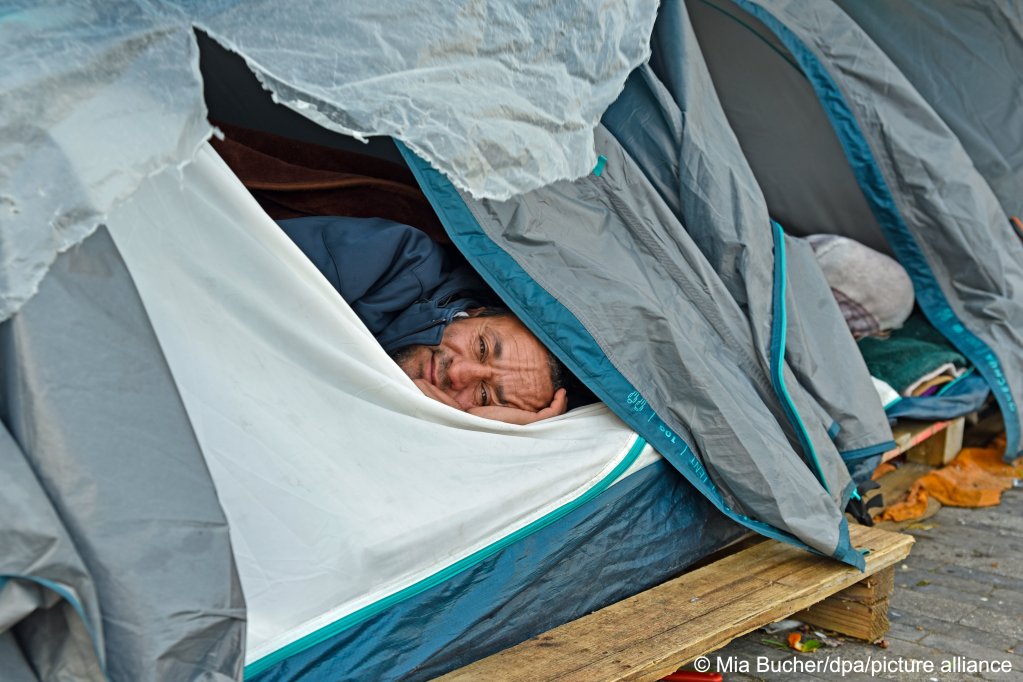
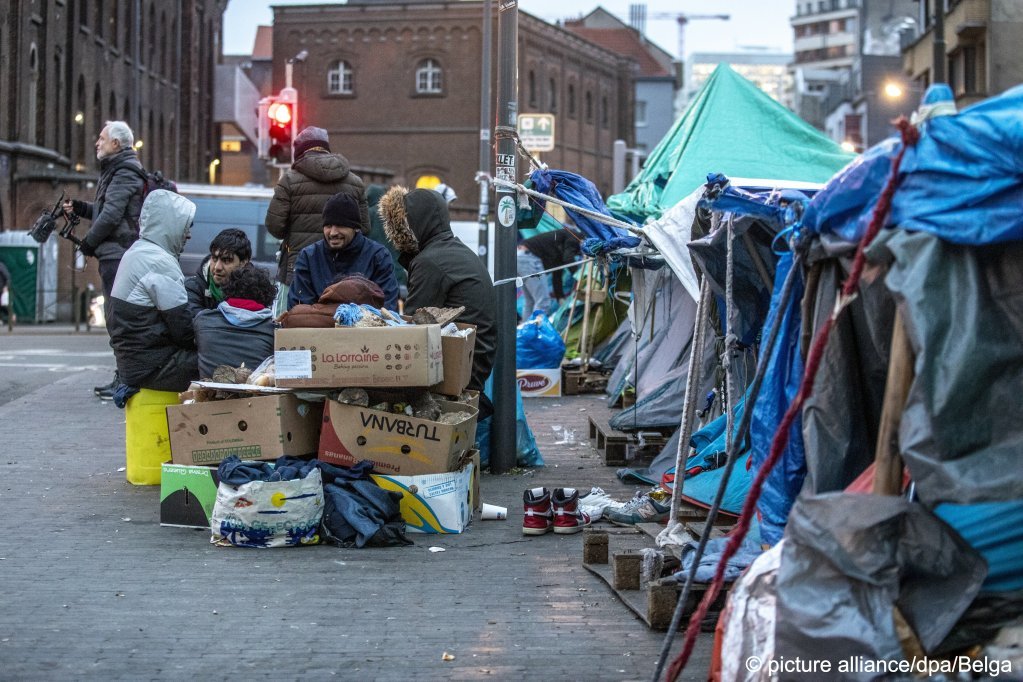
For years, Belgium has been facing a severe shortage of accommodation and reception space for people seeking international protection in the EU nation. This has pushed dozens of asylum seekers to live on the streets, with many having to sleep rough across various parts of the capital, Brussels, for months on end.
Different court rulings have established that the government has to act to change this state of affairs and create adequate reception space for asylum seekers — to little effect.
Four asylum seekers have now succeeded with taking the case to the European Court of Human Rights (ECtHR) in Strasbourg.
Read AlsoBelgium links prison-overcrowding plan to wider migration strategy
ECtHR judges issued a unanimous ruling in their cases, stating that several articles of the European Convention on Human Rights (ECHR) had been violated; they highlighted that the asylum seekers' treatment was, in particular, in violation of Article 3, which prohibits degrading treatment applied to anyone in a country that is a signatory to the ECHR.
Furthermore, the judges also identified a violation of Article 6, which guarantees the right to a fair trial, as the defendants' prior wins at lower courts in Belgium had not been translated into the prescribed action handed down in those respective judgments.
Other ECHR articles that were consulted in the case include Articles 34 and 41.
The ECtHR ruling established that the Belgian government must pay compensation to the four defendants, ranging from just over 5,000 to more than 12,000 euros.
Read AlsoBelgium expands police checks against irregular immigration
ECtHR deems Belgium's inaction not 'reasonable'
The defendants had told ECtHR judges that they had been forced to live on the streets of Brussels, facing unstable and unsustainable conditions; one of the four defendants spent nearly a year living on the streets in the absence of government assistance and care.
Prior to raising their case at the ECtHR, they had already secured binding orders issued by the Brussels Labour Court, which instructed the government to give them a roof over their heads as well as provide them with material assistance — in line with obligations laid out by Belgian law.
Escalating the case to the ECtHR, judges established that authorities in Belgium "must be held responsible for the conditions in which the applicants found themselves for months, including during the winter, living on the streets, without resources, without access to sanitation, having no means of meeting their basic needs and in constant fear for their safety."
The Strasbourg court added that it was "aware of the difficult situation facing the Belgian State" with the current shortage of reception facilities, adding however that officials have had nearly two years to act in these cases, which the ECtHR deemed to not be "reasonable," adding that Belgium's inadequate response to the ongoing reception shortfall was becoming a "systemic" problem.
Furthermore, the ECtHR highlighted the fact that the earlier court decisions had not been enforced to any significant extent, as Belgian authorities had not only failed in providing the asylum seekers with adequate reception spaces upon the labor court ruling but had also ignored to pay the daily penalty payments imposed on the government -- to date.
Read AlsoBelgium Court suspends two measures on newly tightened asylum rules
Belgium's asylum minister blames previous government
Belgium's Minister for Asylum and Migration, Anneleen Van Bossuyt, commented on the decision by stressing that the majority of the shortcomings had taken place during the previous administrative period.
She said in a statement that the events dated back to 2022, "during the previous parliamentary term, in which we were not part of the majority," adding that her party — the New Flemish Alliance (N-VA) — was only part of the opposition at the time.
"In the meantime, essential reforms have been implemented, ensuring a sufficient number of reception places for those entitled to them," van Bossuyt stated, adding however that a series of new measures introduced by her ministry to lower asylum numbers "must be taken to address an untenable situation resulting from years of overly lax policies."
Van Bossuyt has meanwhile been attracting criticism in her own right lately after her ministry recently decided that individuals found to have been granted protection in another EU country already would have any assistance given to them in Belgium immediately stopped.
Read AlsoBelgium: New government to implement 'strictest migration policy ever'
Potential implications beyond Belgium
The ECtHR ruling against Belgium could carry implications for all 46 signatories to the ECHR, i.e. member states of the Council or Europe: First and foremost, the decision could set a legal precedent for other signatory nations to have to abide by and follow.
If any national court of an ECHR signatory therefore were to issue any ruling, ordering the provision of care and housing to a person with an active asylum case, that respective government would now have a difficult time arguing any failings and shortcomings in this area when citing a lack of capacity.
The case also intensifies the spotlight on Belgium and its limited capacities in particular. According to the Dublin-III regulation, EU law dictates that no asylum seekers be sent to any country where they could face a "substantial risk" of the person suffering inhuman or degrading treatment.
This could imply that no one should be sent to Belgium from another EU nation as part of that interpretation; furthermore, as the European Union prepares to roll out its New Pact on Migration and Asylum later this year, it could rule out Belgium as a nation that could benefit from the pact's solidarity mechanism, under which migrants and refugees can be redistributed around the 27-member bloc.
As the EU member state that hosts the bloc's de-facto capital, Belgium might therefore find itself in a contradictory and somewhat embarrassing situation.
Read AlsoEU draws the lines on upcoming migration 'solidarity pool' and how it will be implemented
Legal challenges to Belgium's latest asylum directives
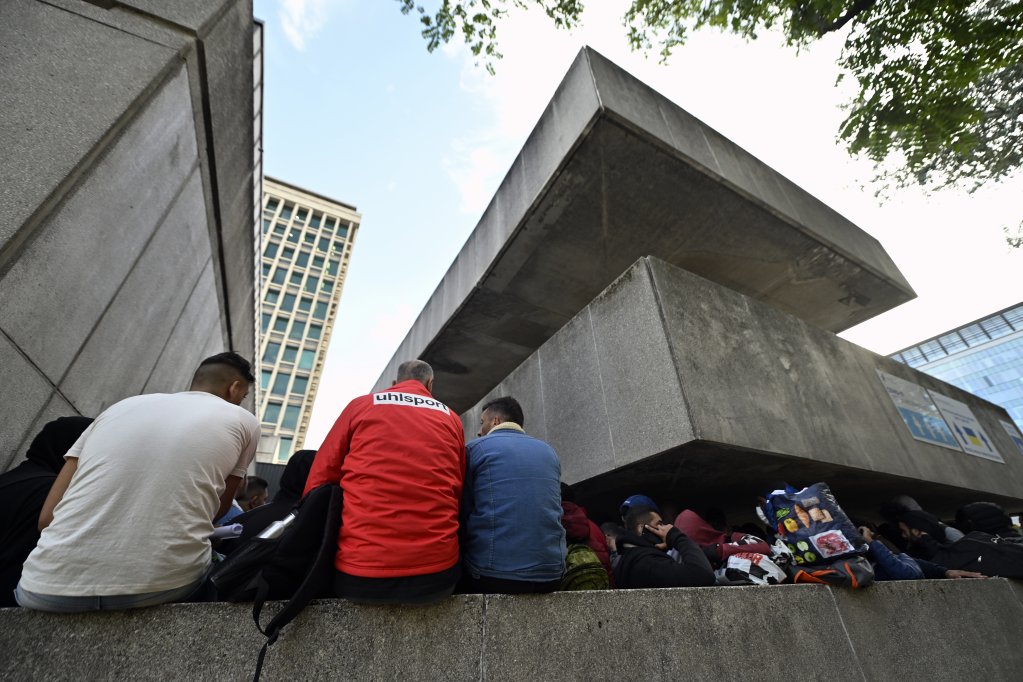
The current controversy in Belgium had been brewing since October 2025, when a court ordered the government to provide accommodation for an Afghan family who had been sleeping on the streets of Brussels since their arrival in the country that summer.
Claiming that the family had already been granted refugee status in another EU nation -- Greece -- before, authorities failed to allocate the family a place once they filed their asylum application, not taking into account their vulnerable situation.
Read AlsoBelgian court rules government has to accommodate Afghan family seeking asylum
Since then, the Council of State, Belgium's supreme administrative court, has interjected in the new direction taken by the Ministry for Asylum and Migration, calling its minister to order.
Such a decision to refuse care, the Council of State argues, "immediately exposes those concerned to the risk of finding themselves in a situation of complete destitution and having to sleep on the streets."
Belgium's Constitutional Court has since also got involved in the matter, assessing the legal compliance of the decision.
Meanwhile, nearly 500 staff working for Belgium's Federal Agency for the Reception of Asylum Seekers (Fedasil) signed an open letter last week, calling Asylum Minister van Bossuyt out for what they referred to as "daily violations of the rule of law and human dignity, both towards asylum seekers and the staff of the agency."
Read AlsoBelgium tightens migration rules amid worker shortage
Belgium: an overcrowded reception system on the brink
Belgium's overall asylum rate is fairly low compared to other EU nations that are at the forefront of irregular immigration; in fact, in 2025, there was a 13 percent decrease in asylum applications lodged compared to the previous year as part of a new slew of legal measures introduced to ease pressure on the reception system.
In total, Fedasil processed only about 25,000 new asylum applicants in 2025, with an even higher number of individuals (26,600) leaving the reception network that same year, according to its latest available statistics.
At the same time, the protection rate granted to asylum applicants has also decreased quite significantly; last year, Belgium granted international protection to less than a third of all applicants; the previous year, it stood at nearly 50 percent.

However, Pieter Spinnewijn, the director-general of Fedasil, nevertheless stressed that the overall "occupancy rate in our reception centers remains high."
"Every day, our teams must rack their brains to find enough places for the newcomers."
One of the key issues of managing reception spaces in Belgium is the time spent on each asylum process: on average, applicants spend almost 15 months waiting for a decision before they exit the Fedasil network; even those who receive a positive decision spend nearly another six months at a Fedasil reception center before they get to leave.
At the beginning of the year, there were about 3,000 asylum seekers living on the streets in Belgium while waiting for accommodation, roughly 1 in 11 applicants. That number does not take into account homeless people from other countries, who have not lodged an asylum case, i.e., irregular immigrants to Belgium.
Read AlsoHundreds of migrant minors missing in Belgium and across EU
with AFP