
Ireland has already begun processing asylum applications in line with the new EU migration and asylum pact, which is due to take effect across the EU on June 12. But despite getting ahead of the curve and experiencing a drop in the number of first-time applicants, the government says its accommodation system is still "under strain."
Ireland holds fifth place in the EU for the number of asylum applications per capita, that is relative to its population. This data, released in March by the European statistics office Eurostat, is for 2025.
In fact, the number of asylum applications in Ireland dropped in 2025 by 30 percent, compared to applications the previous year. Now Ireland is behind Greece, number one for asylum applications per capita, followed by Cyprus, Spain and Luxembourg.
In 2025, Ireland recorded 12,975 first-time applications. Spain actually received the highest number overall of first-time applications, followed by Italy, France, Germany and then Greece. The greatest number of asylum applicants in Ireland last year came from Somalia, this was followed by people from Nigeria, Pakistan, Afghanistan and Georgia. These five main countries of origin accounted for over 60 percent of all asylum applications in Ireland last year, stated the Irish news portal breakingnews.ie.
The majority of asylum applicants in Ireland in 2025 were male and between 18 and 34 years of age. This accounted for 39 percent of all asylum applicants, just above the EU average for people in that category, which is 36 percent.
Read AlsoDublin riots subside after days of anti-immigration violence at asylum seeker hotel
Despite drop in applications, system 'straining'
Despite the reduction in applications, a new internal report from the Irish government, reported by the Irish Examiner newspaper, states that new arrivals are still exceeding the numbers of those leaving asylum accommodation and the system is still "straining" and "under pressure."
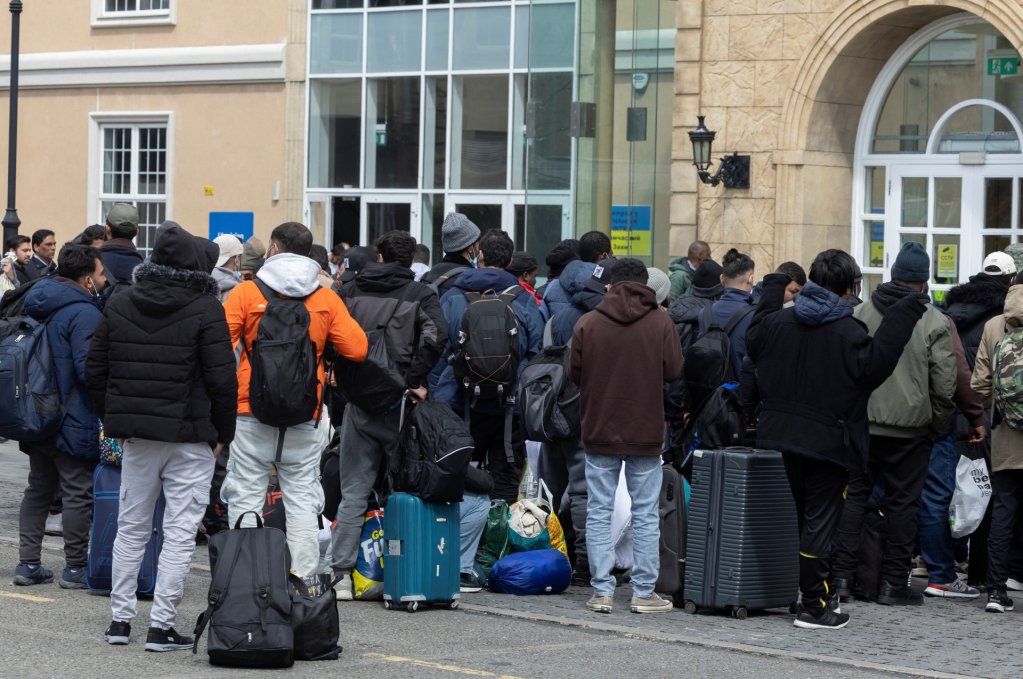
One of the problems, noted the Irish Examiner, is that although around 80 percent of applications are rejected on first instance, approximately 75 percent are appealed, which prolongs stays in the accommodation and strains the services.
The newspaper said that the government paper, produced by the Irish Government Economic and Evaluation service, stated that total expenditure on asylum accommodation increased by 14 percent in 2025 and cost the government 1.213 billion euros. The rising costs, despite the 30 percent drop in new arrivals, were driven by the rising costs of private accommodation being used by the government, according to the Irish Examiner.
Read AlsoImmigration and housing take centre stage in Irish election
Average cost of asylum accommodation now risen to 99 euros per night
The average nightly cost to house an asylum seeker in 2025 was reported to be 99 euros. Staffing costs at the International Protection Office had also been increased to deal with the demand and had risen by 330 percent in 2025, according to the Irish Examiner.
An increase in appeals was having a knock-on effect on the accommodation costs. In 2025, the International Protection Appeals Tribunal accepted more than 15,000 appeals in 2025 and had around 19,000 outstanding at the end of the year, reported the Irish Examiner.
At the end of 2025, IPAS centers for asylum seekers were accommodating 33,250 people, which represented an increase of 450 percent compared to the numbers being accommodated at the end of 2021.
This is perhaps why the Irish government decided to set up a pilot project to implement the EU Pact on Migration and Asylum, which is due to be rolled out from June 12 this year, early. In mid-March, government officials reported they were meeting the 12-week timeline for ‘safe-country’ cases and people coming from countries with less than 20 percent acceptance rates.
Read AlsoIreland: Police arrest 19 following anti-migrant protests
Pilot project ahead of implementation of the pact
Minister for Justice Jim O’Callaghan said the pilot project has been operating since last year to allow the Irish government to see what effects the implementation of the pact might have. O’Callaghan reportedly seemed pleased with progress, saying the government was using an "expedited processing of those applications [for people coming from safe countries, or from countries with less than 20 percent acceptance rate, as well as Nigeria] within the time periods set down in the legislation."
O’Callaghan made the remarks during a debate on the implementation of the bill, in response to questions from independent Senator Michael McDowell. The new bill is described by the Irish Times as the "most radical reform of immigration law in the state’s history." It is designed to bring Irish legislation in line with the EU pact.
Once fully implemented, the bill would allow the Irish government to deal with asylum applications within 12 weeks. Any appeal would also be made within 12 weeks, making any asylum stay a maximum of six months.
Read AlsoHomelessness: A common experience for migrants arriving in Dublin
Border controls?
During the debate, McDowell told senators that one of the main problems facing Ireland is that the majority of asylum applicants enter Ireland via the UK and the Common Travel Area, which allows for free movement between the two jurisdictions. That is because Ireland shares a border with the UK on the island of Ireland. Any attempt to reintroduce stringent border controls at this border would be problematic historically, after years of conflict in Northern Ireland between mostly Protestant Unionists who want to remain part of the UK Union and mostly Catholic Republicans who would favor joining the Republic of Ireland.
According to McDowell, however, the EU Pact is designed to conduct asylum procedures at the border, which would then necessarily introduce checks and controls that could set back the Good Friday Agreement.
In response, O’Callaghan replied that the Irish authorities would be operating an accelerated examination procedure and an asylum border procedure on an “expedited basis.” He said that the government would have a port or screening center near the border where applicants would be sent to have their applications assessed. Operations, he added, had already begun in the Citywest reception center on the outskirts of Dublin. The facility has already been a flashpoint for protests and clashes between citizens and far-right groups protesting the presence of migrants there and in Ireland in general.
Ireland has also been encouraging as many asylum applicants as possible to take voluntary return deals. These can be accepted either before or after an asylum application has been rejected. The Irish authorities offer 2,500 euros per person to return home, up to a maximum of 10,000 euros per family.