
Since the European Parliament voted to allow the possibility of building ‘return hubs’ outside of EU borders, member states have been searching for potential candidates who would be willing to site them. Discussions have reportedly "zoomed in on 12 nations."
EU member states and parliamentarians are busy preparing for the implementation of the bloc’s newest migration policy approach, which includes the possibility to build return hubs outside of EU borders, beginning in June.
To this end, some member states in particular, namely Denmark, Austria, Greece, Germany and the Netherlands, are scouting various nations as possibilities to site these hubs. According to unnamed EU sources who reportedly spoke to the French press agency Agence France-Presse (AFP), discussions have "zoomed in on 12 nations: Rwanda, Ghana, Senegal, Tunisia, Libya, Mauritania, Egypt, Uganda, Uzbekistan, Armenia, Montenegro and Ethiopia."
However, representatives from the EU nations reported to be seeking deals with these countries "declined to comment." One of the sources added that this list should be read as "indicative" but "far from finalized and non-exhaustive."
The source added that any talks that might be going on between the EU and any of these nations were "in the very early stages and aimed at testing the waters."
Read AlsoTunisia proposes revision of its EU migration deal
Are return hubs the solution?
Proponents argue that 'return hubs' will help streamline the asylum process, and help solve the problem facing many EU states that asylum seekers who have been refused asylum end up remaining in the bloc, because of the impossibility of actually returning them to either their home country or a safe third state.
Statistics from the EU’s Statistical Office Eurostat, looking at orders to leave the EU and actual returns between 2014 and 2023, show that between 450,000 and 500,000 third-country nationals were ordered to leave the EU each year, but fewer than half, even in a year of 'peak returns' actually did so. Data from 2023 for instance suggests that while 484,160 third-country nationals were asked to leave the EU, just 91,455 were actually returned.
The EU policy makers hope that if the return hubs do materialize, they can either process the asylum claims directly in them, preventing some people from entering the EU at all, or send those who are refused asylum within the EU back to the hubs, to then be sent either back to their home country, or to a designated safe third state.
Read AlsoEU migrant 'return hubs' – explained
Rwanda scrapped before it could really begin
The problem is that although the idea has been approved in theory, in practice, no EU country has really managed to make it work. Even though no longer in the EU, the UK tried to create a similar type of "return hub" scheme in Rwanda. The former Conservative government paid billions of pounds to Rwanda, which is now claiming it is still owed at least a further 100 million pounds (about 114 million euros).
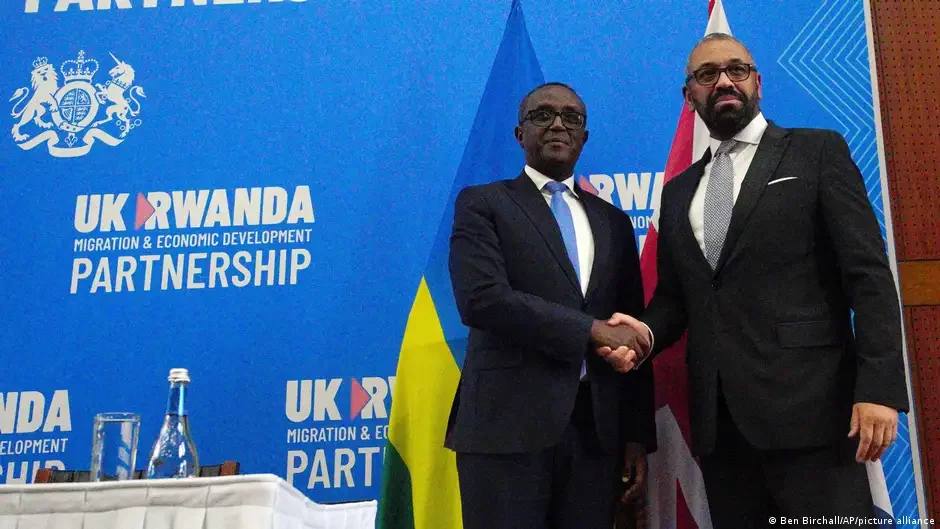
With some of the UK money, Rwanda embarked upon a building program and showed politicians and the press around various housing complexes where it said it would house the asylum seekers flown from the UK. The problem is that not one migrant ever took off from the UK to Rwanda under the auspices of that scheme.
Each time politicians said they were ready to start and a few migrants had been found who were reportedly eligible to be flown to Rwanda, various court cases stopped the plan before the planes could take off. When Britain’s current prime minister Sir Keir Starmer came to power in July 2024, his government promptly scrapped the scheme.
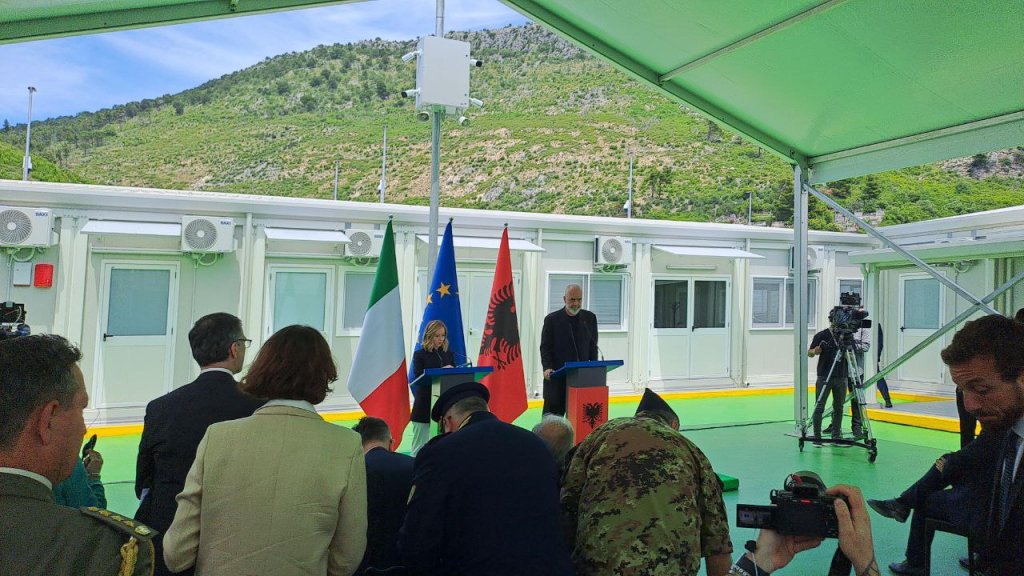
This hasn’t prevented him and his ministers from showing interest in the only other potential model for return hubs within the EU, this time Italy’s attempt to create asylum processing centers, operating under Italian law, in Albania.
Read AlsoEU to support overseas migrant 'return hubs'
Italy and Albania
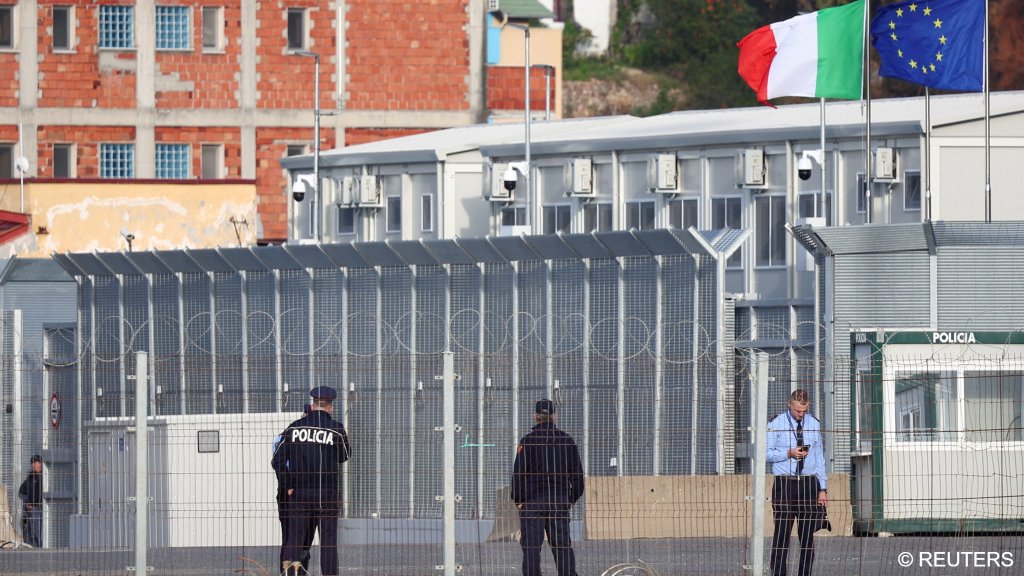
Italy’s Prime Minister Giorgia Meloni has also paid out and promised millions of euros to Albania over the initial five years of the scheme. Meloni has repeatedly said that if her scheme were allowed to operate as she intends, this should provide both a model to the EU and help remove some of the tens of thousands of migrants and asylum seekers who arrive in Italy and are deemed to have no right to stay.
However, like Rwanda, Meloni’s Albania scheme has mostly failed to process anywhere near the kinds of capacity the center has space for. Instead, most of the migrants sent to Albania have ended up being returned to Italy within hours or days of their arrival, following Italian court decisions, citing human rights concerns.
For over a year now, the Netherlands has been reportedly trying to negotiate a similar scheme with Uganda, but it is not clear if Uganda would be expected to take failed asylum seekers or just house people from its own country and region, even if it were to get up and running.
Although Montenegro is on the initial list, last year, its leaders said they would not be prepared to house asylum seekers from other countries on their territory. The Tunisian leader has said similar things.
Read Also80,000 migrants pushed back at EU borders in 2025, fewer than in 2024
Libya?
Libya, which has been divided by two rival administrations operating via a series of local militias, has been declared unsafe by the UN and since the fall of its former leader Muammar Gaddafi in 2011 has not reached the required stability to host democratic elections. The western half of the country is administered by a government recognized by the UN and the eastern half is controlled by Field Marshall Khalifa Haftar. Both sides have been accused of abusing, imprisoning, torturing, kidnapping and generally mistreating migrants.
Reports by the UN, NGOs and various journalists have testified to the presence of various systems operating across both official and unofficial prisons and migrant centers in Libya, where migrants claim to have been subject to extortion, violence and mistreatment, before sometimes being released to try to reach Europe on boats.

Nevertheless, the EU has signed a series of deals with both administrations in Libya and provided them with funding and training to try and encourage migration management policies designed to prevent migrants from leaving for Europe via Libya’s shores.
The Libyan coast guard does intercept migrant boats attempting to leave Libya, often returning thousands of migrants per week but Libya is still the main departure point for migrants hoping to reach Europe.
Following questions from InfoMigrants, the EU has repeatedly said that any policy it implements will comply with all directives on fundamental human rights. The EU acknowledges that this is a very "sensitive area" and that all policies in this direction need adequate safeguards to make sure that any return of third-country nationals avoids leading to violations of those rights.
Read AlsoNGOs: EU 'Return Regulation' endangers undocumented migrants
Migration as a negotiating tool
Some experts working in the field of migration management recently told The Parliament magazine, a magazine reporting on all aspects of EU policy, politics and culture, that they believed that while relying on non-EU countries to site these return hubs might bring short-term benefits, it could open the door to third-party countries’ actually weaponizing migration for political gains.
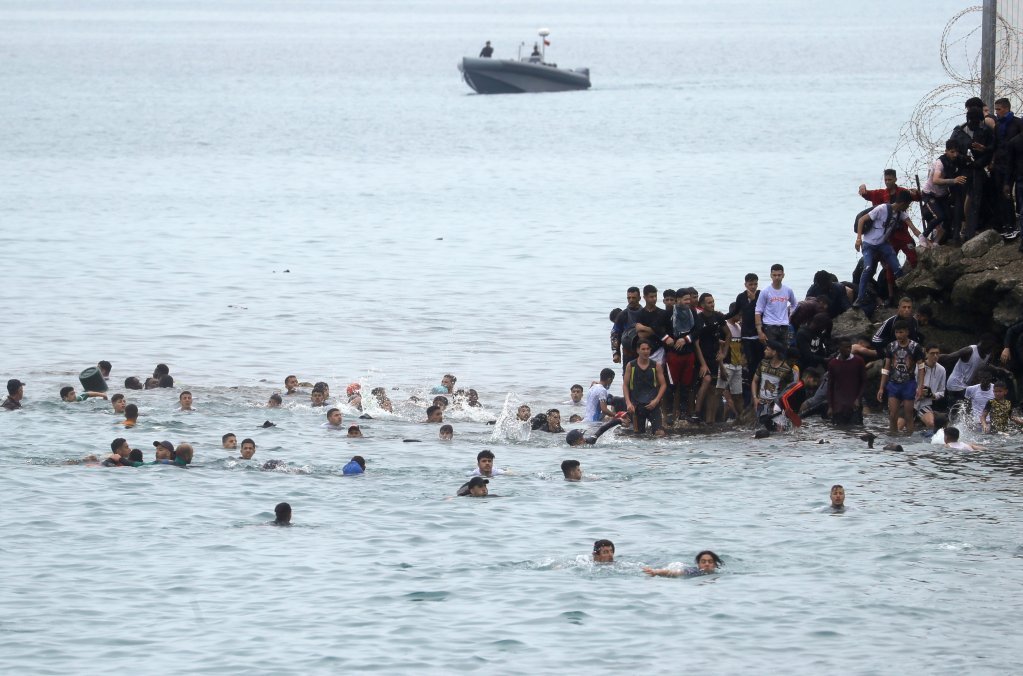
This is a strategy that EU member states have accused Belarus and Russia of doing on the border with Poland and the Baltic States, as well as the administration in the eastern part of Libya. Other analysts have suggested that Turkey has done this at strategic points, in 2020 for instance, when it opened its borders to obtain more leverage while renegotiating its 2016 EU-Turkey migration deal. Some suggest that Morocco also did this with regard to Spain and Western Sahara in 2021.
Basak Yavcan, head of research at the Brussels-based Migration Policy Group think tank told The Parliament that she thought it was risky to rely on third countries for the EU’s migration management policy. "This is not the primary objective of these countries," explained Yavcan. "They will do it for as long as the benefits they get from the EU exceed the cost of keeping these migrants."
Read AlsoEU Council gives final greenlight to new EU asylum measures
Contributing to instability?
Alberto Tagliapetra, a senior program coordinator at the Mediterranean Policy Program at the German Marshall Fund, told The Parliament in an email that situating return hubs in countries outside the bloc could also lead to further instability. Countries like Mauritania, which already suffers from geopolitical instability found across the Sahel region, where Jihadist insurgents control some of the vast desert areas, far from government control and exact levies for migrants and goods passing through the territories they control.
"The security threats deriving from these policies are in fact more relevant for origin and transit countries," wrote Tagliapetra. In some cases, this might also fuel terrorism. Joana de Deus Pereira, a senior research fellow at the UK’s academic and research institution Royal United Services Institute, told The Parliament in an email, that although migration might not be the main driver of terrorism in the EU, "if you place people, whether deported migrants or local populations in situations marked by insecurity, marginalization and lack of future prospects, you are increasing the likelihood that some individuals may be drawn into or exploited by radicalized groups."

Yavcan thinks that the EU’s current focus on returns and externalization is actually misplaced, since a focus on integration would be "a much more sustainable long-term policy response."
Tagliapetra told The Parliament magazine that, in addition to this, supporting job markets in countries of origin, as well as tackling corruption in those countries where migrants come from, or pass through, would also help strengthen the reintegration process for returnees and help avoid repeated migration.
Read AlsoItalian government satisfied that EU has backed up its 'Safe Country' list
Return hubs as 'enforcement tools'
However, European MEPs from the conservative (EPP) and right-wing side of the parliament as well as those responsible for negotiating the new policy such as MEP Francois-Xavier Bellamy, think that the EU’s new returns strategy will finally give Europe “the tools to enforce its own migration rules.” Similarly, conservative MEP Tomas Tobé agrees that “without enforcing return decisions, there is no credible migration policy.”
However, those working in the human rights and NGO sectors say that one of the fundamental tenets of being able to enforce the returns policy and speedier asylum processes is the safe countries of origin list. However, they point out that these ‘safe’ countries might not be safe for everyone. Iskra Kirova, advocacy director for Europe and Central Asia at the organization Human Rights Watch, told The Parliament magazine in February that they believed "ambiguities" around the “safe third country” concept as well as the definition of a "safe country of origin" could lead to violations of migrants' rights and "erodes the right to territorial asylum in Europe."

Kirova said she feared that speedier assessments might lead to applications being rejected without proper case-by-case assessment.
Ultimately, the policy of return hubs largely depends on your political standpoint. German MEP Lena Düpont from the center-right European People’s Party (EPP MEP) recently argued the issue with Spanish MEP Juan Fernando López Aguilar from the Socialists and Democrats. While Düpont told the audience on Euronews' discussion program The Ring, that she thought return hubs represented "the missing piece of the puzzle," López Aguilar was adamant that "return hubs are not the answer –particularly when they are outside the borders of the European union. They have no guarantees of respect for fundamental rights."
López Aguilar added that he believed once outside Europe’s borders, migrants and rejected asylum seekers sent there would also be beyond the remit of EU law.
Read AlsoEU parliament to harden its stance on asylum seekers