
The migratory route from the Democratic Republic of Congo (DRC) to Mayotte by way of Tanzania has grown to such an extent that Congolese migrants now make up the majority of asylum seekers on the French island. Yet as strange as it may seem, many Congolese in Mayotte say they did not know where smugglers were taking them and had never heard of the island before arriving.
By Charlotte Boitiaux and Romain Philips, special correspondents in Mayotte
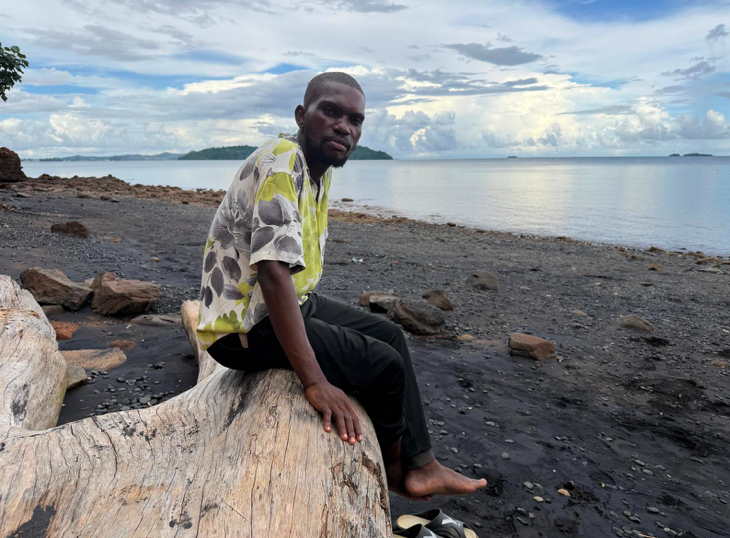
"I had never heard the name of Mayotte before," explains Alexis, a 30-year-old Congolese, with a big smile. "Mayotte, very few people have heard of it before coming here," he said, facing the Indian Ocean from a large tree trunk where he was sitting. "Ask and you will see."
Alexis is right. Almost no one on the beach had ever heard of the French island before arriving there in recent months. Not the adults seated on the black sand, nor those playing football a few meters away, and especially not the children refreshing themselves by playing in the water.
Kennedy, one of his companions from the Democratic Republic of Congo (DRC), agreed. "At school in the DRC, they teach you where Madagascar and Seychelles are," said the migrant who arrived on the French island seven months ago. "They even teach you how to locate the small islands of Réunion and Mauritius, but Mayotte, I had never heard of it."
Mayotte has in recent months become a major destination for thousands of Congolese fleeing the violence of the conflict ravaging the east of their country. Congolese citizens are now the main nationality among those seeking asylum on the island, far ahead of Comorians, who held the top spot for years.
"Congolese nationals made up 50 percent of asylum requests in Mayotte in 2025," according to the statistics from the French Office for the Protection of Refugees and Stateless Persons (OFPRA). Comorian nationals only made up 13 percent of all the asylum requests the same year. The situation represents a surprising reversal compared to 2022, when 51 percent of asylum seekers were from Comoros, while 16 percent were Congolese.
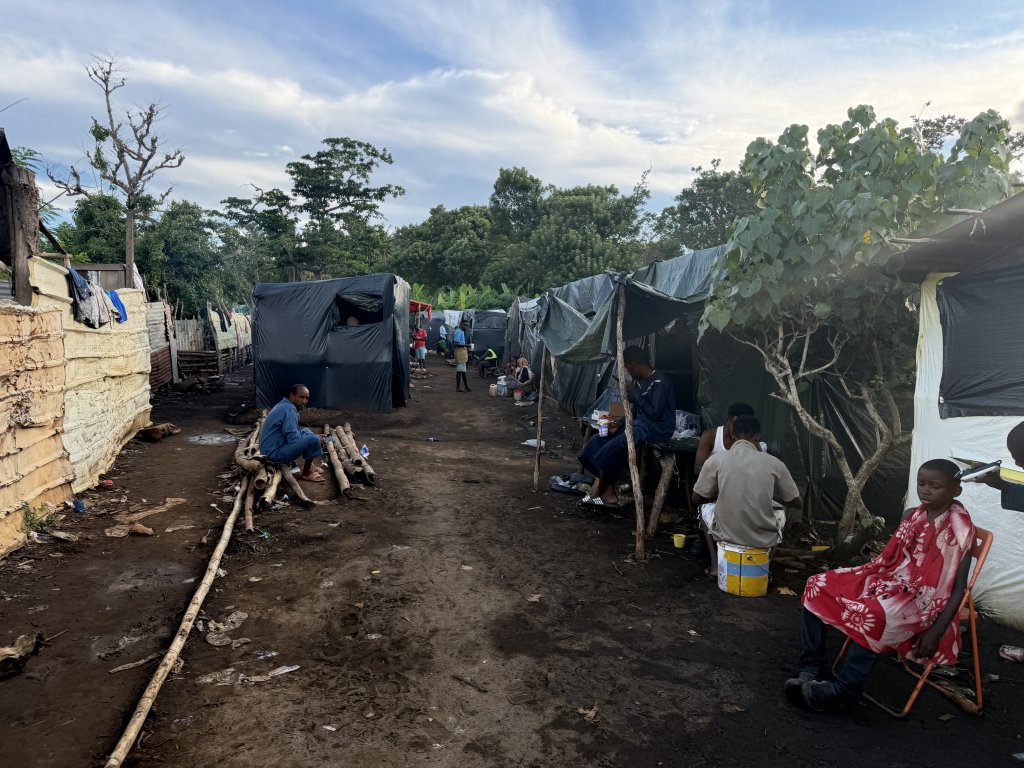
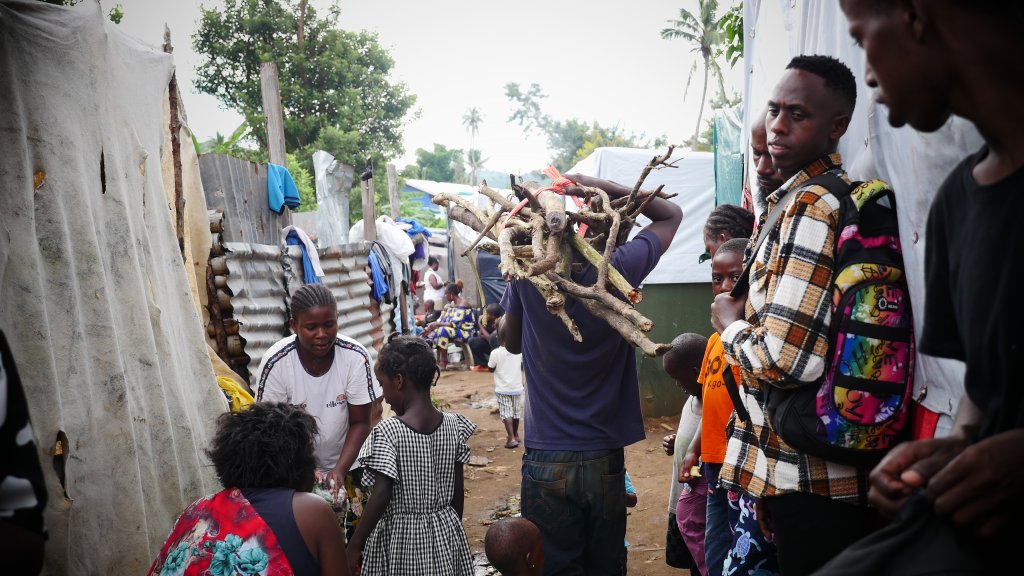
Many Congolese live in the Tsoundzou 2 camp, a few meters away from the beach. The camp is located south of the island’s capital, Mamoudzou, because of the saturated emergency housing system there. Tsoundzou 2 hasn’t stopped growing since this winter. More than 1,000 people live in the camp today – an unprecedented situation. "There are more Congolese [there] than other nationalities like Somalians and Yemenites,” said Kennedy, who knows many of the camp’s inhabitants.
Leaving for an unknown destination
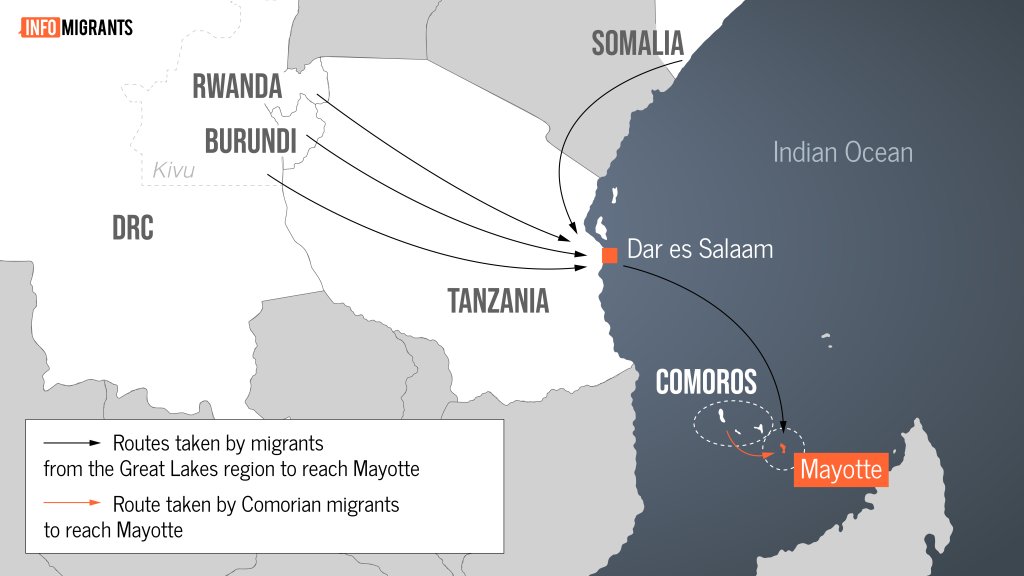
Many Congolese left for Mayotte, a place they had never heard of, without ever knowing where they were going. Like Alexis, the vast majority of Congolese in Mayotte said they were approached by "intermediaries" or "by friends of friends". Quite simply, they were in contact with traffickers in Tanzania, where they sought refuge as the conflict in the Kivu region intensified.
"These Congolese migrants never had Mayotte as an objective," said Alison Morano, an anthropologist and specialist of the French island. "They fled to a bordering country, Tanzania in this case. They were caught in smuggling networks there and they later arrived in a country they couldn't even find on a map."
According to the accounts collected in Tsoundzou, the smugglers offer migrants "a safe destination where they can live in security" without specifying the destination.
Alexis and Kennedy boarded a traditional wooden fishing boat, known as a pirogue, with dozens of other people inside. The boats left the coasts of Dar es Salaam for a route unknown to the migrants in the middle of the Indian Ocean.
The level of trust migrants placed in traffickers is striking.
"It may seem surprising, but when you flee the war in Goma [in eastern Congo, editor’s note], you don’t need to know where they are taking you, you just need to know if you will be safe there," said Kennedy, as he left the beach and returned toward the camp. "If you are attacked, you flee. You don’t ask where the path you take leads to. You think of your life before anything else.”
‘I saw whites, they spoke French’
Clarisse, a Congolese mother lying on the beach's black sand, was also approached by “friends of friends” in Tanzania. “They just said they would help me get to a safe place. Sometimes this is enough to convince someone,” she said while observing her 8-year-old son playing in the water with his friends. “I’m not going to lie to you, when I came here, when they told me I was in Mayotte, I was wondering what country it was.”
Alexis smiled. “I even thought I would leave [Tanzania] to go fishing in the beginning, but we saw hills far away in the distance from the boat, it was Comoros,” he said. The smugglers ordered him to change vessels, in the middle of the sea. Alexis changed the commercial fishing vessel he was on to a wooden fishing vessel which was headed for Mayotte. “I got off the boat; I saw whites. They spoke French. This gave me a clue. I never would have imagined there was a piece of France here,” he said laughing.
The route is deliberately shrouded in secrecy, said Fahad Idaroussi Tsimanda, a doctoral associate at the University of Montpellier, interviewed by Radio France Internationale. Comorian fishermen benefit from it, among other actors. The fishermen who come to do business in Tanzania and eventually return to Comoros and Mayotte see smuggling as a way of supplementing their income.
Fleeing Tanzania which ‘stops undocumented people’
Congolese who travel toward neighboring Tanzania allow themselves to be tempted by smugglers rather than staying in Dar es Salaam because “the situation is also catastrophic there”, said Kennedy. “In the beginning, I didn’t want to leave the African continent, but everything has changed since the [Tanzanian] elections. There are more police checks. If they had stopped us and sent us back to the DRC, it would have been a certain death.”
The “insecurity” in Tanzania pushed a 26-year-old asylum seeker named Chance to leave. “If we don’t have documents, we get stopped every day.” Post-electoral turmoil and bloody repression rocked Tanzania this winter. Caught in the political chaos, many Congolese, already traumatized by the war in Kivu, sought to flee.
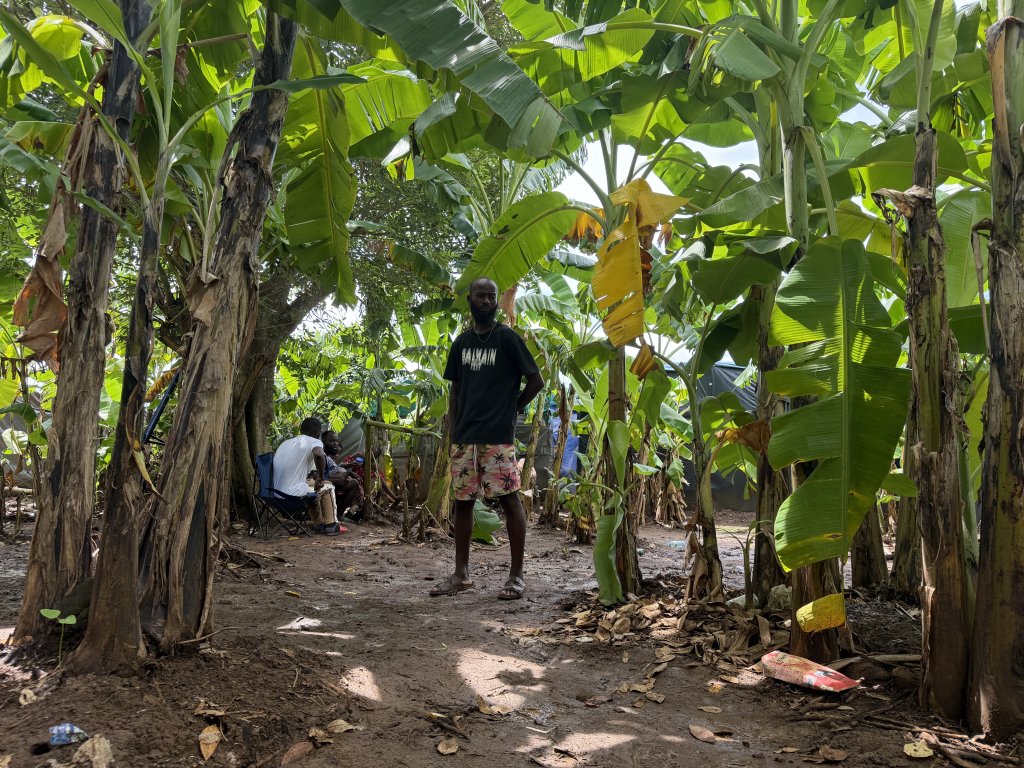
For Elie, seated in the shade of a banana tree, Mayotte was a “marvelous opportunity”.
“When you are in Kivu, you think of fleeing, about leaving for any other country, but you don’t think for a second about reaching France. It’s so far away,” he said. “When I understood I was on French territory, I was delighted.”
None of the Congolese in the group imagined going north to eventually cross the Mediterranean and reach Europe. They all said it was too far away.
‘My children were vomiting’
The journey across the Indian Ocean is a daunting challenge. It takes at least five days to reach Mayotte after departing from Dar es Salaam, sometimes more. Amini, a Congolese national, undertook the journey by sea for seven days with his wife and his three children. “I had never traveled by sea before, I didn’t know. It was terrible,” he said, from an alley of Tsoudzou camp 2. With the lack of water, the hunger, the heat, “my children were vomiting, I thought they would die in the kwassa”.
“It’s the first time that I said: 'This is it, I’m going to die,'" said Kennedy. “You only realize how dangerous the crossing is the moment you are in the boat."
Remembering the crossing brought back bad memories for Alain, another Congolese in the camp. "It was terrible. We spent all our time throwing out water that was entering in the boat," he said, miming the motion of using a bucket to throw out the water that entered his vessel. "To avoid sinking, we threw everything into the sea, even our wet clothes that weighed too much."
Endless administrative delays
Benoit was abandoned by his smugglers off the coast of Mayotte. The Congolese owes his survival to the policemen who intercepted his vessel. Once he was brought to land, the father was released on the “unknown” island – but with an Obligation to leave French territory (OQTF).
After the gruelling journey to Mayotte, Alexis, Kennedy and Amini faced a new ordeal – an administrative ordeal. They had to wait “a long time” before obtaining an "initial meeting” at the prefecture to file an asylum request.
In Mayotte, the delays to obtain this “initial meeting” can last several months up to a year. Once the meeting is obtained, the exiles must wait to be summoned by the Ofpra. During this time, “we are nothing, we have no status”, said Kennedy.
In addition to the wait, there is also the possibility of being sent back to Goma in case of a negative response. The prospect petrifies the occupants of the camp.
The patience of the Congolese nationals is stretched to its limits. “I’m truly pleased to be in France,” said Amini, while caressing his 8-year-old son’s forehead, where beads of sweat appeared. “Yet it’s not really France here. We have been waiting for months. The children don’t go to school; they hang around in the mud all day,” he said. “Actually, once you get here and the elation descends, nothing else happens.”