
French authorities confirmed that two women and two men have died after attempting to cross the Channel from France to the UK. Local newspapers reported there are fears that "more bodies were seen floating" from the beach, and local authorities say the situation is "ongoing."
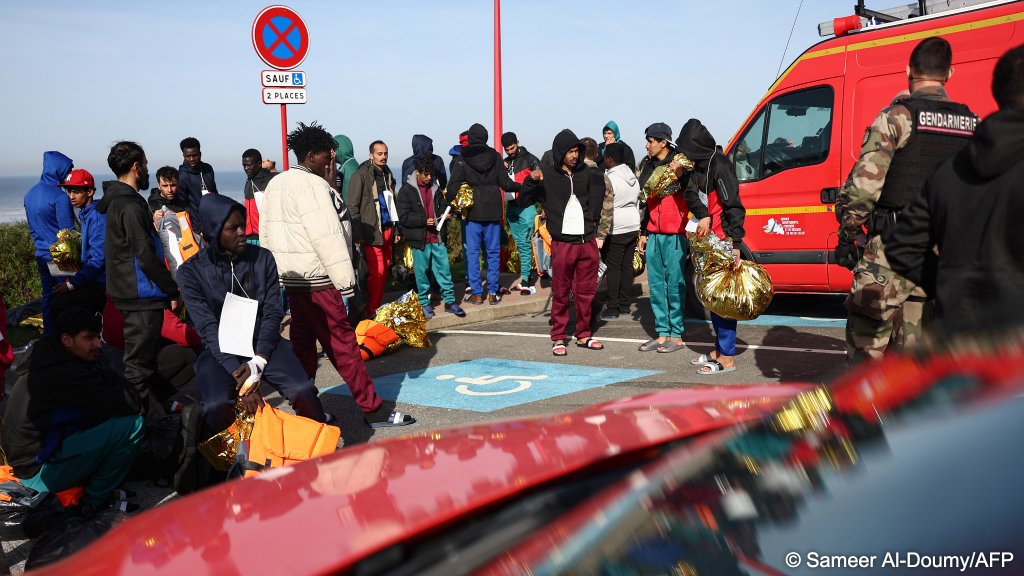
Rescue services were called to the French beach of Équihen in the early hours of Thursday (April 9), reported the local French newspaper La Voix du Nord. At around 7 am, there had been a "failed departure and several migrants had found themselves in the water," Équihen's mayor Christian Fourcroy was quoted as saying by AFP.
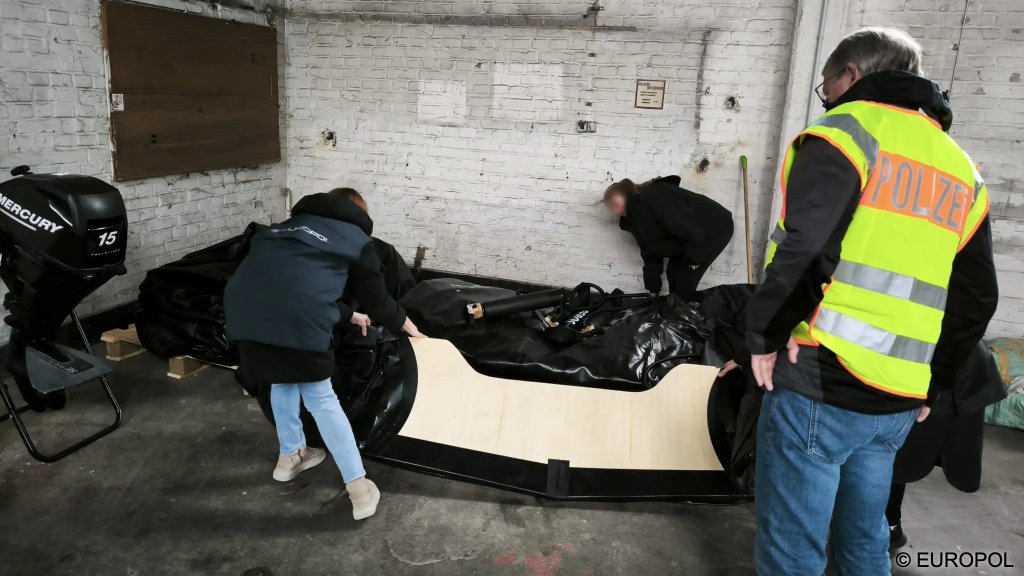
The boat that experienced difficulties was described as "a taxi boat" – the boats often used by smugglers to ferry migrants from the shore or canals out to boats waiting deeper in the water to avoid being stopped by the authorities.
In a press statement issued on Thursday morning, French authorities said that the "situation is still being assessed and remains subject to change."
However, the prefect for the Pas-de-Calais region, Francois-Xavier Lauch, told journalists that the four people who died had "tried to get on board the taxi boat, but the currents in the water, which can be dangerous here, transported them away."
Local prosecutor, Cecile Gressier, told AFP that all the victims reported so far were adults. The nationality has not yet been reported. Last week, two people also died while trying to cross the Channel.
The boat reportedly "continued on its way" after the failed attempt by this group of migrants to board it, Gressier said. It was thought to be carrying around 30 people.
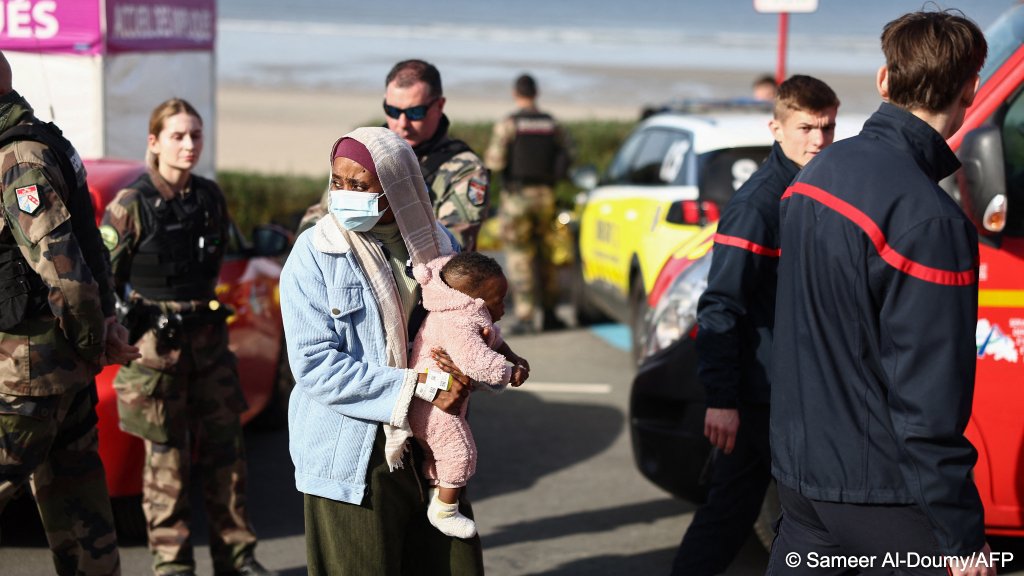
According to prefect Lauch, another person was treated for hypothermia, and 37 people were taken into the care of the emergency services. Of the survivors, one woman was seen carrying a baby.
Read Also
78 migrants rescued after attempting Channel crossing from Belgium
Difficulties boarding
After weeks of bad weather, the Channel had appeared to calm in the last few days and large numbers of migrants were seen in the area waiting to board boats.
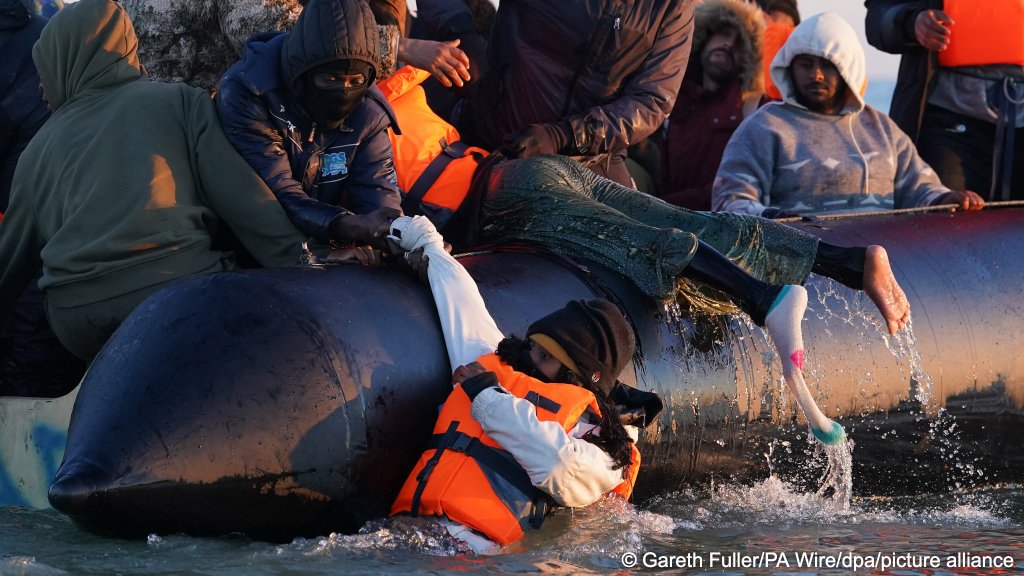
Pictures taken this morning at Équihen plage show migrants trying to haul themselves on to already overcrowded boats from relatively deep water.
The water reaches the shoulders or necks of most of the men standing near the boat, and some of them may already be swimming before they try and climb on board. A feat that takes a lot of strength to haul yourself on a slippery rubber overcrowded boat when fully dressed in wet clothes.
On Wednesday, the French rescue services carried out a training day on Équihen beach, simulating potential scenarios to be best able to save lives. Just a day later, the simulations became "brutal reality," commented La Voix du Nord.
New deal under negotiation
Last week, the current deal between Britain and France over managing migration on the French coasts was due to expire and was extended for two months in its final hours, reportedly to give both sides time to negotiate a fresh deal.
The British government is reportedly looking for more "value for money" and for there to be targets attached to fresh funding. The French side has repeatedly said that some of the more aggressive interventions, such as trying to prevent boats from leaving the shore when already in the water, could lead to accidents and even deaths, something that they want to avoid at all costs.
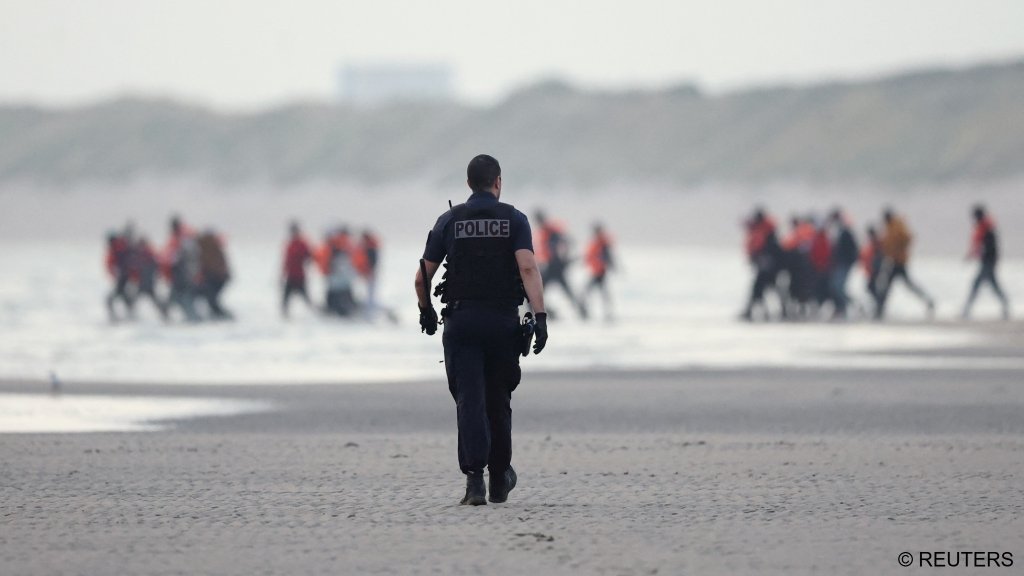
Lauch told AFP that in the case of the incident on Thursday morning, police did not intervene to intercept the taxi boat as it was judged too dangerous to do so.
Read AlsoChannel crossings: More and more are taking to the sea from Belgium to reach England
A series of rescues
On April 8, the French prefecture responsible for the Channel and the North Sea (Préfecture Maritime de la Manche et de la Mer du Nord) confirmed in a press release that several different boatloads of migrants had been seen setting out from Calais and the surrounding area.
On Tuesday night into Wednesday, one boat was found off the coast of Dunkirk heading in the direction of Malo-les-Bains to pick up other migrants, stated the maritime prefecture. This taxi boat is described as conducting "chaotic" operations. Initially, 12 people were rescued from the semi-rigid boat. But a little later, the boat’s engine failed and the remaining 67 people had to be rescued. All 79 people were taken to shore and offered assistance.
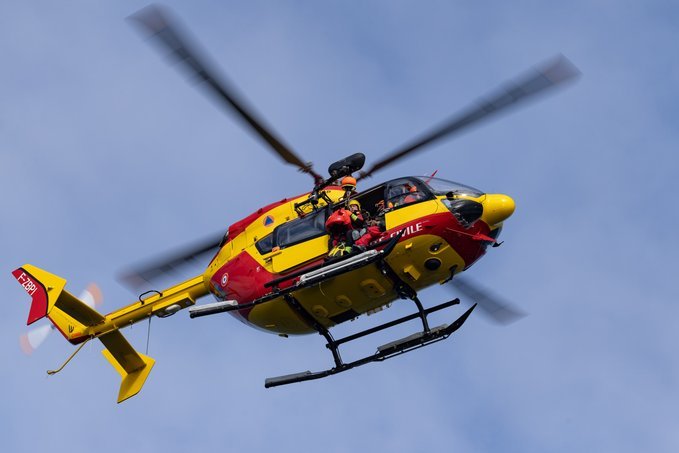
A bit later on that night, another boat was detected in the Bay of the Somme. A surveillance plane was sent out to surveil the situation. Twenty-three people on board asked for help and were taken back to the port of Boulogne.
All in all, from April 7 to April 8, the French rescue teams offered help to four different boats and brought 102 people to shore, they stated in a press release.
Read AlsoUK inquiry finds that 'some' deaths in 2021 sinking in English Channel could have been 'avoidable'
Monitoring and surveillance
In a second press release on April 8, the authorities stated that several boats were sent out to surveil them and make sure that none of them were in difficulty. In the early hours of Wednesday, the emergency services had already been called out to help a boat that had departed from the Belgian coast. A second boat, which also appears to have departed Belgium, did get into difficulty, and two people were rescued from that craft. The rest of the migrants on board, who were determined to continue in their attempt to reach the UK, refused assistance and tried to continue.
It was only when the situation had reached an "extreme emergency" that they asked for assistance, stated the maritime prefecture. The boat was "extremely overloaded" said the prefecture and so the choice was made by the emergency services to not force them to get on board the French rescue boats, for fear of causing an accident or death.
Later, three more people were rescued from a migrant boat and brought to shore to be offered assistance.
Read AlsoEnglish Channel: Do asylum law changes and awareness campaigns deter migrant boat crossings?
Channel crossings
According to British government data, 137 migrants managed to cross the Channel on April 7, the last crossing prior to that was recorded on April 1 when 325 migrants arrived. Since the beginning of the year, up until April 7, 4,903 migrants are recorded to have arrived.

Last year, at least 29 people were recorded as having died in the Channel. French authorities continue to warn of the dangers this relatively brief stretch of water poses. Water temperatures remain cold most of the year and winds and currents are present for the majority of the time, making it difficult to survive for very long if you fall in the water, even if you are fit and healthy.
Investigators have also reported that often the life vests and buoyancy aids sometimes given to migrants, or used by them for these voyages, do not pass proper safety standards and may not help you, even if you were to get into difficulty.
With AFP and Reuters
Read AlsoFrance intercepts 'taxi-boat' in first on-water operation to reduce Channel crossings