
Authorities in Morocco prevented 6.4 percent fewer attempts by migrants trying to enter Europe irregularly in 2025 than in the previous year, confirmed the Interior Ministry last week.
The number of foiled irregular crossing attempts by migrants hoping to cross into Europe from Morocco decreased, explained the Interior Ministry because the routes used by migrants had changed. They added that the actual number of people hoping to reach Europe "showed no sign of easing," reported the news agency Reuters.
The data, released on April 4 to Reuters by the Moroccan Interior Ministry, showed that the Moroccan authorities had thwarted 73,640 irregular migration attempts and dismantled more than 300 migrant smuggling networks. This compares to around 78,685 interceptions reported by the Interior Ministry in 2024.
In that year (2024), noted the UN Migration Agency IOM in its annual report on the country, around 58 percent of migrants intercepted on their way to Europe were from West African countries, around 12 percent from North African countries and around nine percent from East and Central Africa. That year, the Moroccan authorities said they had dismantled around 210 trafficking networks and rescued 14,260 people at sea.
Read AlsoBelgium tightens migration rules amid worker shortage
Different routes
Migrants pass through Morocco by several routes. Both Moroccans and migrants from other countries attempt to leave Morocco either west by the Atlantic Ocean route towards the Spanish Canary Islands, northwards by a sea route towards mainland Spain and the Balearic Islands in the Mediterranean, or by scaling fences into the Spanish enclaves Ceuta and Melilla which are the only European territory with a land border in Africa.
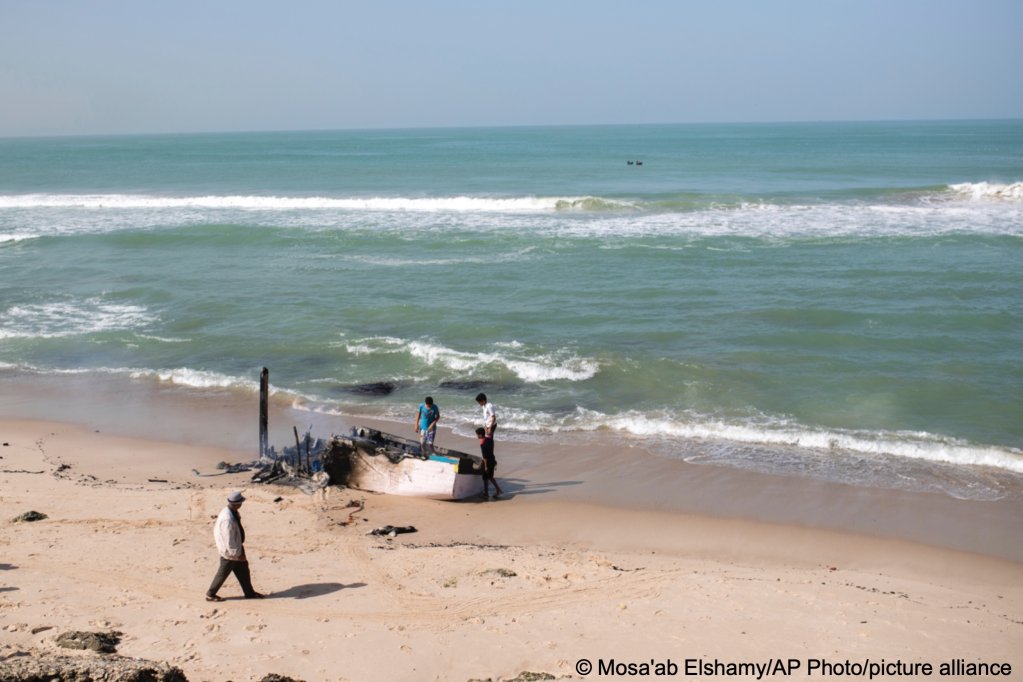
In recent years, Spain and Morocco have signed numerous migration agreements to try and manage migration more effectively. Cooperation between the two countries stepped up in 2022 when Madrid and Rabat agreed to bury their differences over the control of the Western Sahara region.
Spain withdrew from the region in 1975, leading Morocco to claim the territory for itself. However, the autonomous force known as the Polisario Front and backed by Morocco’s neighbor Algeria disputed these claims and has continued fighting for the region’s autonomy.
Read AlsoMigrants from Africa brave deadly Canary Islands crossing
Western Sahara and agreements with Spain
Spain had tried to maintain a neutral position in the dispute, but in 2022 it withdrew from this position and backed Morocco’s plan to give the region some autonomy while retaining control over around 80 percent of the territory.
The easing of Spain’s position in 2022 followed tensions between the two countries that partially culminated in around 6,000 people attempting to cross the land border fence between Morocco and Ceuta in May 2021. Prior to this attempt, Morocco had relaxed its border controls.
According to analysis in the magazine Foreign Policy In Focus, about the issue in March 2023, Spanish leader Pedro Sanchez interpreted the Moroccan move as an "attempt to manipulate Madrid into making concessions vis-à-vis Western Sahara."
Within a year Morocco’s strategy "proved efficient… Spain shifted its stance on Western Sahara," and now supports Morocco’s "autonomy plan, which would allow Morocco to continue exercising its sovereignty over the territory [which is economically important to Morocco] while allowing the Saharawi people their own government," notes FPIF.
In remarks to Reuters, an unnamed official at the Ministry of the Interior reportedly explained there had been a "steady drying up of the migration route transiting through Morocco."
Read Also'Record' numbers of migrant deaths along Algerian-Moroccan border in late 2025
Rescues and returns
In 2025, the Moroccan navy rescued 13,595 migrants at sea. A total of 4,372 migrants signed up to voluntary return programs, transporting them back to their countries of origin.
The official added that the Moroccan government wanted to promote the voluntary return programs further, calling them a "human-centered approach to migration management which strikes a balance between firmness and responsibility."
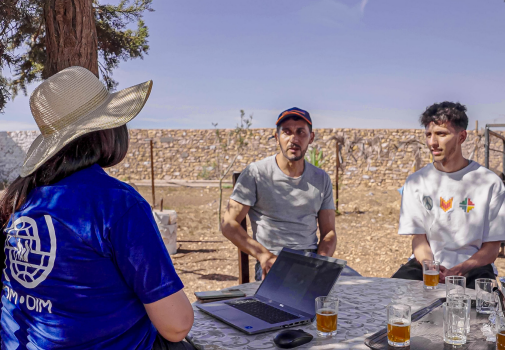
The Moroccan authorities said that data from 2025 demonstrated that their strategies are working and efficient at dismantling the smuggling networks, reported the French-language newspaper Le Matin on April 3.
Meanwhile, earlier this year, the European Union has also been busy intensifying its agreements with North African countries like Morocco, tying in development funds with stricter migration management policies.
According to the IOM’s country page on Morocco, the country is currently running 11 different programs aimed at helping develop Morocco for its own population as well as better manage migration and cooperate with its neighbors around the Mediterranean.
Read AlsoSpain: Mass regularization of migrants set to start
Development and migration management
In its annual report on Morocco, published in 2025 and bringing together data from 2024, the IOM said it had achieved "significant new milestones in its mission to support migrants and host communities." In 2024, the IOM said it reached more than 36,000 people across the country.
The IOM also said that it pursued initiatives in 2024 to set up more regular and safe migration routes from Morocco. This included setting up professional mobility schemes, as well as strengthening international cooperation.
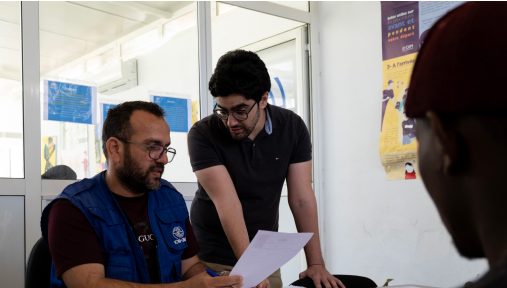
Morocco is a signatory to the Global Compact for Safe, Orderly and Regular Migration, and has developed a National Immigration and Asylum Strategy (SNIA). The IOM points out that Morocco is both a country of destination, transit and departure for migrants.
Back in 2024, Morocco was home to 148,152 foreign migrants, including both regular and irregular migrants, refugees and asylum seekers.
Read AlsoAlgeria: IOM signs partnership with government expanding voluntary return partnership
Reintegration
The IOM also said it was collaborating with IOM teams in other countries in Africa, for instance, IOM Guinea, to improve the reintegration programs on offer to those who decided to take voluntary returns.
A memorandum of understanding (MOU) was also signed between IOM Morocco and IOM Ivory Coast in 2024 to try and offer protection, prevention and prosecution of the numerous cases of trafficking they found affecting Ivorian victims in Morocco. Most of these people were found to have been domestically and sexually exploited.
In 2024, the IOM said it offered assistance to 40 victims of trafficking, including 32 women and eight men. Ten of these were Moroccan nationals exploited in other countries (Oman, Turkey and Thailand) who were assisted with their return and reintegration into Morocco. Three from Burkina Faso, Ivory Coast and Cameroon chose to return home via voluntary return, and 27 foreign victims chose to stay in Morocco, where they received humanitarian aid and medical and psychosocial care. Some of them were also offered training programs to offer them a job for the future.
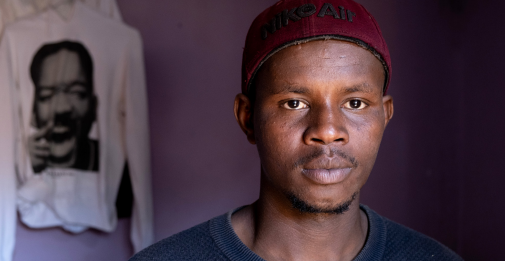
There was also help for Moroccan nationals who were returned from European countries. In IOM’s annual report, they highlighted the story of two brothers, Youssef and Ismail, who had returned from Germany and received reintegration assistance in Morocco. In that year, 26 Moroccans were returned from Germany and 32 from the Netherlands. 2,550 Moroccans were returned from Turkey, representing the majority of all 2,712 returns that year.
With Reuters
Read AlsoCanary Islands: Migrant arrivals fell by more than 60 percent in 2025