
Croatian emergency crews pulled around 30 migrants from flooded woodland around the Sava River near the Bosnian border, in an overnight operation after their boats overturned during an attempted crossing.
Croatian emergency crews pulled around 30 migrants from a flooded woodland area near the Sava River in eastern Croatia in an overnight operation after their boats capsized late Tuesday night (March 31). The incident occurred as the group attempted a crossing from Bosnia into Croatia, officials confirmed on Wednesday (April 1).
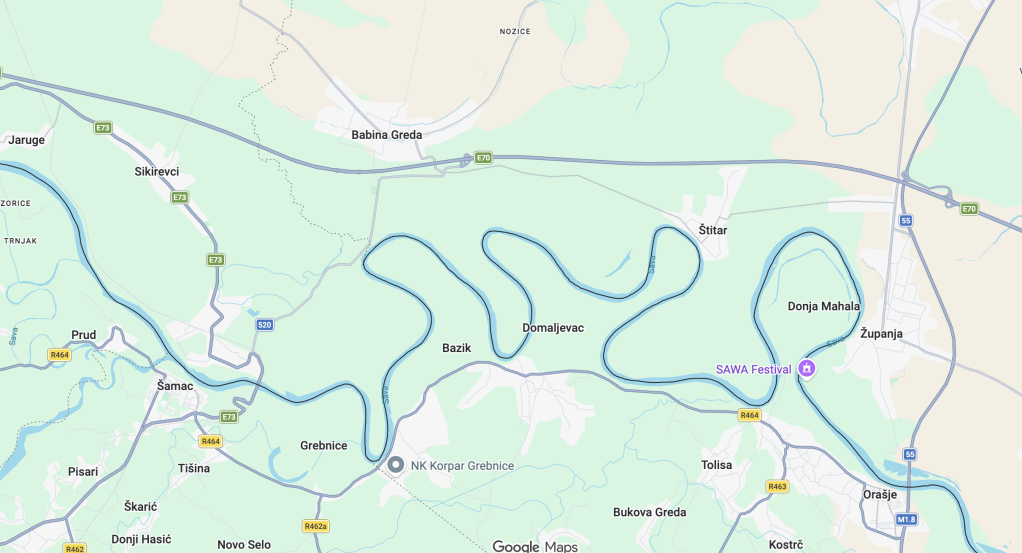
Rescuers worked through the night in extremely difficult terrain between the villages of Štitar and Babina Greda, about 240 kilometers southeast of Zagreb, where the river’s marshy bends and rain‑swollen floodplain turned the landscape into a maze of water‑filled channels and submerged undergrowth.
The alarm was raised at 1.42 am after authorities received reports that dozens of people were stranded in a flooded area between the embankment and the Sava river.
A large‑scale response was launched, involving police, border‑police units, firefighters, civil‑protection teams, the Croatian Mountain Rescue Service from the Vinkovci station, specialized water‑rescue units, emergency‑medical‑services personnel and the Red Cross. Approximately 100 rescuers moved through the waterlogged terrain, carrying migrants to dry ground and providing immediate medical attention.
Read AlsoMigration management measures reinforced in Bosnia Herzegovina and Croatia
No fatalities so far
Speaking at a government session on Wednesday, Prime Minister Andrej Plenković said the boats had overturned after hitting a marshy, submerged section of the Sava River, leaving the group stranded in a remote, hard‑to‑reach area. "At this stage there are no confirmations of fatalities. Everyone who has been pulled from the river is safe and receiving care," he told ministers. Interior Minister Davor Božinović later confirmed that 30 migrants had been rescued, with many at risk of severe hypothermia due to spending hours exposed to cold water.
Eight of the rescued migrants were transported to hospitals in Vinkovci, Vukovar and Slavonski Brod, primarily suffering from hypothermia and exposure‑related symptoms. The remaining group were taken to the police station in Županja, where authorities began administrative procedures to verify identities, determine countries of origin and investigate the circumstances of the attempted crossing. Officials described the group as mainly citizens of Afghanistan, Pakistan, India and Bangladesh, traveling through the Balkans toward the European Union.
Croatian authorities have opened a criminal investigation into the circumstances of the river crossing, including whether any third parties were involved in organizing or facilitating the movement.
Read AlsoFrostbite and amputations in Bosnia shatter migrants' dreams of reaching Germany
Deaths in transit
The Sava River corridor between Croatia and Bosnia has become a recurring route for crossings, with boats often used at night to evade detection. Similar incidents in late 2025 and early 2026 have led to multiple migrant deaths, underlining how seasonal river conditions, inadequate safeguards and the proliferation of such routes combine to turn natural terrain into a hazardous obstacle.
Over the past decade, Croatia has recorded a number of migrant deaths, many linked to accidents in hazardous environments. A 2025 study based on autopsy and police records counted 125 deceased migrants discovered in Croatia between 2015 and 2024, with drowning, traffic incidents and hypothermia the most common causes. In 2025 alone, 14 migrant deaths were recorded in the country, and at least two fatalities have already been reported in 2026 among those trying to cross the border.
Read AlsoCroatia: One migrant dead, others missing as boat capsizes on river
Key transit route
As an EU member state, Croatia functions as a key transit country for the Balkan migration route, marking an external EU border. According to preliminary data from the EU border agency Frontex, detections of irregular border crossings along the Western Balkans route fell by around 42 per cent in 2025, reflecting heightened security measures and closer cooperation with the agency, including the launch of a new Frontex‑led joint operation in Bosnia and Herzegovina in November 2025. Across the EU’s external borders as a whole, detections of irregular crossings dropped by 26 per cent in 2025 to almost 178,000, the lowest level since 2021.
The International Organization for Migration estimates that more than 400 people have been reported dead or missing on the Balkan route since 2014, with many of those deaths occurring in rivers, forests or mountain passes.
Read Also80,000 migrants pushed back at EU borders in 2025, fewer than in 2024
With AFP