
German Chancellor Friedrich Merz has garnered widespread criticism over his statement that he expected about 80 percent of all Syrians in Germany to return home over the next three years.
Chancellor Merz's remarks were made on Monday (March 30), during a visit by interim Syrian President Ahmed al-Sharaa to Germany, as the two discussed the future direction of the Middle Eastern nation.
Germany has for over a decade been home to more than 900,000 Syrian nationals, who fled the 13-year civil war in their country, which started in 2011.
Merz stated that in order for Syria to rebuild its crumbling infrastructure, it needed those who had escaped the violence.
"Eighty percent of the Syrians currently in Germany should return to their homeland" over the next three years, the chancellor said, adding that this was primarily the stated wish of interim President al-Sharaa.
Merz later added, however, that those "who wish to remain in Germany and are well integrated will be able to remain in Germany."
Read AlsoGermany hosts Syria's Al-Sharaa despite human rights issues
German government goals
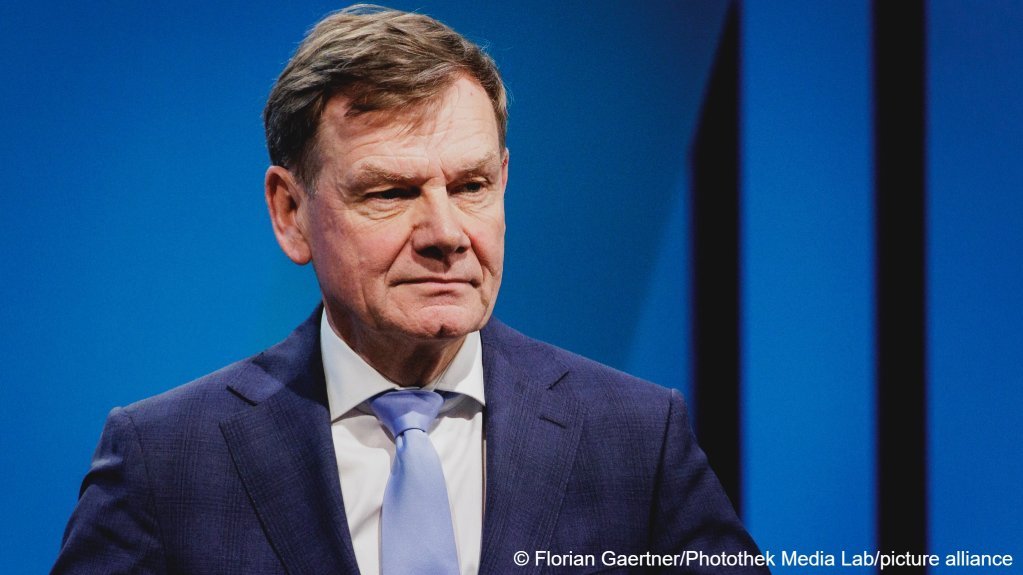
Foreign Minister Johann Wadephul meanwhile endorsed the statement made by Merz while also contradicting some of Merz's message, highlighting that "what the Chancellor says is, of course, the goal of the federal government" — and not primarily driven by a directive expressed by the interim Syrian President.
Wadephul doubled down on that message by saying that the main point of al-Sharaa's visit to Germany was indeed to communicate Germany's plan to deport many Syrians.
The foreign minister has become somewhat recognized for making statements at odds with other members of the government.
Last November, Wadepuhl stated that he believed that the return of a large number of Syrian refugees would be unreasonable considering the extent of destruction across the country in the wake of the war.
Around the same time, Merz made comments stating that it was "time for Syrians to return home."
Read AlsoGermany urges EU to do more to boost Syria's economic recovery
Criticism from all angles
Merz's remarks garnered disapproval across the political spectrum, with some members of his own party, the Christian Democrats (CDU) joining the ranks of his critics.
CDU foreign policy spokesman Roderich Kiesewetter told the Handelsblatt newspaper that it was politically "unwise" to make such statements and raise expectations only to not deliver in the end.
Kiesewetter said that this would be the kind of failure that far-right parties like the Alternative for Germany (AfD) would seek to exploit.
Anke Rehlinger, the Social Democrat (SPD) premier of the western state of Saarland, gave a similar response, telling the Funke Media Gruppe conglomerate of newspapers that "putting forward specific figures within specific timeframes" would only set him up to fail, adding that Syrians had come to play a critical role in the German economy.
"Many Syrians …work in sectors facing labor shortages, such as care for the elderly, or drive busses," she stressed, adding that it was no longer uncommon for many Syrians to have even become full German citizens by now.
Green Party lawmaker Luise Amtsberg went further and highlighted that Merz's statements were only "unsettling hundreds of thousands of German-Syrians, who are now left with the impression that they will have to leave Germany again in the coming years," he told the daily Rheinische Post newspaper.
Read AlsoGerman government pushes Syrians to return to their homeland
The Catholic aid organization Misereor meanwhile has issued a warning against Merz's rhetoric, saying that even after more than a year since the fall of the Assad regime, Syria is still not a safe country.
For many Syrians, daily life in the country is marked by violence, persecution, a lack of the rule of law, and massive human rights violations, the charity said.
Misereor's findings have been backed by the UN and other transnational charities such as Human Rights Watch and Amnesty International.
Read AlsoGermany: CSU demands 'Roadmap of Returns' to Syria ahead of meeting
Syrians indispensable for German economy
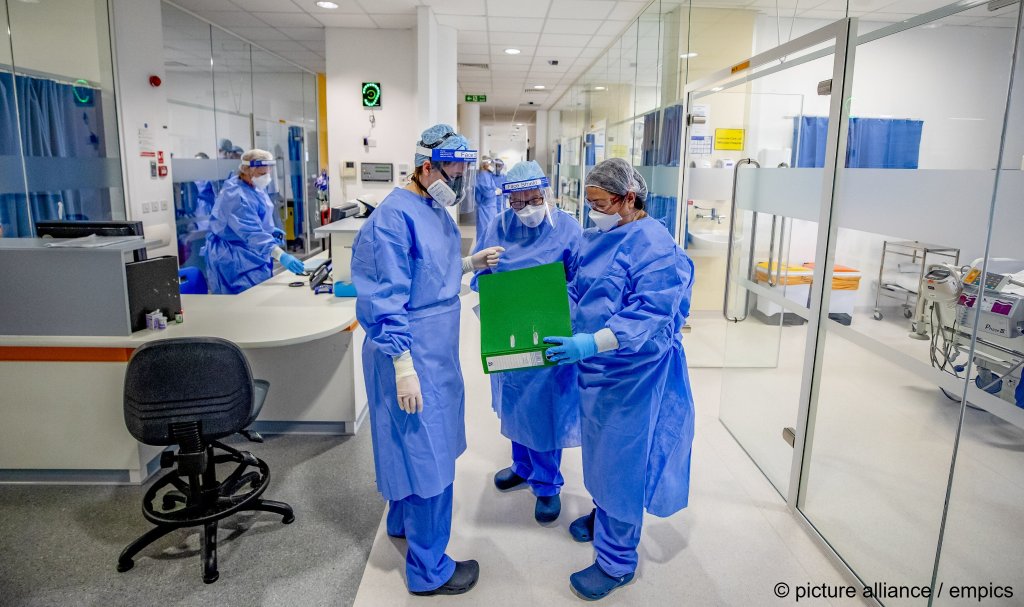
Meanwhile, even the German Hospital Association joined the debate, underlining the point that by now, Syrian doctors made up the single-largest group of foreign doctors in Germany.
The association said that by the end of 2024, a total of 5,745 Syrian doctors were working across Germany in hospitals and other healthcare facilities, adding that Syrian nursing staff had also become indispensable, with more than 2,000 Syrian nurses being employed across the country.
Syrians also play a major role outside Germany's healthcare system: According to Germany's Federal Employment Agency, a total of 320,000 Syrians are currently either in full-time or part-time employment in Germany.
About 85 percent of them are sufficiently employed (i.e. earning more than 600 euros per month) that they qualify for paying taxes and social insurance contributions.
The figure, however, does not reflect Syrians who have become German nationals, as they would not be included under foreign quotas.

An impossibly ambitious plan
Crunching the numbers further reveals why Merz's statement is impossible to turn into reality: the return of 80 percent of 900,000 Syrians in Germany over the next three years would mean that 720,000 Syrians would have to leave — either voluntarily or by way of deportation.
This would mean 240,000 returns per year, 20,000 per month, 4,440 per week, or 666 per day. This would require at least two fully booked flights to Syria per day, seven days a week.
In comparison: Germany succeeded 20,000 deportations to all countries per year in 2024. If Merz's arithmetic were to work, it would have to increase its capacities by 12-fold and only focus on sending back Syrians and no other nationality.
In terms of flights alone, official data from 2023 and 2024 shows that Germany chartered around 200 deportation flights in those years — in addition to booking tickets on an unknown number of scheduled flights — just to succeed with this deportation rate of about 20,000 people in total, to all countries per year.
with dpa, Reuters, KNA