
Earlier this month, Italy’s voters rejected Meloni’s attempt to overhaul the judiciary, which she had hoped would allow her to push on with her stated migration agenda. However, in Brussels, she has hailed the recent approval for the idea of return hubs and a tougher returns procedure, celebrating the fact that her ideas are taking flight across the bloc.
Pinned to the top of Italy's Prime Minister Giorgia Meloni's X page is a characteristically triumphant message. Featuring a picture of her smiling, Meloni celebrates the "green light" given by the European Parliament on Thursday (March 26) for the new regulations on repatriations and return hubs. "Finally Europe is going in the right direction," states Meloni, "and it is a direction that has been strongly supported by Italy."
In the post, Meloni continues that the idea of return hubs will allow "individual nations to repatriate irregular immigrants not just back to their own countries, but to third countries too." This, underlines Meloni, will "finally give Europe a more credible migration policy," allowing for speedier deportations and stronger controls at the border.
Her jubilation though comes hot on the heels of a recent defeat on the domestic front, when a referendum proposed by her party failed to win approval, perhaps making all those European policies harder to implement in Italy itself.
Domestic defeat?
Giorgia Meloni’s defeat in Italy’s constitutional referendum is not just a setback on judicial reform. It is also a blow to the political narrative that has underpinned her migration agenda: the claim that activist judges, rather than the legal weakness of her policies, are the main reason her flagship outsourcing schemes, for instance in Albania, have struggled.
On March 23, in response to her referendum defeat, she wrote on X: "The Italians have made their decision. And we respect that decision. We will move forward, as we always have, with responsibility, determination and respect for the Italian people and for Italy."
Formally, the referendum concerned the organization and oversight of the judiciary. Meloni’s government sought to separate the careers of judges and prosecutors, a change supporters argued would clarify the distinction between judges and prosecutors and reduce internal judicial factionalism, but critics argued would weaken the shared judicial culture that helps safeguard impartiality and can act as a counterbalance to government policy when needed. A counterbalance which is part of most functioning democracies.
It also proposed splitting the Superior Council of the Judiciary -- the constitutional body that governs judicial appointments, promotions, transfers and discipline -- into two separate bodies, one for judges and one for prosecutors.
A further element proposed in the referendum was the creation of a new disciplinary court, designed to handle misconduct cases involving magistrates and shift that function from the existing self-governing system. The government presented the package as a modernization of Italy’s justice system. Instead, voters rejected it by roughly 54 percent to 46 percent, on a turnout of more than 58 percent, turning in some analysts' eyes what the government had framed as institutional reform into a broader political rebuke.
Read AlsoItaly: Meloni vows to do everything she can to make Albania plan work
From judicial reform to migration politics
The result matters because Meloni and her allies had spent the campaign fusing judicial reform with migration politics. In speeches and campaign messaging, she argued that courts were obstructing deportations and undermining public safety, while Justice Minister Carlo Nordio escalated the confrontation by describing parts of the judicial system in quasi-criminal terms.
By the final days of the campaign, the government was no longer merely arguing for a technical reform of judicial governance; it was asking voters to endorse a broader view of executive power in which legal constraints on hardline migration policy were treated as illegitimate obstruction.
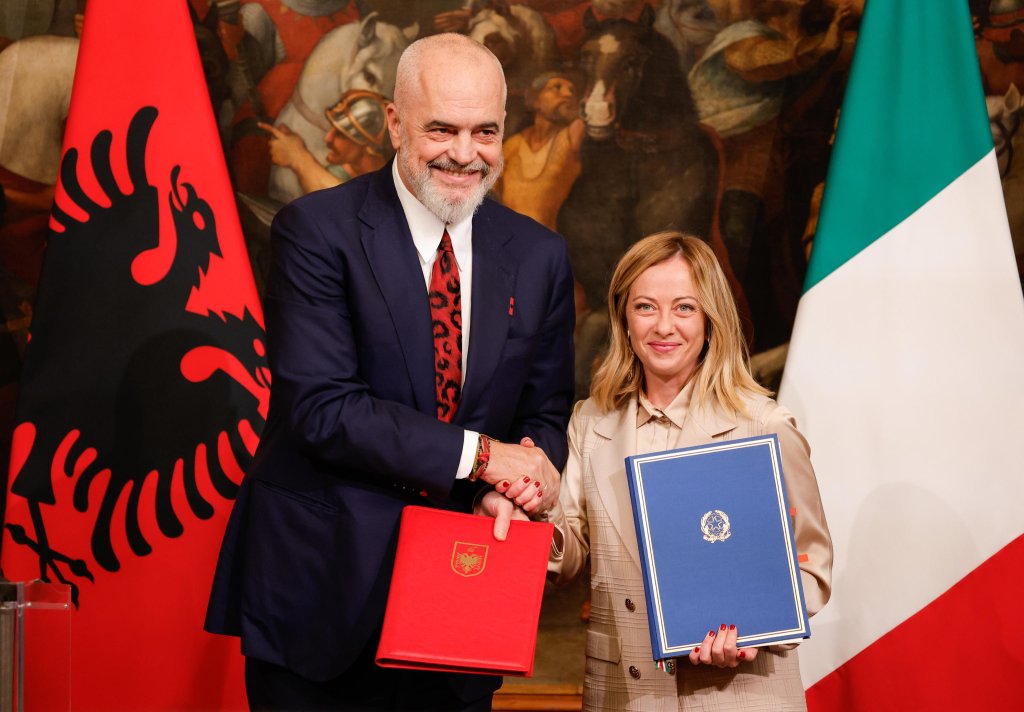
This is where Meloni’s Albania project becomes central. The offshore centers in Albania were presented as proof that Italy could externalize asylum and migration management in a way that was both tough and workable. It is a model that has been praised across the EU and been examined by other leaders in the hope they might one day be able to start up similar schemes.
In practice, however, the Albania scheme has repeatedly been slowed or blocked by courts, and even recent supportive reporting notes that the facilities have largely stood empty because of legal challenges. That record makes it difficult to argue that outsourcing has already succeeded in operational terms, whatever its symbolic value.
Read AlsoAsylum Roundtable: 'Never so many migrants transferred to Albania'
Legal fragility
That legal fragility is central to the argument that Meloni has overstated the scheme’s success. Her government has continued to present the Albania arrangement as a pioneering solution and an example for Europe, despite significant legal setbacks.
The gap between political branding and legal reality is precisely what the referendum result now makes harder to conceal. After this defeat, Meloni can still insist that judges are frustrating the popular will, but she can no longer say that Italians have endorsed her attempt to restructure the constitutional balance in order to overcome those constraints.

The significance of the vote, then, is not that offshore processing suddenly becomes impossible. It is that Meloni’s preferred justification for it has been weakened. She remains in office, and she can still pursue migration restrictions through ordinary legislation, executive decree, bilateral deals and European negotiations.
But the referendum loss could make future clashes with courts look less like proof of judicial sabotage and more like evidence that her migration policies were legally vulnerable from the start. Many of the judgements reached by Italian courts have relied on European legislation to back up their decision. So, on a wider European level, if the Albania scheme has judicial weaknesses, then it might make the actual implementation of return hubs anywhere more dififcult too.
Read AlsoEU migrant 'return hubs' – explained
Wider EU support for return hubs
That said, Thursday's vote in Brussels shows that across Europe, the political wind continues to shift in favor of the externalization of migration policies. On Thursday, the European Parliament voted by 389 to 206, with 32 abstentions, to move ahead on a tougher EU returns regime.
Meloni immediately seized on the vote as vindication of her own policies. But her Albania scheme is not quite the same as the EU's idea of return hubs.
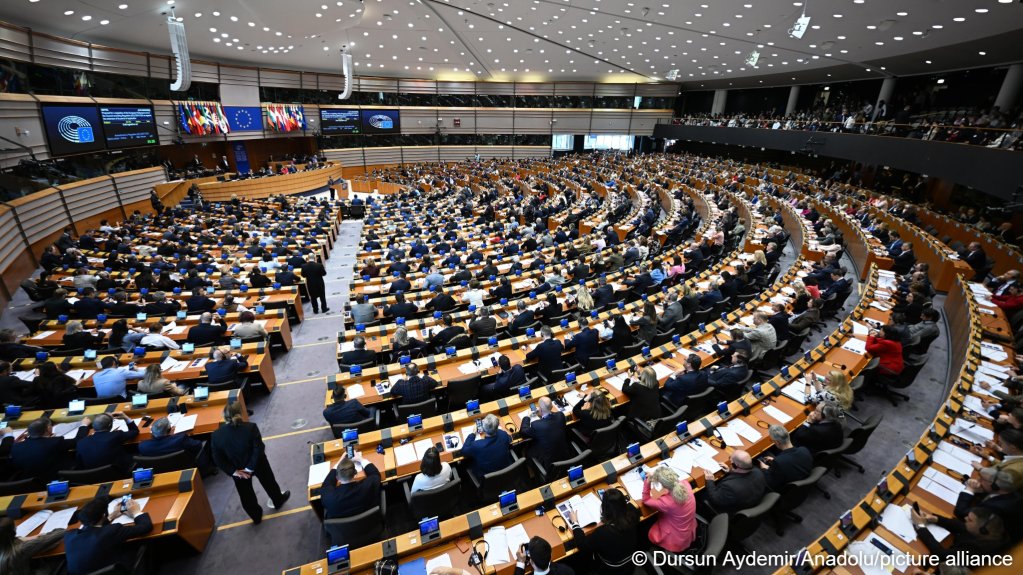
The EU’s proposed return hubs concern people already subject to return decisions, not the exact same legal setting as Italy’s Albania model for processing or detaining certain migrants offshore. But politically the overlap is unmistakable: both rely on the externalization of control, both aim to move difficult parts of migration governance beyond the ordinary territorial space of EU asylum systems, and both are defended as instruments of deterrence and state capacity.
That intervention is politically revealing. After losing a referendum that had become a wider test on her governing authority, Meloni moved quickly to present an EU legislative development as proof that her approach is still shaping the continent’s agenda. In other words, she is trying to convert a domestic setback into an argument about European momentum.
But this is precisely where the distinction between political influence and policy success matters. The European Parliament vote does not show that Italy’s outsourcing experiment has worked. What it shows is that the language and the logic of externalization -- tougher returns, third-country arrangements, longer detention and a more punitive approach to irregular stay -- have moved further into the European mainstream, supported by alliances between center-right and far-right forces.
Read AlsoEU votes in favor of migrant 'return hubs'
Normalizing hardline policies
What Meloni has helped normalize, in other words, is not necessarily a proven model of success, but a vocabulary of migration governance in which outsourcing, offshore detention and legal exceptionalism are presented as pragmatic realism.
That mainstreaming is visible not only in Meloni’s response but in the wider rhetoric around the vote. Charlie Weimers of the Sweden Democrats declared: "There is a new consensus in Europe. The era of deportations has begun."

The danger for the wider EU is that this normalization advances even where the evidence of effectiveness remains thin and the legal risks remain high. Rights groups described the shift in equally stark terms. Marta Welander of the International Rescue Committee called the vote "an historic setback for refugee rights," warning that it would pave the way for "a new punitive EU asylum and migration regime, designed to deter, detain and deport people seeking safety."
Human rights advocates have warned that return hubs outside the EU risk becoming spaces where rights cannot be effectively monitored, and recent reporting shows increasing concerns that such centers could turn into "human rights black holes" or "legal black holes."
Read AlsoNGOs: EU 'Return Regulation' endangers undocumented migrants
Lessons for Europe
The referendum result offers two lessons for Europe. First, hard-right leaders can still be defeated when voters see constitutional reform as an attempt to weaken checks on government power, especially when opponents frame the contest around institutional independence rather than migration numbers alone.
Second, even when such leaders lose at home, the policies they champion may continue to travel at EU level, especially when parts of the center-right adopt their language and legislative priorities.
For Meloni, that is the contradiction of the moment. She lost the vote that was meant to prove she had the authority to bend Italy’s institutions around her agenda. Yet the agenda itself -- externalization, returns, offshore detention, and the recasting of legal safeguards as obstacles -- is moving deeper into the European mainstream.
Read AlsoItaly: Courts issue back-to-back rulings in favor of Sea Watch migrant rescue organization
With AFP and AP