
Since 2024, Germany has moved to bolster security checks across the land borders it shares with neighboring countries. The Netherlands is one of these. The agreement comes as new data has been shared in parliament regarding attempts to cross the border irregularly and those who were turned back.
Germany and the Netherlands have agreed to cooperate on strengthening border security and the implementation of the European Asylum and Migration Pact, with a focus on organizing the return of rejected asylum seekers to their countries of origin via (as yet to be built) return hubs.
The announcement comes at the end of a joint meeting between German Interior Minister Alexander Dobrindt and Dutch Minister for Migration and Asylum, Bart van den Brink, in Berlin on Thursday (March 26).
"We want less irregular migration and significantly more returns. To achieve this, we are relying on clear rules and new instruments such as the Return Hubs, so that returns work more consistently. At the same time, we are making our countries safer. We are working more closely together, exchanging information more quickly, and strengthening cross-border cooperation between our police authorities," Dobrindt said in a statement released on Thursday.
Germany and the Netherlands also intend to cooperate closely in engaging with third countries in the diplomatic implementation of return hubs -- facilities outside of the EU intended for rejected asylum seekers.
"Germany is a very important partner and a good neighbor. Together in Europe, we bear responsibility for a fair and effective asylum policy — with less immigration, more returns and innovative solutions such as return centers," added van den Brink.
Refusals at the border
This week, a question for information in parliament coming from the left-wing Linke faction in parliament elicited information regarding the results of the already existing controls at the border. According to information in answer to the request for information, published by the German press agency dpa, last year, border controls uncovered 4,494 attempts to enter Germany without the correct papers. This was an increase on 2024 figures, which registered 2,863 attempts to enter Germany from the Netherlands without the correct papers.
According to data from the German Federal Police (Bundespolizei), 2025 saw 62,959 attempts to enter Germany at all borders without the correct papers. These figures showed a drop of 25 percent compared to attempts to enter German irregularly in 2024, reported the news portal boerse.de.
About two thirds of those attempts were told to turn back, added boerse.de. Very few of those attempting irregular entry were actually attempting to ask for asylum, confirmed the police.
Of those attempting to seek asylum in Germany, 996 people were turned back at the border, reported dpa, because said German authorities, either they had come from a "safe third country," it was established that they had already applied for asylum in another EU country, which under the terms of the Dublin convention was responsible for determining their asylum claim, or because they were judged to be a danger to society. The majority of those turned back, stated dpa, were nationals from Afghanistan, Turkey and Algeria.
Read AlsoEU votes in favor of migrant 'return hubs'
Expanded border checks
Another aspect of the agreement between the two countries is the bolstering of security cooperation. One way of doing this is through the exchange of round-the-clock information on border activity along the entire border, from Aachen and Maastricht to the North Sea.
Germany imposed checks at all of its land borders starting in September 2024, expanding border checks that were already in place on the borders with Poland, Austria, Switzerland, and the Czech Republic.
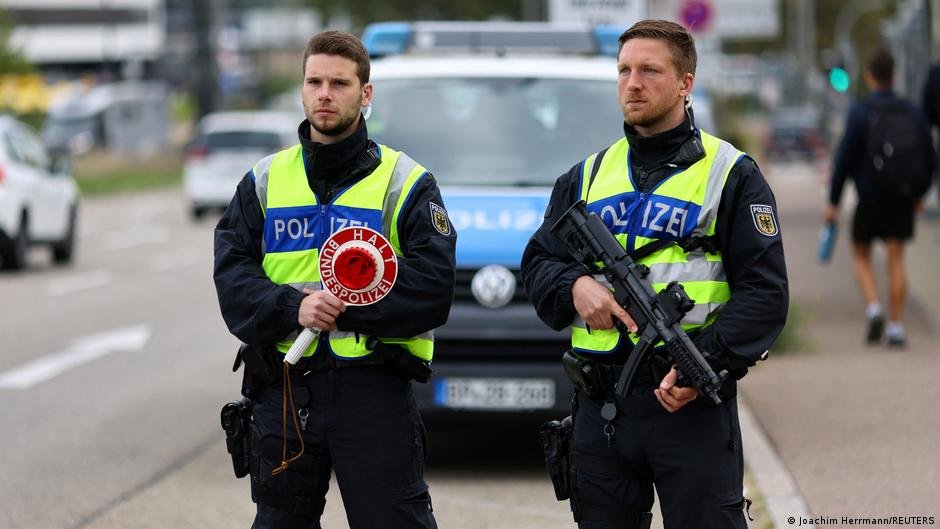
The authorities described the checks as a "targeted way to combat cross-border crime and further limit irregular migration". Travellers and commuters were asked to have documents such as official identification (national ID card or passport) on hand, while nationals of non-EU countries were reminded to comply with requirements for entering Germany.
Germany borders nine countries along a total distance of roughly 3,750 kilometers. The Netherlands lies in Germany's northwest. The shared border between the two countries runs an estimated 577 kilometers.
Data released by the Dutch government indicates the checks carried out at both land borders and airports:
- Total duration of border controls performed: At least 11,210 hours
- Number of persons checked: 143,960 (of which 100,150 were EU citizens)
- Number of cars, buses, trucks, and trains checked: 35,380
- Number of foreign nationals refused entry to the Netherlands: 530
- Number of asylum applications: 110
- Number of persons apprehended/arrested: 250
Border activity
A 2025 report from the Dutch government shows that about 89,000 people work in the Netherlands but live in a neighboring country. Of that number, based on 2023 figures, about 45,000 people were living in Germany but worked in the Netherlands.
The numbers further indicate that cross-border commuters from Germany mainly worked in the provinces of Limburg, Gelderland, Overijssel, and, to a lesser extent, in Noord-Brabant.
The Dutch city of Venlo in North Limburg was recorded as having 9,000 cross-border commuters from Germany, comprising mostly German and Polish nationals, at 3,000 people each.
Read AlsoGermany: Review and round up of 2025 migration policy