
The EU-Turkey deal on migration and asylum was signed in 2016. Ankara agreed to enact stricter borders to curb illegal immigration, while Brussels provided Turkey with six billion euros to improve the humanitarian situation of refugees in the country. Ten years on, how has the deal fared?
The "EU-Turkey deal" was signed in March 2016, amid a sharp increase in the number of people arriving in the European Union (EU) in search of safety and protection. Officially called the "statement of cooperation," the accord aimed to prevent the large groups of migrants departing from the Turkish coast for Greece and Europe.
In fact, some 860,000 migrants traveled along this route in 2015. At the peak of that year, Greece recorded a record 10,000 arrivals per day.
The "statement of cooperation" between EU states and Turkey agreed that anyone who arrived irregularly on the Greek islands from Turkey could be returned there without being able to file for international protection.
The deal also included a "one-in, one-out" plan: for each Syrian returned to Turkey from the Greek islands, another Syrian from Turkey could be resettled in the European Union through a humanitarian corridor.
As part of the deal, the EU provided 6 billion euros to Ankara, with a portion of the funds used to finance stricter border controls by the Turkish police.
Read AlsoEU Council gives final greenlight to new EU asylum measures
'It contributed to the decrease of illegal migration to the EU'
Ten years after its signature, the European Commission considers the deal a success because it "contributed to the decrease of illegal migration to the EU," stated the Commission.
"The 'EU-Turkey' Statement of 2016 remains valid, as a framework of cooperation on migration on the Eastern Mediterranean route [...] For the period of 2021-2027, the EU has allocated almost 5.5 billion euros in support of refugees and host communities in Turkey, as wells in Turkey's capacity for border management."
"Turkey has made significant efforts in hosting and addressing the needs of refugees and migrants," added the Commission.
Ankara currently hosts four million refugees, including over three million Syrian refugees.
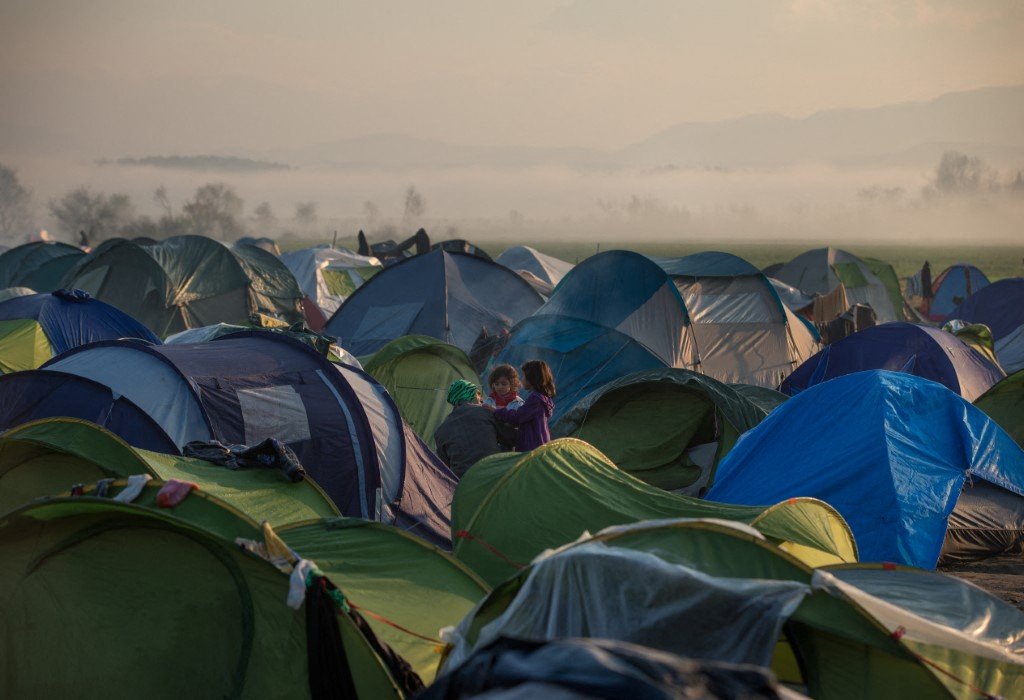
The deal indeed led to the decrease in the number of irregular arrivals, according to statistics released by the United Nations High Commissioner for Refugees (UNHCR). Arrivals by sea to the Greek islands in the Aegean Sea fell in the years following the agreement: 30,000 migrants reached the Green islands by sea in 2017, compared to 173,000 in 2016.
The number of irregular arrivals later fluctuated between 2017 and 2025, without ever reaching the same level that existed from 2015-2016. For example, 42,000 migrants arrived irregularly in Greece by sea in 2025, while 54,000 arrived in 2024.
On the Turkish side, Ankara appears to have respected its obligations to the deal. Beginning in 2016, its border became almost impermeable. Turkish police began massively arresting migrants attempting to enter the European Union. Some 175,000 migrants were intercepted in 2016 compared to 60,000 in 2015 and 40,000 in 2014, according to Ankara's statistics. Most of the migrants detained were Afghans.
Over the following years, the arrests continued at a steady pace: 225,000 migrants were intercepted in 2024 and 160,000 were detained in 2025.
'This Turkish wall did its job'
"This deal was a success for European countries which requested a wall outside of their borders. And this Turkish wall did its job," said Samim Akgönül, professor at the University of Strasbourg and director of the department of Turkish studies.
"There was also some degree of 'success' for the immigrants who stayed in Turkey. Despite the discrimination, the speeches by authorities which are sometimes racist, their precarious status of 'temporary protection,' the millions of Syrians who came to Turkey have roots there. They have children under 10-years-old. They are children born in Turkey who are part of the Turkish population today."
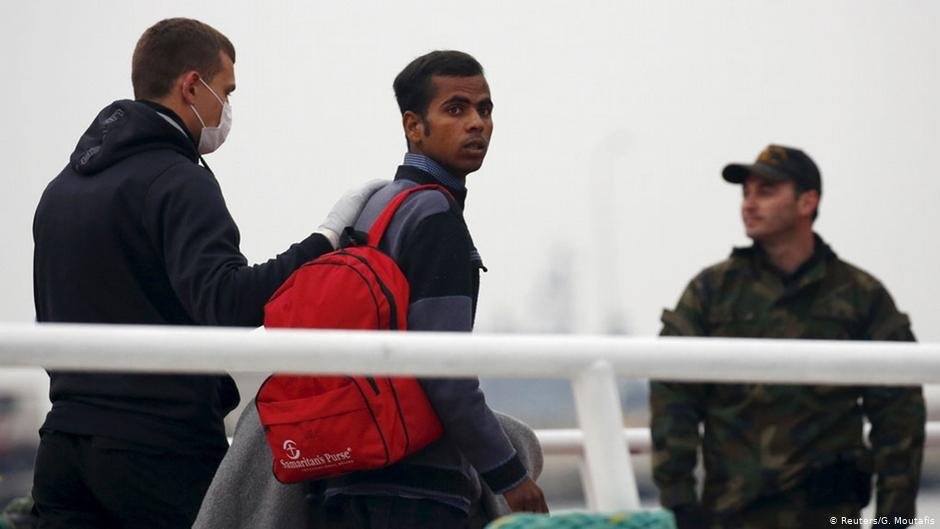
"The deal was working, at least in terms of security, according to the statistics," agrees Didier Billion, deputy director of IRIS in a 2021 interview with the website Toute l’Europe. "Just before the deal, an estimated 3,500 refugees were trying to cross the Aegean Sea every day. After March 18 [the day the deal was signed, editor’s note], the number fell to about 40 refugees per day," he said.
"The accord had a dissuasive effect," said Jean Marcou, director of international relations at Sciences Po in Grenoble and specialist on Turkey, in a 2019 interview with Le Monde.
Yet Brussels had to make concessions "to keep this agreement viable", said Akgönül. "The EU had to turn a blind eye to human rights abuses in the country and the issue of arbitrary detentions."
Read AlsoItaly and Turkey to cooperate closer to curb irregular migration
'Dissuasion, restriction, externalization of migration'
Non-governmental organizations (NGOs) remain indignant over the deal. "The accord re-modeled the migratory policy of the European Union by introducing dissuasion, restriction and the externalization of migration outside EU borders," said the medical humanitarian organization Doctors without Borders -- Médecins Sans Frontières (MSF) in a recent press release.
The deal "considered a 'success' by the European Commission" came at "an enormous cost," with "thousands of people subject to inhuman conditions" in Turkish detention centers.
Numerous NGOs slam the difficult living conditions for migrants and delays in processing asylum files in the various hotspots (also called Reception and Identification centers) situated on the Greek islands.
"This deal can be considered a failure from a humanitarian point of view," said Akgönül. "The Aegean Sea has become a cemetery. Migrants risk a lot to avoid security forces and eventually reach Europe."
MSF also slammed the deal for having inspired similar partnerships. "During the last decade [. . . ] the EU extended its cooperation to other countries like Libya, Tunisia, Senegal, Mauritania, Morocco, Niger, Egypt and certain Balkan countries, to stop people from arriving in Europe."
The EU signed accords with other countries to prevent or reduce the irregular arrival of migrants: a new deal was signed with Libya in 2017, another was signed with Tunisia in 2023 and yet another was signed with Egypt in 2024.
The deal was already branded as "a resounding failure" in 2021, according to Amnesty International on the fifth anniversary of the accord.
Turkey used the migratory deal for political leverage with the EU on several occasions. Dissatisfied with the EU over discussions on the payment of promised funding in 2020, Ankara opened its border. Tens of thousands of migrants crossed into Greece in a matter of days, only to find themselves stranded at the Kastanies border crossing between Turkey and Greece.
Read AlsoThe 'refugee summer' of 2015: Key moments that shaped Germany