
When they turn 18, many juvenile migrants face the prospect of "ageing out" of protections and safeguards meant for children. In the EU's changing migration landscape, some face increased risk of deportation if they do not reach permanent residency status by the time they reach 18.
Official European data estimates that, on January 1, 2024 around 7.5 million minors in the European Union (EU) were not citizens of their country of residence.
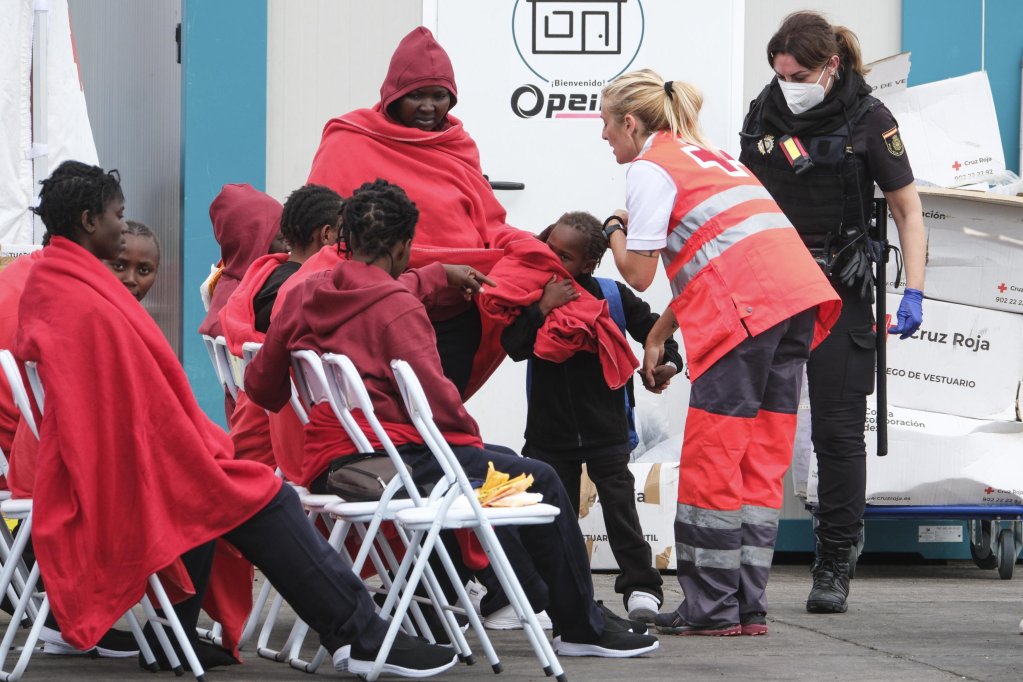
Many of these youths are living with their families. Others may have arrived via family reunification routes, or they may have moved alone, as unaccompanied minors in the hope of finding a better life, or have been forced to move, pushed by conflicts, poverty or climate change.
Age assessment, which determines eligibility for child protection laws and benefits, remains a critical challenge. Some juvenile migrants arrive with little or no reliable identification documents to verify their age.
So, what happens to migrant children when they turn 18 and cross over from being classified as a child to an adult?
Read AlsoUnaccompanied foreign minors in Italy: Only a small fraction lived with foster families in 2025
'Ageing out' transitioning
According to a study by the Belgium-based NGO Platform for International Cooperation on Undocumented Migrants (PICUM), international and EU law guarantee children certain rights and protections regardless of their residency status. However, this changes when they turn 18 and, under the law, are considered adults.
In some cases, preferential access to essential support and services like health care, social workers, schooling, training, or a guardian may no longer apply.

This stage of transitioning out of the child's rights framework is termed 'ageing out'. For migrant children, whose residence status has yet to be regularized, ageing out also comes with it the possibility of becoming undocumented on their 18th birthday. The PICUM research also stressed the risk of deportation because of that sudden advent of irregular status.
Most EU member states protect unaccompanied children from deportation, either by issuing a temporary residence permit until they turn 18 or by not implementing return orders while they are underage. However, unless the juvenile migrant has secured a residence permit, protections against deportation diminish once they become an adult.

Even when there are paths to residency available, they may be "incredibly hard" to access in practice.
For instance, undocumented young people may not be able to meet the conditions for a long-term residence permit, like working full-time in the case of Sweden or proving that they have spent at least half of their life in the country, as is the case in the United Kingdom (UK). Additionally, bureaucratic procedures related to applying for long-term residence permits may also be too expensive, making them inaccessible for young people.
In Sweden, the Qatari-backed broadcaster Al Jazeera recently profiled the case of Iliya Taheraki, who moved to the country when he was eight, when his parents fled Iran. When Taheraki turned 18, though, Al Jazeera reports, he received a notice of deportation.
The tightening of Swedish migration laws has translated in some cases into teens like Taheraki facing deportation if they haven't been able to acquire permanent residency status by the time they turn 18.
Earlier this month, in response to widespread criticism over cases where minors were forced to leave while their parents were allowed to stay, the Swedish government announced a suspension of the deportation of teen migrants as the government evaluates its family immigration rules.
Read AlsoSweden halts deportations of teen migrants whose families remain
New migration and return regulations
Migrant minors, including unaccompanied minors, who are irregularly present, can be ordered to leave EU territory under the Return Directive
An estimated 25,200 minors were ordered to leave the EU in 2024. Among those ordered to leave, 63 percent were male. The top five countries of origin of those ordered to leave the EU were Turkey, Syria, Afghanistan, Russia, and Georgia.
As the EU is set to implement a new Return Directive this year, PICUM warns of ways that new provisions could harm juvenile migrants.
"This law could impact hundreds of thousands of children across the EU each year - most living here with their families," Laetitia Van der Vennet, Senior Advocacy Officer at PICUM told InfoMigrants.
Snapshot
The data below, taken from statistics released by Eurostat, Europe's statistical agency, provides a snapshot of irregular migrants in the EU.
Scale of child migration in the EU
- In 2024, more than 41,500 minors crossed the EU’s external borders irregularly
- Of this group, over 12,400 were unaccompanied, meaning they arrived without a parent or guardian
This marks the second-highest annual figure on record, showing that child migration remains a significant and persistent phenomenon.
Who are these children?
- Minors made up 12.3 percent of all irregular migrants
- Most of the irregular child migrants are boys, who represent 79 percent, while girls represent 21 percent
- Typical age of juvenile male migrant is between 14 and 17 (about 76 percent)
It is interesting to note that among younger children, the gender demographic changes.
Among girls, 70 percent are under 14 years-old.
This suggests that older teenage boys are more likely to migrate alone, while younger children are more often girls or part of family units
Where are they in the EU?
- In 2024, around 112,000 minors were found to be irregularly present across the EU, the highest level since 2016
- Countries with the highest estimated number of irregular minors:
Greece (34,100)
Germany (30,800)
Italy (13,200)
- Slovenia has the highest rate per million inhabitants, followed by Greece, Croatia, and Cyprus. The research indicates that migration pressure is unevenly distributed, and smaller states can be disproportionately affected.