
The Hitsats camp, in central Tigray, northern Ethiopia, hosts more than 15,500 people displaced by the war, which officially ended in November 2022. The impossibility of returning to the western part of the region and the deplorable living conditions in the camp are forcing some of them to flee to Europe via Libya, where many are subject to widespread violence. For the families who remain, deep despair is rife.
Gebremedhin carefully unfurls a plastic banner on the dusty ground. A portrait of his 26-year-old son, Jonas, is displayed next to text written in Tigrinya, the language of Tigray. "It says that my son is in prison in Libya, and that we need money to free him," the father explains. "It's a cry for help, and our last hope."
Two years ago, Jonas left the Hitsats displaced persons camp in central Tigray, northern Ethiopia, for Libya, a transit country on the migration route to Europe. But just a few days after his arrival, the young man was arrested by militiamen and thrown in prison. They are demanding 1.5 million birr, or 8,200 euros, from his family, who remained in the camp, in exchange for his release. "We begged our friends and family for help. Thanks to them, we managed to send 150,000 birr [820 euros], but it wasn’t enough. They only stopped beating Jonas for a few weeks. He’s still in prison."
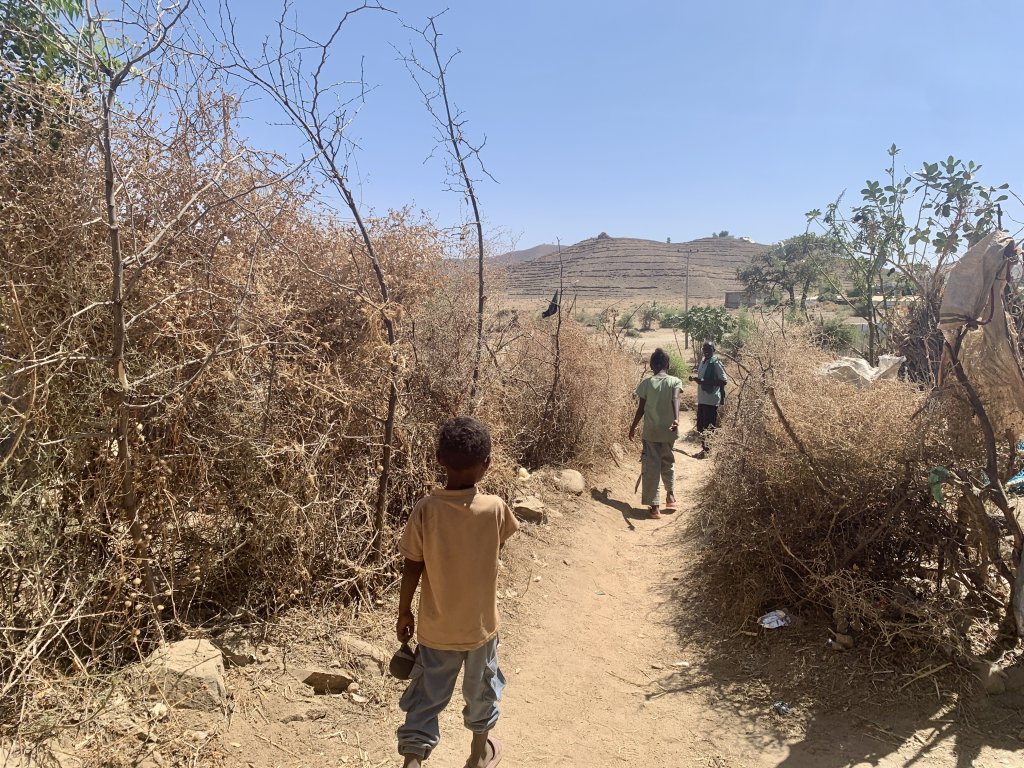
In the Hitsats camp, Gebremedhin’s story is far from an isolated case. According to Keshi Mebrahtu, the site coordinator, of the camp's 4,525 households — which house a total of 15,550 people — "half have a son, daughter, brother, or sister who has left on the migration routes, mostly for Libya. Families are decimated by these departures." Once arrested, the migrants are often subjected to beatings and torture, lack of hygiene and food, to force their relatives to pay exorbitant ransoms for their release. Videos of migrants being tortured and threatened regularly flood social media in Ethiopia.
Amselet, too, received a call one day in 2023 from a trafficker in Libya. "He demanded 1 million birr [around 5,518 euros] to free my brother, who was 18. I was in shock because I thought he was in Sudan at the time [during the Tigray war, hundreds of thousands of people from the western part of the region fled to neighboring Sudan]. He left for Libya without telling anyone."
Amselet and her family, who raised cattle before the war, sold all their animals to cover part of the ransom. For a while, the beatings stopped. "And then the traffickers asked for more money, but we have nothing left now, we’re stuck here," she says, her voice getting caught up in her throat. "What am I supposed to do?"
Ethnic cleansing
Like Amselet’s brother, thousands of Tigrayans from the west risk their lives on the so-called "Northern" migration route, driven by the impossibility of returning home.
Since the end of the war, formalized by the Pretoria Agreement on November 3, 2022, western Tigray has been occupied by the neighboring Amhara region. During the conflict, its armed forces, allied with the federal army of Addis Ababa and Eritrean soldiers, took control of western Tigray, leading to forced displacement of populations, ethnic cleansing, and crimes against humanity, documented in an April 2022 report by NGO Human Rights Watch (HRW).
Since then, the Amhara authorities have administered the region, and testimonies of segregation against the Tigrayans who remained are multiplying. Before fleeing to Hitstats, Gebremedhin, for example, spent a year in a prison in Humera. "I was Tigrayan, that was enough for them to lock me up."
Displacement
Today, more than 750,000 displaced people remain trapped in camps across the region, according to the UN High Commissioner for Refugees (UNHCR), despite the Pretoria Agreement which demands Ethiopian authorities organize their return.
For most displaced people, rebuilding their lives in Tigray is an unthinkable option, given the economic bleakness gripping the region. Before the conflict, however, "it was one of the most dynamic regions in Ethiopia," driven by the "agriculture, manufacturing, and small industries" sectors, as reported in a study published on August 4, 2025, in the American journal Nature. Tigray thus accounted for nearly 10 percent of Ethiopia's industrial GDP growth. But the war "wiped out decades of economic progress, leading to the destruction of key industrial facilities, the disruption of supply chains, and the mass displacement of workers."
According to a study by the Tigray Youth Association — which is part of the regional administration — in 2023, 81 percent of Tigrayans aged 25 to 35 were unemployed. And 40 percent of those surveyed were considering leaving Ethiopia to seek employment abroad. "Yes, the guns have fallen silent, but the war continues in other forms," Yohannes Giday, coordinator of the association, explained. "The reconstruction of Tigray hasn’t even begun. Infrastructure and social services have been reduced to ashes. So, of course, young people prefer to cross the border."
'She couldn’t bear this life'
The living conditions in the hundreds of camps for displaced people in Tigray further diminish any hope for a future in the territory. In Hitsats, the dismantling of the United States Agency for International Development (USAID), decided by Donald Trump in March 2025, has drastically reduced humanitarian aid and plunged displaced people into dire straits. Since 2022, 335 people have died in the camp due to lack of food and medicine.
In December and January, a fundraising campaign organized by TikTokers helped to improve the situation somewhat. "It saved us, but it’s only temporary support. I’m afraid the situation will become even more critical in the coming months," Keshi Mebrahtu said with worry.
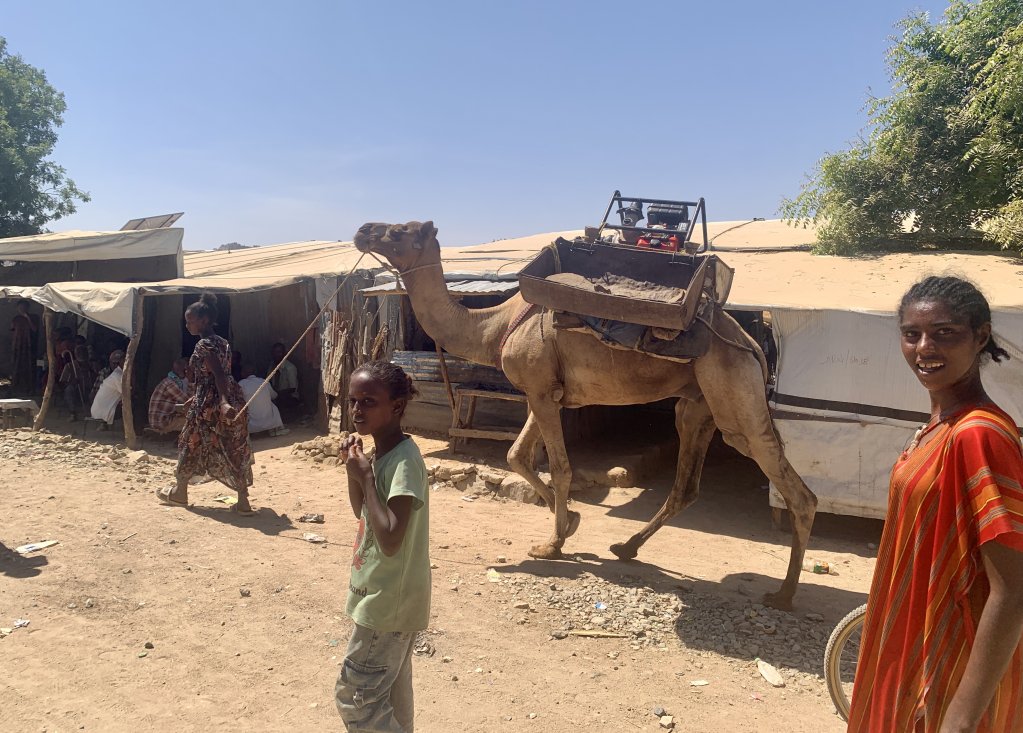
Merhawit, 25, fled these living conditions three years ago. "It was too hard for her, she couldn’t bear this life," recounts her mother, Abeba, in the small courtyard next to her shelter. "So she left, telling me she was going to look for work in Addis Ababa. Several months later, I received a call from a number in Libya. On the other end of the line, I could hear blows and my daughter crying." Merhawit’s captors demanded 1.8 million birr, about 9,800 euros, which the family was unable to pay.
The young woman then spent a year in a Libyan prison and contracted tuberculosis. "When she became too weak, they released her," Abeba added. On her lap was a dress of her daughter’s, which she has kept carefully ever since. Merhawit now survives in Tripoli, thanks to the help of other migrant women like herself. "She wants to cross the sea to work in Europe and get medical treatment for one of her brothers, who suffers from a heart condition."
Knowing that for now Merhawit is alive is precious. But many families remain without news of their loved ones, like Amselet, who hasn't heard from her brother in months. She tells InfoMigrants: "I don't know where he is or what he's doing. I just hope he's still alive."