
Foreign workers in Malaga make on average 5,000 euros less per year than Spanish residents, with temporary and part-time jobs driving much of the wage gap. Meanwhile, Spain is now opening post office and Social Security service windows to allow hundreds of thousands of undocumented migrants to apply for legal residence and work permits as part of its regularization drive.
Migrant workers in southern Spain continue to earn significantly less than local residents, highlighting persistent inequalities in labor markets even as wage gaps show signs of narrowing, report unions.
In Malaga province for instance, foreign workers earn on average 29.1 percent less than Spanish nationals, according to trade union Comisiones Obreras, cited by the news portal Sur in English. The gap has narrowed from 38.2 percent in 2022, but still amounts to roughly 5,000 euros less per year. Average annual earnings stand at 20,974 euros for Spanish workers versus 16,246 euros for migrants.
Union officials attribute the improvement largely to increases in Spain’s minimum wage, which disproportionately benefit migrant workers concentrated in lower-paid roles. However, structural disparities remain. Migrants are more likely to hold temporary or part-time jobs, working the equivalent of 64 percent of a full-time schedule compared with 77 percent for local workers, local media reported.
Migrant workers 'key' to the economy
The imbalance is also reflected in income distribution. Nearly half of migrant workers in Malaga earn less than 10,000 euros annually, with pronounced gender disparities among foreign workers. Women earn significantly less than men, according to the same data.

Despite lower wages, migrants play a key role in the regional economy. More than 121,000 foreign workers are employed in Malaga, accounting for 16.5 percent of the workforce, and contributing an estimated 8.5 billion euros annually, the union said. However, many remain in informal employment, particularly in agriculture, retail and hospitality, highlighting the scale of Spain’s shadow economy.
The wage gap in Malaga, while substantial, is smaller than in the wider region of Andalucía, where foreign workers earn on average nearly 7,400 euros less than locals, representing a 58 percent difference. At the national level, the disparity is even higher, reported Sur, exceeding 8,800 euros.
Read AlsoSpain and IOM discuss migration cooperation during Madrid visit
Application locations expanded in regularization drive
Against this backdrop, Spain is preparing a large-scale regularization program aimed at bringing hundreds of thousands of undocumented migrants into the formal system.
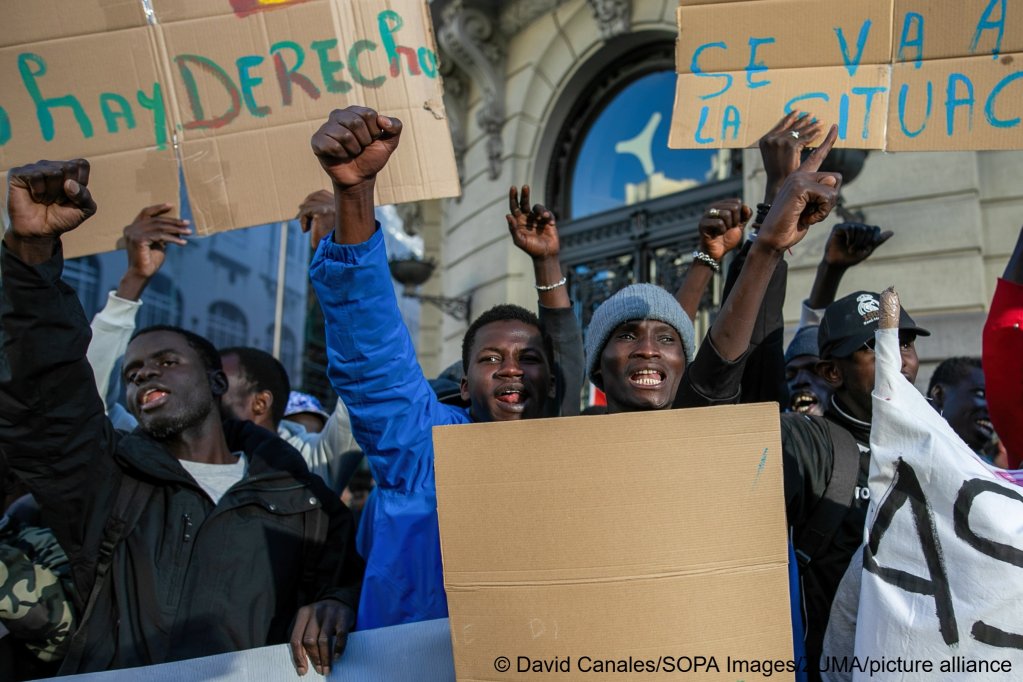
Under a draft decree, migrants will be able to submit applications for residence and work permits through designated service windows at post offices and Social Security offices, El País reported on Monday (March 23). The Ministry of Migration will oversee the process, with a specialized unit reviewing applications.
The government estimates that about 500,000 people could qualify, though some analysts put the figure closer to 840,000. Applicants must demonstrate prior residence in Spain and meet eligibility criteria set out in the decree, which is pending final approval.
Officials aim to process applications within three months, though concerns remain about administrative capacity and potential delays, reflecting longstanding bottlenecks in Spain’s immigration system.