
As the EU hands Nigeria 290 million euros and market access, a new returns pact promises "dignified" repatriation -- but critics warn of human rights issues and risks for migrants fleeing violence.
The European Union and Nigeria have signed a readmission and returns agreement, committing to the speedy repatriation of Nigerians without legal status in Europe while opening doors to nearly 290 million euros in infrastructure investments.
EU High Representative for Foreign Affairs and Security Policy Kaja Kallas and Nigerian Foreign Minister Yusuf Tuggar announced the deal after the 8th EU-Nigeria Ministerial Dialogue, framing it as a "new era" of partnership amid rising migration pressures and shared security concerns.
This pact builds on years of cautious engagement, evolving from 2023's leaked EU concerns over Nigeria's view of Europe as a "closed space" with strict visas into a multifaceted upgrade covering trade, defense, and science.
The announcement comes just days after the UK and Nigeria unveiled a bilateral migration deal, further underscoring how European actors are bundling returns and security cooperation with promises of economic and diplomatic rewards.
Read AlsoUK and Nigeria sign deal to streamline migrant returns
'Team Europe'
Such promises are now being fleshed out in concrete financing terms under the EU’s "Team Europe" brand, which coordinates EU‑level funds with national development budgets and European banks to present a unified European package to partner countries. These new Team Europe commitments, outlined in an EU press release following the Eighth Ministerial Dialogue, bring total EU support for Nigeria to 962.5 million euros since 2025, positioning the readmission agreement as only one element of a wider, infrastructure‑driven partnership.
In the same week, the European Union announced a 290‑million‑euro Team Europe package for Nigeria -- channelled through the Global Gateway strategy -- to fund digitalization, health‑sector modernization, and agricultural value chains, alongside additional funding for migration‑related reintegration and anti‑smuggling work.
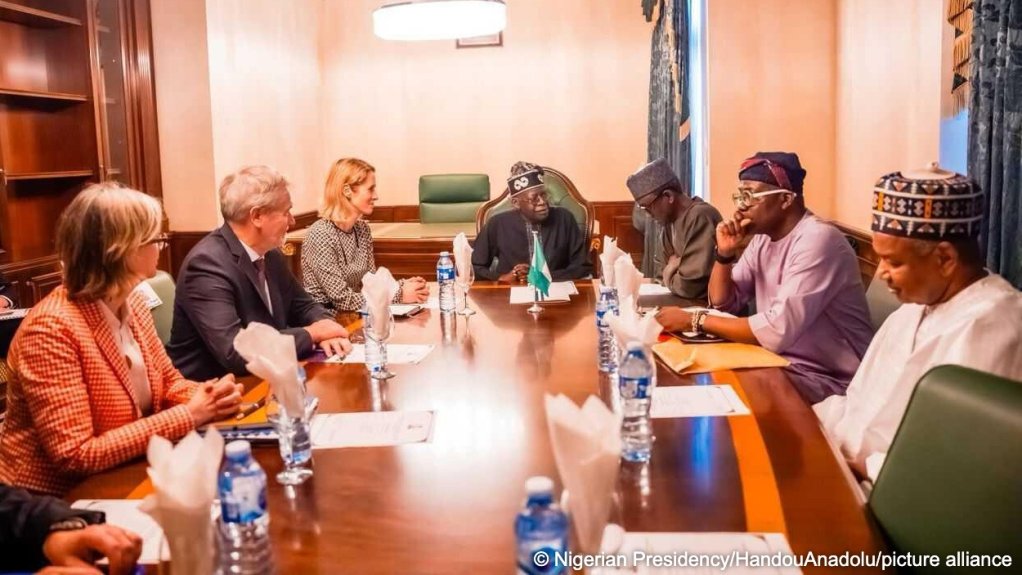
High Representative Kaja Kallas framed the partnership as a deliberate upgrade: "In the current geopolitical context, the European Union is keen to enhance its partnership with Nigeria. Bringing more EU investment to Nigeria, aligning with the Renewed Hope agenda for the Nigerian Federal Government is a key priority for both sides in this regard."
Commissioner for International Partnerships Jozef Síkela added that these investments create "new quality infrastructures, sustainable jobs and long‑term economic opportunities that benefit the Nigerian people, but also create new opportunities for Europe."
Taken together with earlier transport, energy, democracy, and gender‑violence programs, this demonstrates Europe's current approach, to offer a template of migration cooperation that is explicitly wrapped in infrastructure, job‑creation and rights‑linked narratives.
From limited ties to strategic pivot
The agreement mandates Nigeria to accept returns of its nationals whose asylum claims fail or who overstay visas, verified through passports, biometric data, or witness statements -- streamlining processes that previously stalled due to identification disputes.
Financial incentives for Nigeria include immediate Global Gateway funding: 66 million euros in grants plus 221 million euros in low-interest loans for digital connectivity, agriculture, health upgrades, and migration management, atop 700 million euros in past counterterrorism support. A June business forum in Lagos and access to the multibillion-euro Horizon Europe research program sweeten the pot, potentially boosting Nigeria's exports and jobs from over 200 EU firms already employing 130,000 locals -- representing 25 percent of its trade.
Nigeria, Africa's most populous nation at 230 million and its largest economy, has long punched below its weight diplomatically with the EU, despite its significant oil wealth and BRICS membership. Relations have warmed post-2023 when the EU named it as a "key strategic partner" -- one from each continent -- to expand influence against Russia after its invasions of Ukraine (in February 2022).
Since then talks have also accelerated on migration control, with the EU prioritizing returns amid Nigeria's role as a top origin for irregular Mediterranean crossings. Similar pacts exist with Kenya, where a German deal promised jobs but emphasized returns -- highlighting the EU's template of mobility tied to cooperation.
Read AlsoUK uses visa restrictions to pressure African countries on deportation deals
Youth job crisis meets EU shortages
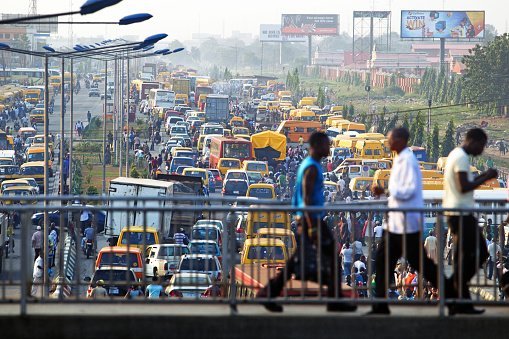
Push factors driving Nigerians -- mostly young, single males aged 23-34 (the country's median age is just 19) -- to leave the country are stark: economic woes like unemployment, debt, and scant livelihoods, are evident in IOM surveys, with security threats from militia groups like Boko Haram creating secondary pressure for residents of some regions, particularly in the north.
Over 80 million youth lack formal jobs in a nation growing by three to four million workers every year. Informal employment dominates, offering no contracts or protections. There is also a clear mismatch with the growing rate of education and the labor market, with many holding STEM degrees and very few opportunities in local markets, fueling risky journeys costing thousands of dollars.
In theory, this aligns perfectly with EU labor gaps in healthcare, IT, engineering, construction, and trades -- exacerbated by aging demographics and green/digital transitions. Germany's 2026 shortage list lowers EU Blue Card thresholds to 45,934 euros annually for such roles. Legal pathways via Talent Partnerships seek to train Nigerians for circular migration. SUSTAIN -- a labor mobility initiative between Nigeria, Germany and Ireland -- has prepped up to 240 young Nigerian STEM professionals for jobs in Germany and Ireland, fostering "brain gain" with skills that aim to later benefit both nations.
Read AlsoCase of Nigerian model puts UK asylum system to the test
Mechanics of returns and Global Gateway backbone
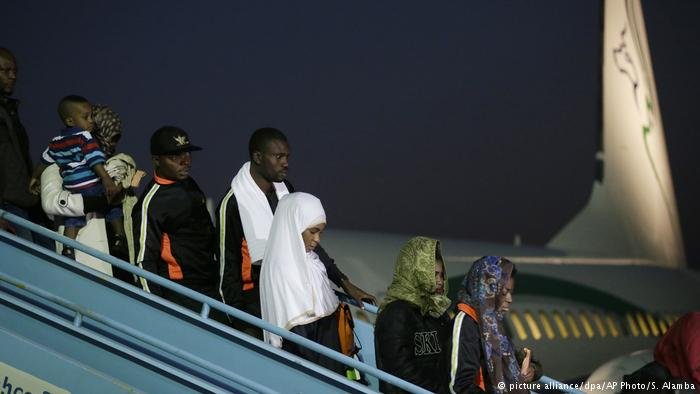
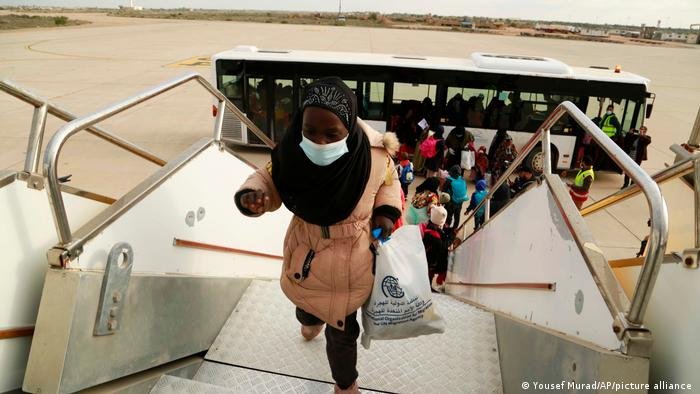
Under the new agreement, it is expected that more people will be returned via faster charter flights and enhanced data sharing. This could increase the numbers of returns to thousands annually. While the Global Gateway funds blend of grants, loans, and private capital are intended for transparent, green projects.
Nigeria is grappling with insecurity, spiralling inflation, vigilante violence, torture allegations, and deepening youth exclusion -- a "ticking time bomb," according to human‑rights reports -- that is being aggravated by a steady erosion of civic and political freedoms. In this fragile context, fast‑track returns of Nigerians from Europe could risk refoulement for those fleeing violence, believe some human rights experts, especially given extremely low levels of asylum‑system awareness (estimated at 3-15 percent prior to departure) and weak reintegration prospects.
EU efforts to package migration cooperation with financial incentives -- often described as a "cash‑for‑migrants" model -- have drawn sharp criticism, with analysts warning that paying governments to stop departures or take people back can entrench unaccountable security elites rather than protect migrants' rights.
In the Sahel region, (which crosses parts of northern Nigeria) similar deals have coincided with harsh anti‑migration laws, crackdowns on civil society and securitized border zones, leading some observers to argue that the approach has helped normalize repression under the banner of "stability." Against this backdrop, critics see the Nigeria agreement as echoing patterns seen in neighboring countries like Niger, where EU‑backed security cooperation did not prevent the 2023 military takeover and the subsequent detention of former President Mohamed Bazoum, but arguably helped strengthen the very apparatus now being used to silence dissent under an autocratic military junta.
Brussels, however, points to the New Pact on Migration and Asylum, which it says aims to combine firm enforcement with a "dignified" and rules‑based approach, supervised by independent monitoring mechanisms. Yet recent similar experiences in Kenya show that overpromising jobs and economic benefits tied to readmission deals can backfire, undermining trust in both governments and donors.
For Nigeria, the readmission pact reinforces its role as West Africa’s linchpin, but it also raises a central question: whether the EU’s mix of investment lures and returns‑focused cooperation can deliver shared gains without undermining the very protections it claims to safeguard.