
The IOM says that there are just shy of 940,000 migrants in Libya, according to the latest data that was available, based on a count from the end of 2025. The unofficial number is believed to be much higher.
The IOM Libya’s Displacement Tracking Matrix (DTM) program has identified a total of 939,638 migrants present in Libya across the country’s 100 municipalities.
However, this data — though it is the most recent available — dates back to November and December 2025. The actual number of migrants in the country is assumed to be much higher due to both unreported instances and also due to the fact of a rival government effectively running the east of the country, where it is difficult to get reliable numbers and statistics.
The largest groups of migrants in Libya had come originally from Sudan, Niger, Egypt, Chad, and Nigeria.
The majority of them were found to be residing in urban settings, including the major cities of Tripoli, Benghazi, and Misrata.
While the number of 939,638 migrants is technically the greatest number recorded since this data began to be monitored, some historical estimates imply that before Libya's 2011 civil war, there might have been up to 2.5 million foreign nationals in the country.
Read AlsoWhy are people migrating from Egypt?
Precarious living conditions
The IOM highlighted the fact that migrants continue to report suffering persistent challenges around daily life in Libya — the majority of irregular migrants in the country hope to move to Europe eventually.
These include financial hardship, lack of documentation, limited access to healthcare, and overall precarious living and working conditions.
A recent report by the Mixed Migration Center has shown that migrants in Libya often don't get paid on time or even at all, effectively rendering them in a state that essentially qualifies as indentured labor.
Some are stuck in an actual state of slavery, whereby they are abused for the labor under the threat of violence. Others are trafficked in prostitution or suffer sexual abuse.
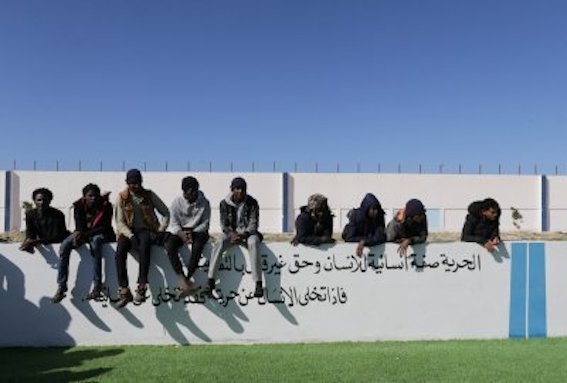
Read AlsoLibya: 'I wish I had died,' says migrant after weeks of rape
Libya: increasingly a destination country for migrants
Libya has emerged as the main departure point for migrants from around the world wishing to enter the European Union by irregular means.
Many, however, end up stuck in the North African nation for years on end, unable to pay smugglers the fee for their onward journey — which typically involves dangerous crossings of the Mediterranean Sea by boat to Italy and Greece.
Each year, hundreds of people die on flimsy, unseaworthy dinghies trying to reach European soil.
Read AlsoItaly: Migrant departures from Libya have increased, says Italian Foreign Minister
Meanwhile, Libya has also increasingly turned from being a transit country for migrants to a longterm destination, with the cheap labor afforded by these foreigners matching the demand in several sectors, including construction, agriculture, and domestic work.
The IOM says that economic challenges in migrants' home countries continue to serve as the main driver of migration to Libya, though conflict related arrivals — especially from Sudan — had also increased.
Read AlsoBangladesh-Libya-Italy migration route: 'An adaptive and organized route to Europe'