
Denmark and Italy have said Europe "cannot risk a repeat of the refugee and migratory flows as seen in 2015." Leaders of the two countries Giorgia Meloni and Mette Frederiksen called on the EU Commission to approve millions of dollars in aid for the Middle East to discourage people fleeing in the first place.
Denmark and Italy's leaders have expressed concerns that the ongoing conflict in the Middle East could prompt large numbers of migrants and refugees seeking entry into the European Union, and called for tighter border measures.
In a joint letter, Mette Frederiksen and Giorgia Meloni said Europe "cannot risk a repeat" of 2015-2016, when hundreds of thousands of migrants, many fleeing the Syrian civil war, arrived in the bloc. Both leaders, who have pursued stricter immigration policies at home, urged the European Commission to approve a 458-million-euro humanitarian aid package aimed at supporting populations in the region and slowing migration toward Europe.
"The ongoing conflict in the Middle East is increasingly worrying in a number of domains, spreading in a region already hosting large numbers of displaced people," the letter read. "We cannot risk a repeat of the refugee and migratory flows to the EU which we saw unfold in 2015-2016. This would not only be a humanitarian catastrophe for the people directly affected but will also risk impacting on the security and cohesion of our Union."
Read AlsoOver 330,000 displaced by recent hostilities in Middle East and beyond, says UNHCR
EU to explore 'innovative' anti-migration mechanisms
Frederiksen and Meloni said that the aid package should help countries in the Middle East manage the effects of the conflict, which began after attacks on Iran by the United States and Israel in late February, before those affected attempt to flee to Europe. They added that the EU must "be prepared and take the necessary steps if the situation develops" adding: "We cannot afford to be taken by surprise as in the past. This means further strengthening our borders."
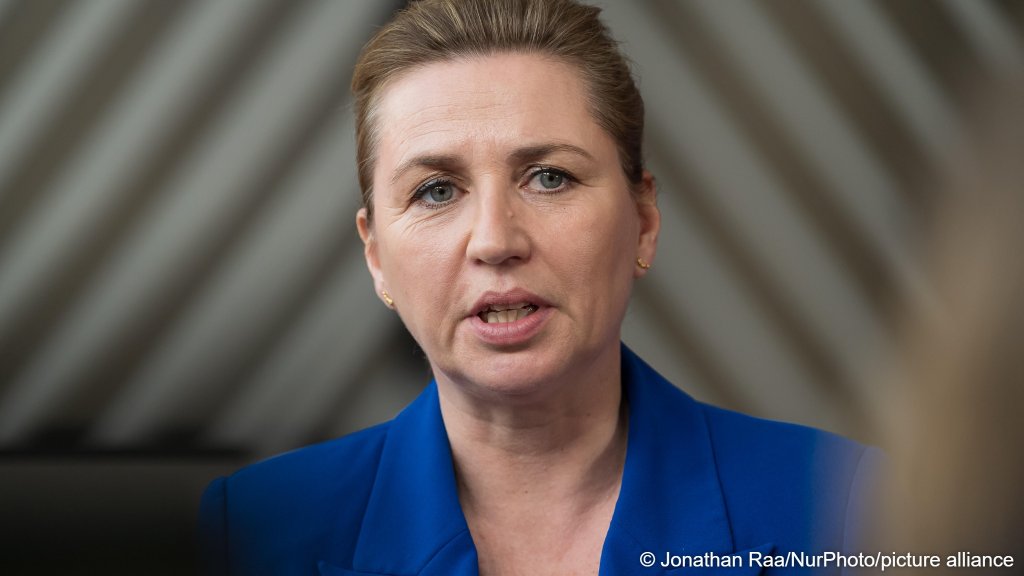
The two leaders, along with Dutch Prime Minister Rob Jetten, recently held informal talks with representatives from several EU nations and the European Commission to explore "innovative" ways to reduce migration amid the ongoing Middle East conflict, according to Meloni’s office.
Earlier this month, German Chancellor Friedrich Merz also cautioned that a potential disintegration of Iran could have "far-reaching consequences," including a significant impact on migration patterns.
UN refugee body warns of mass population movements
The United Nations Refugee Agency (UNHCR) last week warned of a "worrying escalation in humanitarian needs" as millions of people have become displaced due to the current Middle East conflict.
Stéphane Dujarric, spokesperson for the UN Secretary-General, has said hundreds of thousands are caught in the crossfire in Lebanon, where ongoing air strikes and displacement orders have forced entire communities from their homes. Areas south of the Liani River, parts of the Ba'be governate, sections of the Beka Valley, and large portions of Beirut’s suburbs have all seen significant population movements.
"In the past week, more than 660,000 people registered themselves as displaced with the Lebanese government," Dujarric announced.
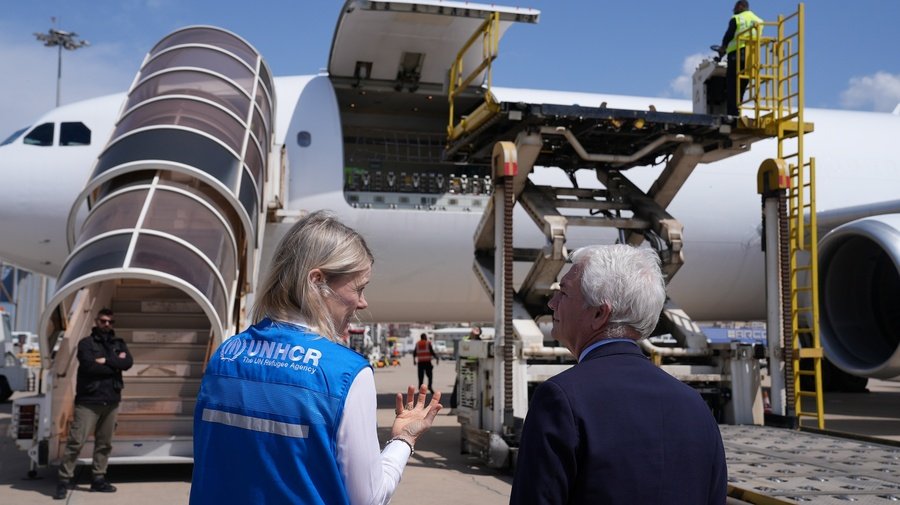
In Iran, UNHCR estimates that over three million people have been temporarily displaced, with many fleeing Tehran and northern urban centers in search of safety.
War in Syria and Ukraine triggers mass displacement
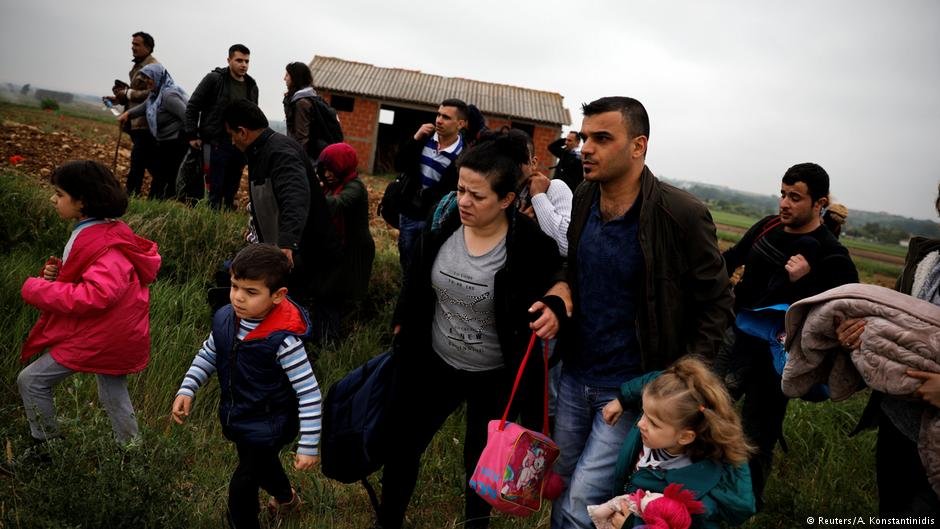
During the 2015 Syrian crisis, Germany accepted hundreds of thousands of refugees. As of the end of 2023, around 973,000 Syrians were living in Germany, of whom roughly 712,000 had received refugee status or temporary humanitarian protection. More recently, more than 980,000 Ukrainian refugees were registered in Germany following the Russian invasion in February 2022.
However, Gerald Knaus, chairman of the European Stability Initiative, told German media Deutschlandfunk last week that reinforced borders in countries such as Turkey currently limit escape routes for those fleeing the conflict.
Read AlsoGermany concerned Iran conflict may trigger new refugee flows to Europe
Germany could be primary destination for potential Iranian migrants
A 2024 study by the Rockwool Foundation Berlin, based on a Gallup survey of 1,007 Iranians, suggests that Germany would be the primary destination for potential migrants from Iran, followed by Canada (13 percent), Turkey (10 percent), and the UK and France (six percent). The study highlighted that diaspora networks play a key role in migration decisions, helping reduce relocation costs and easing integration.
Recent German government data shows that more than 13,500 Iranian nationals arrived in Germany between January and November 2025. However, protection rates remain low: only 27.6 percent of 891 Iranian asylum applications in January and February were approved, while the overall rate for 2025 stood at 22.8 percent across 11,626 decisions, according to the Federal Office for Migration and Refugees (BAMF).
However, it remains unclear how developments across the Middle East may influence asylum decisions or trigger new migrant movements.
With AFP and dpa