
Germany’s interior ministry has signaled it will stop funding independent asylum counseling services starting next year. Opponents warn that ending the program could undermine legal safeguards for migrants and slow down asylum procedures.
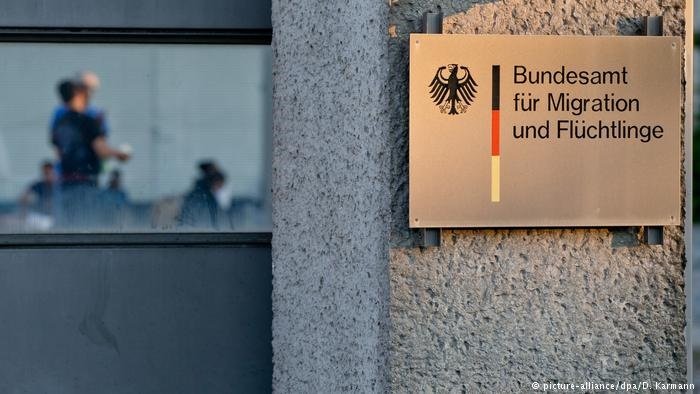
The German interior ministry has announced that it does not plan to finance independent asylum counseling from 2027 onward, according to reports by the Redaktionsnetzwerk Deutschland (RND) editorial network and the journalism non-profit network Correctiv.
The ministry, led by Alexander Dobrindt, has informed welfare organizations of the government's plans to cut funding. The interior ministry declined to confirm the decision, citing that funding allocations are determined during federal budget negotiations, which for 2027 have not yet taken place.
The counseling program was introduced under Germany's former "traffic-light coalition" (made up of the Social Democratic Party, the Free Democratic Party, and The Greens under Chancellor Olaf Scholz, SPD) to provide asylum seekers with free, independent, and voluntary counseling, as outlined in Section 12a of the country's Asylum Act. The coalition hoped the program would help speed up proceedings for asylum requests.
The current coalition agreement between the Christian Democratic Union/Christian Social Union and the Social Democratic Party, however, is calling for an evaluation of the counseling service before decisions about its future are made.
Read AlsoEU migrant 'return hubs' – explained
Welfare organizations and charities warn cuts threaten civil society
Welfare groups and charities have strongly criticized the potential funding cut. Michael Groß, president of the Arbeiterwohlfahrt (ABO, Worker's Welfare Association), called the move a "serious political mistake."
"After all the attacks on the right to asylum, civil society is now also being actively pushed out of supporting refugees," he told the RND network.
Oliver Müller of the Catholic charity Caritas said ending the program would be “short-sighted,” emphasizing that early, qualified advice helps speed up asylum procedures and reduces unnecessary lawsuits.
Rüdiger Schuch, president of the German Christian charity Diakonie, warned that getting rid of counseling for asylum seekers could make procedures longer and slow down the country's asylum processes.
Pro Asyl’s managing director Karl Kopp, meanwhile, described independent counseling as "not a luxury but a central rule-of-law safeguard within the asylum process," noting its importance for vulnerable individuals to navigate complex legal procedures.
LGBTQI+ advocacy groups have also warned of "fatal consequences" for marginalized asylum seekers if the funding is withdrawn.
Read AlsoEU parliament to harden its stance on asylum seekers
How did different political groups react to the plans?
Germany's Green Party also condemned plans to slash the funding for independent asylum counseling. Federal parliament member Leon Eckert told RND that Dobrindt’s approach was a "migration-policy and humanitarian blind flight," citing both alleged budgetary pressures and an undisclosed evaluation as justification for the decision.
The Interior Ministry is basing its decision “on alleged savings pressures in the budget as well as an evaluation result that it is simultaneously keeping under wraps,” Eckert told RND. Interior Minister Dobrindt (CSU), who also wants to cut funding for integration courses, is continuing “his migration-policy and humanitarian blind flight” with this step, Eckert criticized.
SPD politicians have expressed disagreement within the coalition. Parliament member Hakan Demir of the SPD has said that, particularly for vulnerable groups, it was important not to speak only with representatives of the authorities about an upcoming asylum procedure.
"That is why we continue to advocate for independent asylum procedure counseling.”
With AFP and dpa