
The United Nations Refugee Agency (UNHCR) warned of a "worrying escalation in humanitarian needs" in the Middle East as hostilities continue into the second week. Meanwhile, a study based on a poll among Iranian nationals indicates that Germany is the most likely destination country for those considering emigration.
The United Nations Refugee Agency (UNHCR) warned of a "worrying escalation in humanitarian needs" as millions continue to be displaced in the Middle East as hostilities continue into the second week.
In a press briefing on Tuesday (March 10), Stéphane Dujarric, spokesperson for the UN Secretary-General, said that in Lebanon, hundreds of thousands are caught in the crossfire of hostilities as "air strikes and displacement orders" continue.
Entire populations were reportedly displaced in areas south of the Liani River, while thousands of others were displaced in areas that included the Ba'be governate, parts of the Beka Valley, and large sections of Beirut suburbs.
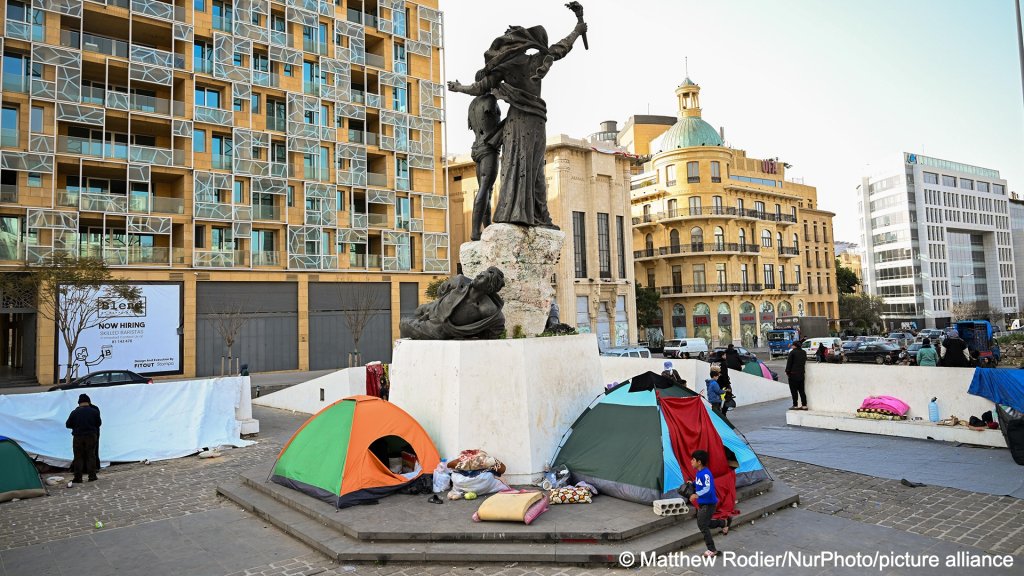
"In the past week, more than 660,000 people registered themselves as displaced with the Lebanese government," Dujarric said.
Addressing the UN Security Council in New York on Thursday (March 12), Tom Fletcher, the United Nations Under-Secretary-General for Humanitarian Affairs and Emergency Relief Coordinator (OCHA), said that "mass displacement is accelerating" across Lebanon and warned that these conditions heighten the risk of sexual violence, exploitation, and trafficking, especially among women and girls.
Meanwhile, in Iran, the UNHCR estimates that more than 3 million people are temporarily displaced inside the country. Most of the displaced are said to be fleeing the capital of Tehran and other urban areas in the northern part of the country in search of safety.
"We’re seeing large-scale movements into densely populated urban areas where shelter capacity is already overstretched," Fletcher said.
Hundreds of shelters "are overcrowded, with inadequate sanitation [and] insufficient essential supplies," he told the council.
Read AlsoAfghan refugees and Iran's poorest bear the brunt of war
Pushing for diplomatic solutions
Germany's Chancellor Friedrich Merz has pushed for diplomatic solutions to hostilities, warning that escalation and a prolonged continuation of this war could have severe consequences for the Middle East, Europe, and migration flows, particularly if it leads to the breakdown of the Iranian state.
"We do not want to see a Syrian scenario," he said on Friday (March 6). "We naturally have a strong interest in this ourselves to avoid new waves of refugees from the region," Merz, who is from the Christian Democratic Union (CDU), said.
In 2015, when armed conflict in Syria triggered a mass exodus, Germany opened its doors to hundreds of thousands seeking protection. According to data from the German Federal Statistical Office, approximately 973,000 Syrians were residing in Germany as of the end of 2023. Approximately 712,000 of them have been granted refugee status, which includes asylum seekers with pending applications and those whose applications have been rejected but who have been granted temporary protection on humanitarian grounds.
Additionally, more than 980,000 Ukrainian refugees were registered in Germany since the Russian invasion of Ukraine in February 2022, according to the government's interior ministry.
Migration experts have said they do not expect an increase in refugees arriving in Europe despite the ongoing attacks on Iran. Gerald Knaus, the chairman of the European Stability Initiative (ESI) think tank, told public radio Deutschlandfunk on Wednesday that countries such as Turkey have fortified their borders, meaning there are currently no escape routes for people fleeing the conflict.
"If we have borders guarded by soldiers with orders to shoot, then even the most desperate people in the world cannot leave their country."
Read AlsoGermany concerned Iran conflict may trigger new refugee flows to Europe
Study: Germany, a likely country for refuge
A study by the Berlin-based Rockwool Foundation (RF) suggests that should the outbreak of hostilities in the Middle East trigger a new refugee movement, Germany is likely to be the primary destination for people from Iran. The results of the study, seen by the news agency Reuters, showed the following countries as their most likely destination for potential emigration:
- Germany: 28 percent
- Canada: 13 percent
- Turkey: 10 percent
- UK and France: 6 percent
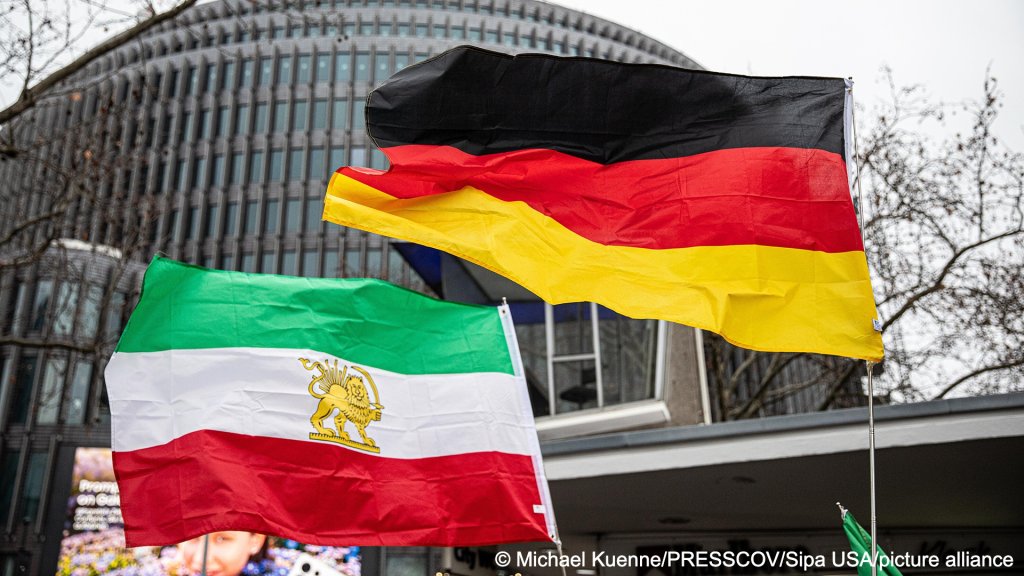
The findings were based on a 2024 survey conducted by the Gallup Polling Institute among 1,007 Iranians. Of those surveyed, 252 indicated a desire to emigrate.
RF pointed to existing diaspora networks between the country of origin and destination as a main point of consideration for people in choosing a country to migrate to. Apart from the kinship and familiarity, settling in where there are established diaspora communities can reduce the costs of moving and soften the initial difficulties of finding your way in a foreign country.
Read AlsoGermany cuts funding for integration of refugees
Protection rate in Germany
The latest government data indicates that there were over 13,500 Iranian nationals who arrived in Germany from January to November 2025.
However, only about one in four Iranian asylum seekers has recently been granted protection, according to new figures from the Federal Office for Migration and Refugees (BAMF), reported by the RND media group on Thursday.
In January and February, 27.6 percent of 891 asylum applications by Iranian nationals were granted protection. For 2025 overall, the protection rate (which includes asylum recognition, refugee status and deportation bans) was 22.8 percent across 11,626 decisions. A BAMF spokesperson told RND that it is still unclear whether developments in Iran and the wider region will affect asylum decisions or lead to new refugee movements.