
A new bill introducing "return hubs" in third countries to accelerate deportations was recently approved by a key committee of the European Parliament. InfoMigrants explains how the new plan would work — and why rights groups warn of the human cost.
On March 9, 2026, the Committee on Civil Liberties, Justice and Home Affairs (LIBE) in the EU Parliament approved amendments to a proposal by the European Commission to overhaul EU return procedures. This return regulation, first proposed by the Commission in March 2025, would streamline the return process of rejected asylum seekers across the EU.
If approved by a majority of the European Parliament, the new law would also see the introduction of so-called "return hubs" -- facilities planned outside the European Union where countries aim to send people who have been ordered to leave after their asylum claims are rejected.
The plan has sparked intense debate. Supporters see it as a practical fix for overwhelmed borders, while critics warn of potential abuses, legal challenges and a precarious long-term dependency on host countries.
InfoMigrants breaks down the key objectives of the return regulation -- specifically the return hubs -- and what implementation may look like in practice.
Background: Why is the EU proposing offshore asylum hubs?
The origins of the new regulation go back to the 2008 Return Directive (Directive 2008/115/EC), which set basic minimum standards across EU countries for handling people without legal permission to stay -- including a six-month detention limit, preference for voluntary departure, and procedures largely left to member states.
In practice, however, it fell short: return orders piled up while deportations lagged due to poor coordination, missing travel documents and court challenges.

The Commission has warned that Europe's migration and asylum systems face significant strain, necessitating faster, more coordinated returns for those without legal stay rights. In December 2024, Commission President Ursula von der Leyen made returns a top priority for her new mandate, vowing to "draw lessons from Italy-Albania" -- a controversial deal routing arrivals straight to Albanian detention centers.
Then came the return regulation, proposed by European Commissioner for Home Affairs, Ylva Johansson on March 11, 2025. Unlike the old directive, this is a full "regulation" -- directly applying across the EU without national tweaks, allowing for new approaches by member states to enable returns to non-EU countries. Although it is separate, it fits into the logic of the broader EU Migration Pact, which will take full effect in June 2026, with the goal of creating a "common European system" for returns.
This push reflects the EU migration policy's broader shift toward deterrence and enforcement, where the new Pact on Asylum and Migration has weakened safeguards to prioritize tighter border controls, accelerated procedures, and higher return rates.
What are return hubs?
Return hubs are physical centers in non-EU countries where people with rejected asylum claims would be sent to await deportation. The goal is to speed up deportations by processing returns in third countries rather than inside the EU -- part of a major push to raise current low return rates. Only about 20 to 30 percent of roughly 700,000 annual return orders are currently enforced.
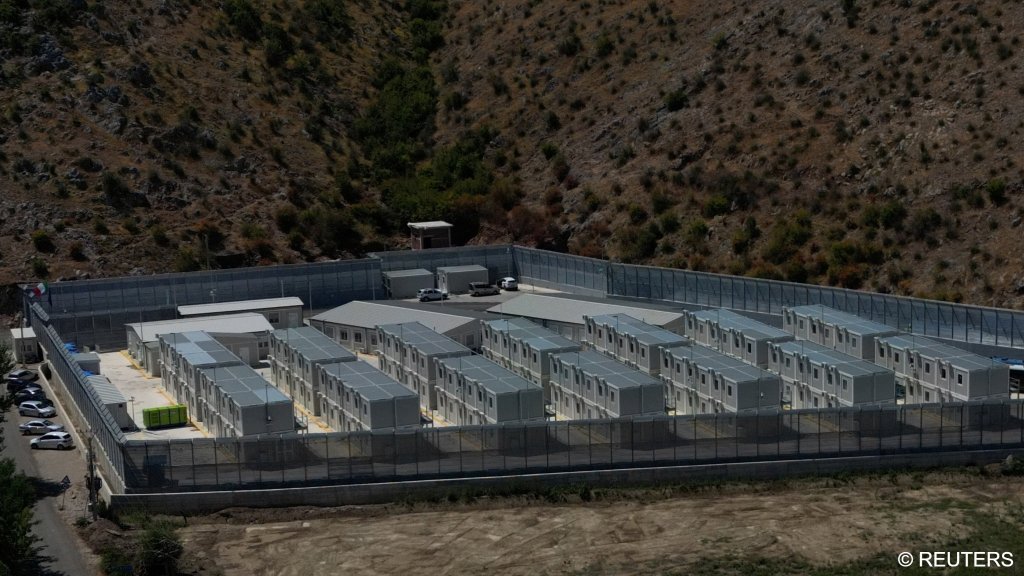
They operate via bilateral agreements between EU states and host governments, with no overarching EU-wide binding framework -- just promises of compliance with basics like non-refoulement.
The process works as follows:
- An EU country issues a return order after rejecting an asylum claim. These orders will be mutually recognized across the bloc by July 2027.
- The person is transferred to a hub in a third country -- e.g. Albania, Uganda.
- At the hub: identity checks, obtaining travel documents, detention if the person resists or poses a risk.
- Final outcome: deportation to home country, or transfer to another "safe third country."
Funding will come from the 420 million euro annual solidarity pool -- cash contributions (20,000 euros per avoided relocation) from member states opting out of asylum seeker transfers, aiding frontline countries like Italy -- plus development aid incentives for hosts.
Italy's deal with Albania to build and run centers in Shëngjin and Gjader -- 670 million euros over five years to process 36,000 people annually -- serves as the main blueprint.
How would they work?
While the details of how these proposed return hubs would function remain unclear, the proposal establishes the following criteria:
- EU states can only establish hubs in non-EU countries meeting international human rights standards, including non-refoulement (prohibiting returns to persecution).
- EU states would need to sign a bilateral agreement with the host country. These must detail transfer procedures, living conditions, and stay durations, with monitoring mechanisms to track implementation and adapt to changing circumstances in host countries.
- The proposal initially excluded unaccompanied minors and families with children from being sent to return hubs, but the Council's December 2025 agreement overturned this for families -- now permitting their transfer to hubs alongside adults.
- The Council approach confirms hubs serve dual roles: final destinations or transit centers for onward deportation, raising concerns about the length of detention in these facilities.
However, critical practical uncertainties persist, raising doubts about real-world compliance, with no clear EU oversight for extraterritorial violations.
What does this mean for migrants in practice?
The new rules and hubs replace patchy national procedures with a uniform EU fast-track system -- but one with significantly stricter enforcement mechanisms.
Under the return regulation, return orders apply bloc-wide: a rejected asylum claim in Greece will trigger automatic mutual recognition across the EU, enabling swift transfer to offshore hubs like Uganda or Tunisia by July 2027.
However, hub conditions remain unpredictable. Bilateral deals with hosts could create variable standards without direct EU oversight -- for example, Uganda might offer stability, but Tunisia and Libya carry documented risks of torture and chain-refoulement.
Migrants will be subjected to increased surveillance. The regulation mandates expanded use of EU-wide databases like Eurodac (now storing facial images, biometrics, alphanumeric data from age 6) and interoperability with the Schengen Information System for real-time tracking of return orders, locations, and absconding risks.

Criticism
In a joint statement, published last year, the Platform for International Cooperation on Undocumented Migrants (PICUM) and over 250 organizations warned of broad collection/sharing of sensitive data -- including health, criminal records -- with third countries lacking adequate protections.
They also raised concerns over intrusive tech in detention -- GPS tracking, mobile surveillance, and increased racial profiling.
Rights groups have warned that the proposal paves the way for EU states to set up deportation centers abroad, where arbitrary detention, weak oversight, chain refoulement to unsafe countries and other violations loom large. PICUM notes it would also foster overcrowded facilities while granting "emergency" powers to curb judicial review -- even for families and children.
Silvia Carta, PICUM Advocacy Officer, said: "This new proposal is a lucid attempt to escalate the EU's obsession with deportations, by applying a discriminatory and punitive approach to any person in an irregular situation."
Adding that there is no consideration of measures that could truly foster social inclusion and regularization. "Instead, we can likely expect more people being locked up in immigration detention centres across Europe, families separated, and people sent to countries they don't even know," Carta stated.
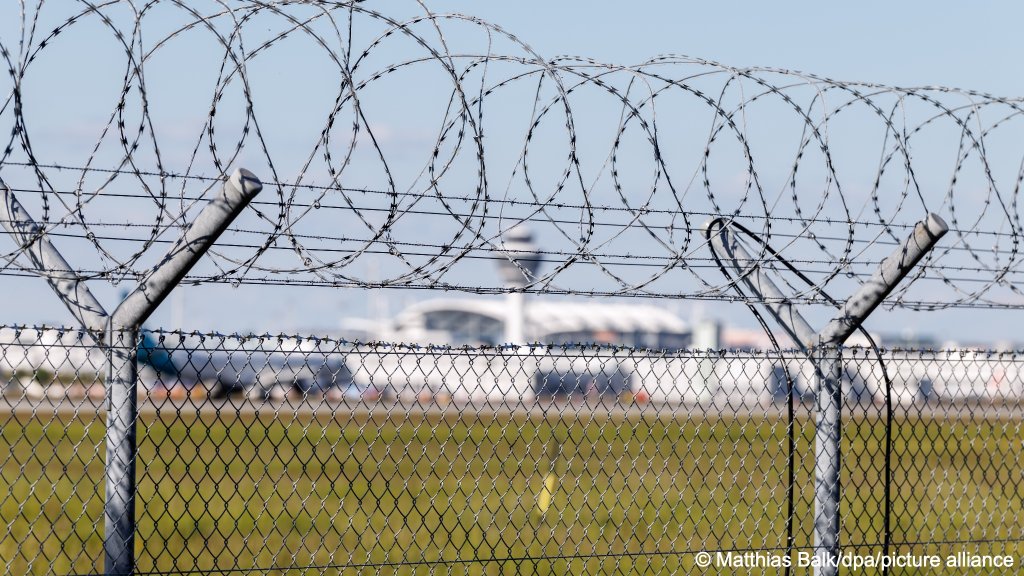
Hundreds of organizations previously called for the regulation's rejection. The International Rescue Committee warns of a "rollback of rights" and the EU Fundamental Rights Agency (FRA) has said that "planned return hubs cannot be rights-free zones."
In a recent interview with InfoMigrants, Elizabeth Tan, Director of UNHCR’s Division of International Protection, noted that the agency has "serious protection concerns in Tunisia and Libya."
Stating that "those are not safe countries for refugees and asylum seekers right now. If a European country were proposing an agreement with Libya, we would consider that not to be in line with international standards."
Unintended consequences
Critics warn the hubs risk a range of unintended outcomes beyond the immediate rights concerns. Host countries like Tunisia could continuously leverage migration deals for cash, creating "rentier states" dependent on migration management income, while failing to uphold basic human rights standards.

Weak oversight could mirror the abuses seen in Libya, boosting smuggling networks and enabling torture. Most fundamentally, critics argue the hubs will simply not work -- as they do nothing to address the conflicts, climate pressures and poverty that drive migration in the first place.