
Sudanese refugees currently face fewer escape routes to neighboring countries and stricter European asylum policies. Katarzyna Grabska, a research professor at the Centre for Humanitarian Studies at the University of Geneva, described the new obstacles facing those trying to flee the violence in Sudan, as well as the solidarity mechanisms that help fill the gaps left by shrinking state support.
Since April 2023, Sudan has been engulfed in a civil war between the army and the Rapid Support Forces (RSF) paramilitary group that has killed tens of thousands, displaced nearly 12 million people and created the world’s largest humanitarian crisis.
In June 2024, the former United Nations High Commissioner for Refugees Filippo Grandi called Sudan “the definition of a perfect storm” because of the combination of circumstances that create drastic outcomes. War and violence led to human rights atrocities, causing millions of people to flee. Famine and food insecurity are affecting 25 million people, while peace efforts have stalled.
Around four million people have sought refuge in neighboring countries like Egypt and Chad. A few thousand manage to reach Europe, where they often board rickety boats to cross the Channel into the United Kingdom (UK), and the majority have their asylum claims approved.
Katarzyna Grabska, research professor at the Centre for Humanitarian Studies at the University of Geneva, spoke with InfoMigrants about the extra layers of difficulty facing Sudanese refugees in 2026, and how Sudanese communities are filling in for the shrinking state support.
IM: Are civilians still managing to flee Sudan and what paths are they taking to get out?
KG: Some four million people have managed to escape across the borders. This adds to the “perfect storm”, described by the former United Nations High Commissioner for Refugees, Filippo Grandi. With over 7 million internally displaced, many remain trapped in the country, and this also intensifies the scale of the humanitarian disaster.
Read AlsoWar in Sudan: 'In Darfur, some people have been displaced for the third or fourth time'
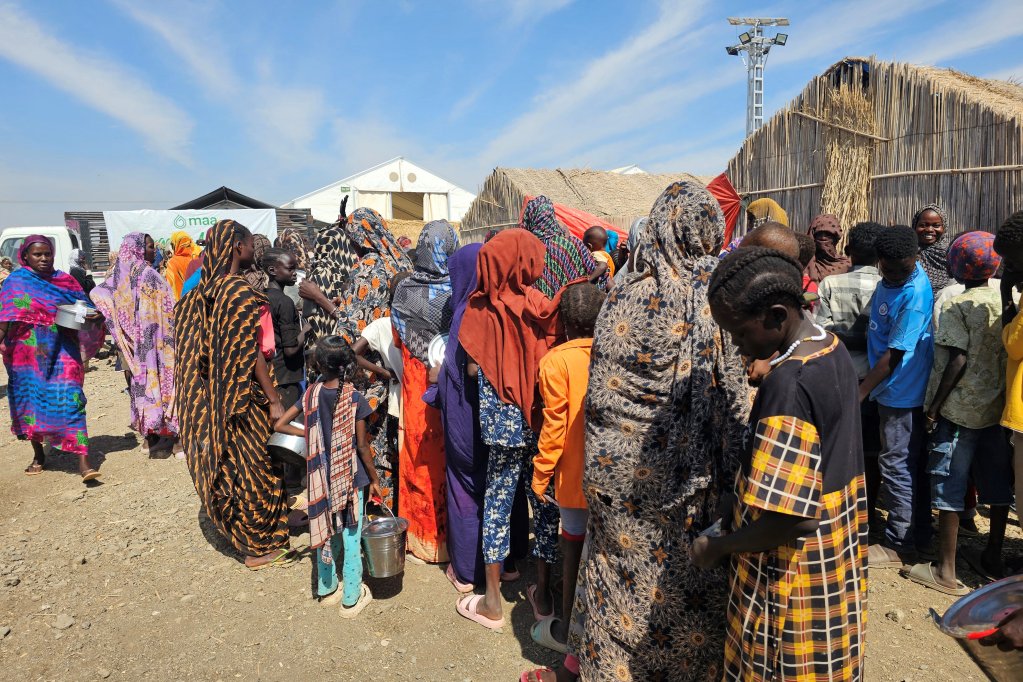
Sudanese refugees have been fleeing to neighboring countries like Chad, the Central African Republic, Libya, South Sudan, Egypt, Ethiopia and Uganda. Yet certain borders are closing. Chad closed its eastern border with Sudan on February 23, after clashes with RSF killed five Chadian soldiers, three civilians and wounded 12 people. When Chad closes its border with Sudan, it closes both an important route for people to flee warzones in Darfur as well as a vital channel of humanitarian aid into Sudan.
To the north, Egypt has been a major hub for Sudanese fleeing the conflict and now hosts an estimated 1.5 million Sudanese nationals. The Four-Freedom Agreement, which was established in 2004, gave Sudanese access to freedom of movement, residency, access to education and work. It was suspended in mid-2023, making it increasingly difficult for Sudanese to cross into Egypt.
Read AlsoEgypt: Fears of mass detention sweeps are pushing refugees into hiding
Egypt has started progressively banning Sudanese refugees from entering its territory since 2023, by introducing visas and high entry costs. The situation with Ethiopia is just as complex. The RSF has been accused of organizing training camps there and launching drones from Ethiopia into Sudan.
IM: Is there a greater willingness in Europe to grant Sudanese applicants asylum or at least temporary protection?
KG: The European Union’s (EU) position on Sudanese asylum seekers has been characterized by a “dual-track” approach: providing humanitarian aid to keep displaced people in the region while simultaneously tightening external border controls to limit arrivals in Europe. In general, there are very few Sudanese asylum seekers arriving in Europe. The vast majority stay within the region and are hosted by neighboring countries.
The EU registered 10,000 asylum applications in 2024. Between January and November 2025, 12,684 Sudanese migrants arrived in Europe via sea and land, a 3.3-fold increase compared to the same period in 2024, with primary arrivals in Greece (65 percent) and Italy (31 percent). There have been high recognition rates of Sudanese refugees in Europe since 2023 – especially in terms of subsidiary protection – compared to asylum seekers from other countries.
While more people are aiming to reach Europe as their destination, the numbers are still very low. In 2025, the International Organization for Migration reported an increase of over 400 percent of people taking the eastern Mediterranean route. People arrive in Italy and Greece, but they keep moving, trying to reach places where they have family or wider Sudanese diaspora connections. France, Germany and the UK are the main destinations of Sudanese in Europe.
Read AlsoBritain toughens rules for asylum seekers in migration overhaul
IM: Why are increasing numbers of Sudanese refugees coming to France?
KG: It appears that in France, over the past couple of years, Sudanese have been able to access subsidiary protection faster than in other countries. In 2025, 4,000 applications for asylum were filed in France. Half of those applications have been reviewed and the other half are still pending. Among the applications that were reviewed, half received refugee status. Yet when people are waiting for papers, they are not able to work. This puts them in a situation where they have to rely on others for assistance. Some wait years for their claims to be reviewed.
The asylum procedure in England takes a long time, and Germany is also slowing down the process and putting up more obstacles. This is linked to the political situations in those countries. Over the past two years, decisions in France were slightly faster, at least in terms of access to subsidiary protection.
Read AlsoUK: 'Major changes' to asylum system announced
IM: How will the European migration pact change the overall situation?
KG: The new EU Asylum and Migration Pact, which will come into force in June 2026, spells out a restriction of asylum and other migratory paths. It is externalizing borders even more [by enabling the creation of so-called “return hubs” for migrants whose asylum applications have been rejected, editor’s note]. It also means faster – and probably stricter – asylum procedures.
Read Also'Injustice pursues me': Ibrahim A. goes on trial for English Channel shipwreck
The pact will lead to even more criminalization of smugglers, which often leads to the criminalization of migrants themselves. Many young Sudanese men in Calais get arrested and sentenced to long terms in prison while piloting migrant boats that are crossing the English Channel because they couldn’t afford the price of the passage. They agree with the smugglers to steer the boats to get a discount for the crossing. They are seen as criminals by European authorities, and this trend will only increase with the EU pact.
IM: To what extent do Sudanese refugees in Europe depend on informal solidarity networks to survive?
KG: What we can see in general is that the state, whether in Europe or anywhere else, is retreating from providing support to refugees. As a Sudanese refugee, if you are arriving in a country which already has a community, you are going to reach out to that community.
There are divisions among the diaspora because the war also politicized many people. Yet there is also a lot of support in terms of providing accommodation, access to education or to income, and help with small businesses. In Cairo, some women set up Sudanese businesses; they rely on Sudanese products. This is a way of generating an income and keeping the community together.
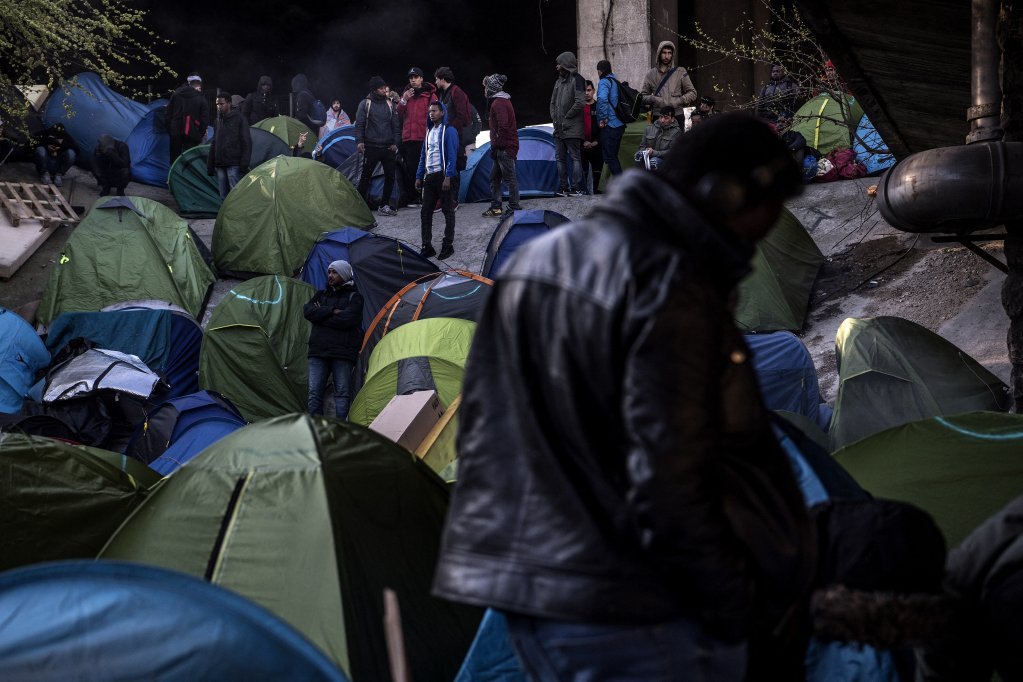
There are other solidarity movements, like in France, where the main place of arrival is La Chapelle. Sudanese refugees know they must go to La Chapelle. They see it as a place to get information and support. There are volunteers setting up networks to help them find housing or education. These are important spaces where people can go to survive.
IM: How is the evolution of the situation in Sudan affecting the lives of Sudanese refugees and their ability to help their families?
KG: What we see is the incredible movement of the Sudanese diaspora helping those stuck in war zones. This is also part of the social obligation in communities and the responsibility that people feel toward family members, based on kinship, but also based on good neighbor practices. Displaced Sudanese artists and curators living in Ethiopia, Egypt and Kenya have organized incredible efforts aimed at saving people and art.
I’ve followed a few artists who had to move to Egypt, Saudi Arabia or Kenya. They had to find residency permits to legalize their stay, and then find work, because their family needs support for education, housing, medication. Obtaining residency permits in Egypt has been extremely difficult, if not impossible, and leaves people in a limbo. More and more women are taking on these responsibilities which is often seen as transgressing some gender roles in Sudanese communities.
Between sending remittances and helping those who have stayed behind in other ways, there is a huge social responsibility. It’s a burden on people.
Read AlsoRefugees forced to hide in Egypt to avoid arrests and deportation, Amnesty reports