
Austrian and Europol authorities have dismantled a major migrant smuggling ring following a 15-month investigation. Coordinated raids resulted in 130 arrests linked to the criminal network in seven EU countries so far. Vienna’s public prosecution office said that the criminal group made over a billion euros in earnings over the years, making this the single biggest bust of its kind in EU history.
Europol observers say that “Operation Ancora” is the single largest instance of authorities successfully dismantling an organized crime network focused on the smuggling of migrants to Europe to date.
Much of the operation was spearheaded by Austrian authorities, who along with their Europol partners found that the ring, a well-connected group based on family ties with up to 800 members, which had spread across much of central and eastern Europe, had used around 1,000 vehicles to traffic people across borders.
A mobile phone shop in Vienna is believed to have served as the logistical and financial hub of the massive network, which managed to make over a billion euros in earnings in recent years.
This bust follows a series of other significant operations spearheaded by Austria in recent years -- including one in May 2022 where authorities arrested 205 people tied to a separate ring that smuggled over 36,000 migrants into Europe, generating over 152 million euros in profit.
Read AlsoAustria leads international bust of massive people smuggling ring
A fatal — and fateful — car crash
Ursula Auer, head of Austria’s Foreign and Border Police Department, said that the smuggling ring had its logistical hubs based in Vienna, Austria and Budapest, Hungary, adding however that is operated across many EU nations as well as Turkey.
The investigation into the criminal group had started in December 2023, following a fatal car crash in southern Austria, which took place during a routine border stop.
The contents found on the bodies of the victims turned out to be a treasure trove of evidence pointing to the operation of a major smuggling network:
Communications devices such as smartphones and tablets revealed terabytes of data pertaining to an industrial network which had moved an estimated 100,000 irregular migrants into central Europe.
An Austrian police spokesman said that this accident "set everything else in motion."
Read AlsoGermany: Six defendants handed prison sentences in migrant smuggling trial
From one end of Europe to the next
Furthermore, Investigators detailed the use of more than 1,000 vehicles in dozens of smuggling instances to smuggle people into the EU, and seized firearms as well as narcotics.
Payments of up to 20,000 euros would routinely be charged per person to move them all the way from Turkey across the Balkans into Austria and, in most instances, onward to Germany.
The data on the devices also revealed information on the various hierarchical tiers on which the gang operated, with the weakest links in the chains being young drivers, who would be recruited via social media in Eastern Europe -- mostly from countries such as Moldova, Romania, Georgia and Ukraine.
Investigations found that these drivers would be deliberately told to use high-powered, luxury cars during smuggling operations in order to go undetected and also to ensure they could keep up pace during potential police chases.
Operation eclipses 2015 'Hungarian lorry tragedy'
These conductors of the vehicles were also instructed to stick to minor border crossings in a bid to evade detection, shifting a significant amount of the direct responsibility for the passengers of the vehicles over to the largely inexperienced drivers.
How many fatalities might be linked to the operations of the network is unclear to the public at this point; however, Vienna’s public prosecutor announced that so far it had already prepared an indictment document of over 300 pages, citing offences ranging from membership in criminal organizations to aggravated smuggling causing death.
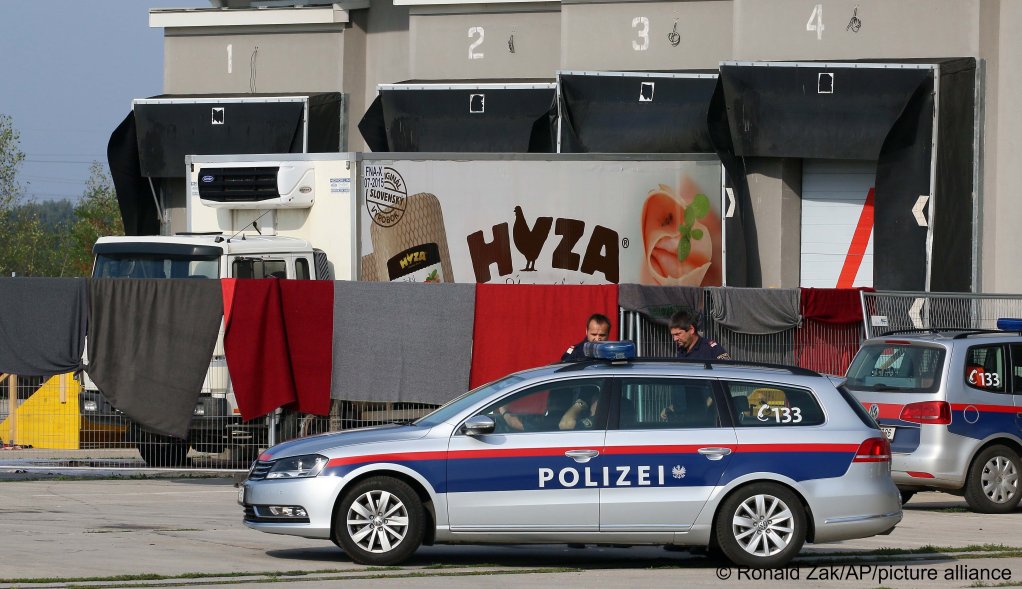
Europol said that this operation eclipsed the 2015 "Hungarian lorry" tragedy in both scale and profit, referring to the 2015 discovery of a stationary, abandoned Hungarian-registered lorry on a motorway in Austria on August 27, 2015, in which the decomposing bodies of 71 people from Syria, Iraq, and Afghanistan were discovered.
That tragic event had resulted in the launching of the biggest investigation into smuggling activities into Europe — until now.
Read AlsoA look at the deadliest migrant suffocation incidents