
Since 2020, a semi-formal entry system via eastern Libya has become the "backbone" of a new corridor, bringing migrants from Bangladesh via various transit routes towards Libya, and then on to Italy or Greece in Europe. The Mixed Migration Center’s latest report takes a closer look at the route, including the role of brokers, the costs and debt migrants face, and the dangers of the journey.
Sohrab Hossain was born in Bangladesh and has been living in Italy since 2012. Like tens of thousands of Bangladeshi migrants every year, the now-35-year-old journeyed to Italy via Dubai, Egypt and Libya on an irregular route. He describes himself as coming from a "poor" background, who dropped out after class nine, but was motivated by a desire to work.
When Hossain arrived back in 2012, he says he paid a Bangladeshi broker around 400,000 Bangladeshi taka for the journey (around 2,833 euros). Since his arrival, the journey has become infinitely more expensive. Hossain wanted to stay in Libya. But he was exploited and remained unpaid for months for the work he did in the country. He was under pressure to repay the loan he took from a bank to come to Libya. The only option then seemed to him to continue to Italy.
A smuggler told him that a large engine boat would take them to Italy and that the journey would not be complicated. He had to stay at a "game home’" where fellow migrants are often extorted for more money at various stages of their journey and imprisoned, threatened, beaten, and exploited before they can finally attempt a crossing of the Mediterranean. He was also beaten for more money, but eventually managed to convince the brokers that he had no money left to pay.

"I was in Libya for ten months. After landing in Benghazi, I was arrested by the police as I didn’t have any legal papers to enter Libya. As I came to the country on a body contract (a high-risk, illicit arrangement used by human traffickers to transport migrants from countries like Bangladesh to Europe, particularly Italy, via Libya), a broker arranged for my release from a Libyan jail the next day. Those of us coming to Libya then, we came to work, we didn't come to travel to Italy. But I first got a job in a house, and I worked for five months. They kept telling me they would pay me the next month, then the next month. But when I asked for my salary, they beat me.
"I left the job and took another one. There, I was paid for 20 days of the month. They used to pay me daily after working for eight hours a day. But we were unable to keep our income with us because others often snatched it from us on the streets. I never felt safe there. I was terrified that they would shoot and kill us. The fear just grew and grew."
"After ten months, I had run out of money, and my family was putting pressure on me to send money home. I couldn't pay them. Out of sheer fear, I found a smuggler to take me to Italy. The broker was Bangladeshi and there were also Libyans involved. Once we boarded a boat, they fired shots at our boat. Luckily, we were rescued by an oil tanker from the Philippines and they took us to Sicily. We were so pleased to be rescued, because all our fuel had run out and we were just drifting. Many people were feeling sick and people were crammed below deck. There were maybe 132 people on board."*
Hossain also told InfoMigrants that his brother Biplob Hasan died in the Mediterranean when he took a similar journey from Libya four years ago. He had asked his 24-year-old, younger brother not to take the irregular route but to wait for the regular one, but his brother didn’t listen and lost his life.
Bangladeshi economy reliant on migrant labor
Migrant labor is a pillar of Bangladesh’s economy. Each year, an estimated 500,000 Bangladeshis migrate abroad for overseas employment. Bangladesh is a big country with a large population, and millions of households that depend on remittances for stability, mobility and long-term security, especially as there are not enough jobs in Bangladesh to accommodate everyone.
Many Bangladeshi migrants seek work in Europe, especially in Italy, where the Bangladeshi diaspora has been growing. While still smaller than formal labor migration, an increasing number are arriving in Italy irregularly via Libya. The Mixed Migration Center, in its latest report based on 80 interviews in Bangladesh, Libya and Italy, examines how these journeys are structured and financed, how the recruitment system works and how it intertwines with the smuggling industry.
Over the last five years, around 14,000 Bangladeshi migrants have arrived irregularly in Italy via Libya each year. "Sometimes more, sometimes less," explains Bram Frouws, Director of the Mixed Migration Center, to InfoMigrants. The story behind their journey to Europe is often long, complicated and full of expense, both monetary, but also often psychologically too, as the journey can result in violence, insecurity and repeated exploitation in Libya.
'You have to risk something to win'
Mohammad Shamim Gazi was one of them. He attended school up to the 12th grade and didn’t continue his education afterward. The now 28-year-old left a predominantly underprivileged part of Bangladesh and arrived in Italy in 2021, also via Libya. Gazi told InfoMigrants Bengali that his father had died, which precipitated a family crisis of debt, and he needed to set off to find work. Depending on him in Bangladesh are his mother, younger brother and sister. He was able to marry off his youngest sister a year ago. "When your back is against the wall, there is nothing else you can do."
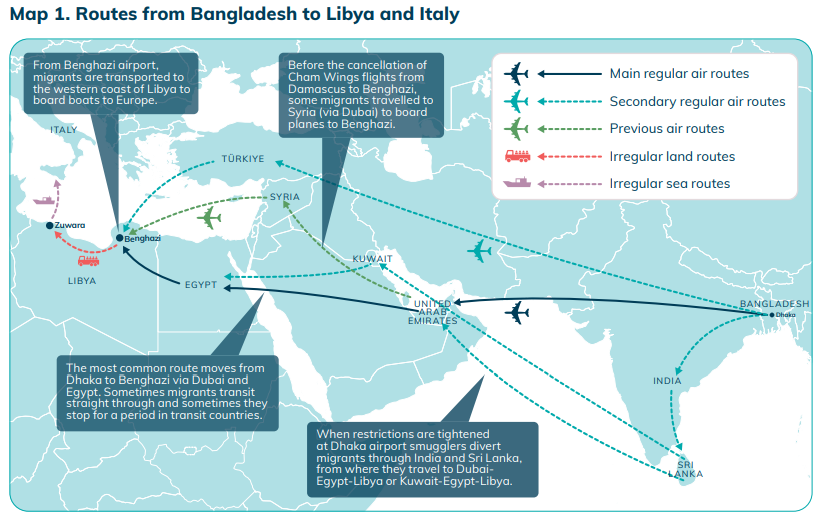
Gazi said he flew from Dhaka to Dubai, then on to Egypt and Benghazi in eastern Libya. He told InfoMigrants Bengali that he spent about one-and-a-half months in a room with around 30 other migrants, before boarding a wooden boat in the direction of Italy.
For the journey, Gazi says he paid around 850,000 taka (around 6,000 euros). He agrees, he was lucky to have arrived on his first attempt in Italy and get a place in a camp near Rimini.
Gazi too says he has suffered low pay for the work he has done in Italy initially, because of a lack of documents. Now, Gazi too lives in Modena and is working in a sushi restaurant. Gazi thinks that you have to risk something to win, but he still says he would have preferred to have taken a regular route, if it had been on offer to him. One of his cousins died on a boat to Italy, he says, but apart from that, the incidences of death and injury along the way are things he has heard about, but not personally experienced.

A lucrative route for smugglers
The MMC says the Libya-Italy route has re-emerged, particularly since 2020. Although the reasons for this are complex and include push and pull factors, the MMC surmises that one of the main reasons may be that the regime in eastern Libya was keen to increase revenues and began offering work and transit visas for a fee, allowing for a semi-official way in for at least half the journey.
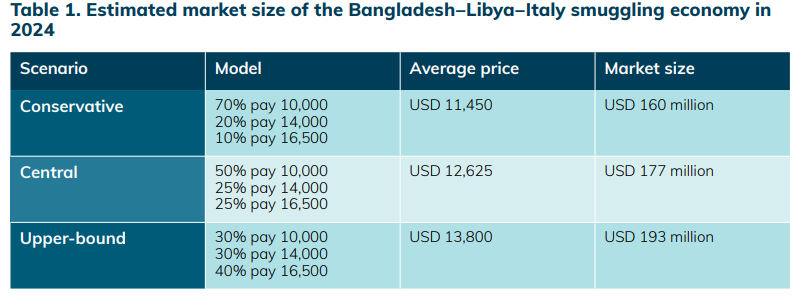
The route is estimated to be worth between 160 and 190 million US dollars per year (between 138 million and 164 million euros), according to the MMC.
That figure is based on the knowledge that most Bangladeshis pay between 10,000 and 14,000 US dollars (between 8,600 euros and 12,000 euros) for the full journey.
Adding on extortion and additional costs inside Libya, it can end up costing each individual between 15,000 and 17,000 US dollars in total (between 12,900 euros and 14,679 euros).
Using 2024 arrival figures in Italy, MMC multiplied these to estimate how much this smuggling economy might be worth. The figures exclude those who may have paid but never arrived, they caution.
Who is taking this route and why?
Socioeconomic pressures in Bangladesh have intensified in recent years, with rising unemployment, high living costs and limited diversification of the domestic labour market. Italy, states the report, is seen in this context as an aspirational place, where migrants might be able to attain better economic opportunities but also a greater sense of dignity and long-term security.
Those who take these journeys are predominantly men. They come from all different areas of Bangladesh and have different skills and educational profiles. The majority have already done some work in Bangladesh and hope to be able to earn more abroad with their migration. Some come from urban areas, and some from rural areas, clarifies Frouws, but all of them are really moving for work.
Bangladeshis still also migrate towards the Gulf countries and Malaysia, but the MMC authors believe that these two big destinations for Bangladeshi workers also feed into the Libya–Italy route, making it "one of the most organized and adaptive routes linking South Asia to Europe."
There are some migrants who end up in Libya and Italy who initially wanted to work in the Gulf states, but whose migration there perhaps incurred debts or failed. At that point, agents in the Gulf states then represented Libya as their "logical next step."
Some may plan to reach Libya via semi-regular channels in order to work in Libya. Others go to Libya to get to Italy or other parts of Europe.
The route "extends Bangladesh’s long-standing labor migration infrastructure into irregular terrain when formal opportunities shrink," MMC states.
An interplay between regular and irregular migration
The re-emergence of the Libya-Italy route, explain the report authors, should be seen within a wider ecosystem of regular and irregular movement. According to the MMC, all respondents to their survey were men, and the majority were aged between 18 and 29. The majority of Bangladeshi migrants in Libya in 2024 reported having arrived in the country with valid passports and work permits.
Evidence from interviews with actors who have taken or facilitated the Bangladesh-Libya-Italy route suggests that many migrants along the way will either possess or think they are paying for a legal and valid work permit or job offer.
For instance, in the report, MMC underlines that Italy’s system of seasonal employment job offers, via the so-called Decreto Flussi (Flows decree) each year, which offers tens to hundreds of thousands of seasonal work opportunities, is often used by recruiters and smuggling networks to lend legitimacy to their operations. So, fake job offers or contracts will be used to sell what essentially is a smuggling route, with the migrant thinking they are buying permits to facilitate an actual job when they reach Italy.
Similarly, most Bangladeshi migrants in the last few years have entered eastern Libya via official or semi-official permits, before later being sold or moved through other, more illicit networks. Some smugglers even offer orchestrated kidnappings to extort migrants for even more money once they reach Libya, migrants told MMC authors.
Only 11 percent said they had used migration facilitators to reach the country. However, these people were captured by IOM’s Displacement Tracking Index (DTM), which means, according to MMC’s report authors, that there is another population of Bangladeshis who transit Libya for onward irregular movement to Italy and are probably not captured by the DTM.
This interplay between legal and illegal means to enter a country or find employment demonstrates that when trying to combat irregular migration, countries should not see irregular migration as a detached phenomenon, MMC underlines.
Read AlsoEU-funded maritime control center planned in eastern Libya
'Things are rather fluid'
Many of those who migrate from Bangladesh may embody several profiles of a typical migrant along the way. "People don’t fit neatly into one of these categories but often shift from one to another. Things are rather fluid," explains Frouws in a video call.
A possible scenario is that migrants leave Bangladesh with the intention of working in one of the Gulf States. "Then, either during the journey, or after arrival, they discover the job they were promised doesn’t actually exist. At that point, they are often asked to pay additional fees, beyond the agreed price for this regular labor migration."
At that point, the person is in debt, far from home and has often had his passport confiscated, sometimes under the pretence of obtaining the next work permits or visas to continue the journey, so he then turns to agents who present him with a seemingly 'magic' solution, to travel on to Libya in search of work there, or via Libya to Italy for a job there.
"Still others might have planned to fly to Libya with a visa, transiting through customs and flying, but when they arrive in Libya, they end up in detention and then face ransom demands," explains Frouws. Their families are then asked to pay for their release, and then to pay off these debts, the person is forced to move on towards Europe.
"So, a person may start out with something planned, to migrate for work, but at some point during the journey, things change. They are misled and then end up in a situation of exploitation in Libya." Some might have been trafficked at one point along their journey, or fall into debt bondage and forced labor, or are perhaps resold between various brokers in Libya.
Finally, there are returnees or escapees who are attempting to flee Libya after experiencing cycles of violence, extortion or detention.
But even for those whose routes unfold "largely according to plan," these journeys are still taking place within an "inherently volatile and dangerous environment," notes the report. All along the journey, "vulnerability is produced and compounded throughout the migration process."
Read AlsoLibya: 345 Bangladeshi nationals opt for voluntary return home
Divided Libya -- migrants interact with 'a range of actors'
Since 2011 and the fall of Moammar Gadhafi, Libya has been plunged into conflict and is now divided between two rival administrations, the east run by Field Marshall Khalifa Haftar and the west run by a UN-recognized government. In both sections though, militias and armed gangs operate alongside semi-formal government and army structures. Most Bangladeshis, however, arrive first in eastern Libya and then tend to move on to the west to embark on a Mediterranean crossing, the MMC found.
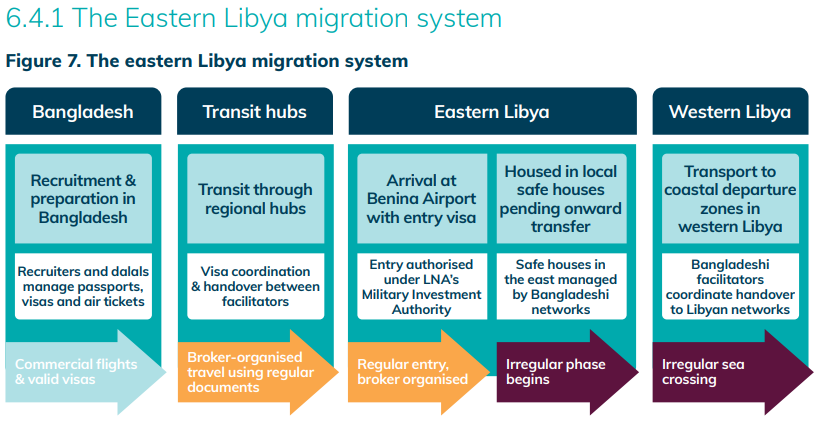
Along this journey, the migrants end up "interacting with a range of actors, who work together, but not as one coherent network." There are brokers, transporters, facilitators and armed groups that take migrants along part of the way or also control different parts of the territory, explains Frouws.
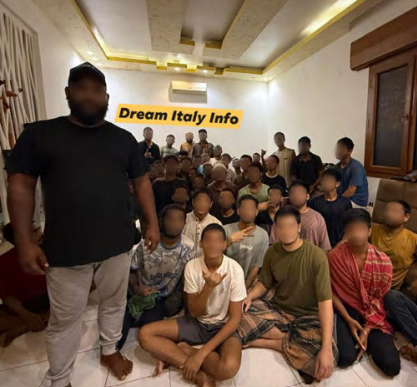
On arrival in Libya, most Bangladeshis interviewed told MMC authors that they were picked up by Libyan drivers at Benghazi airport and then brought to safe houses, still in mostly exclusively Bangladeshi groups, and often still with Bangladeshi facilitators. However, as they are moved south and west towards the coastal departure points, they are moved on to Libyan gangs and brokers. Many will have their passports removed, and this is when smuggling can turn into trafficking. Migrants might be sold to brokers, or not paid for the work they have been asked to carry out and then forced to pay brokers for their release.
Frouws describes this as a "loosely connected chain of actors." Sometimes, migrants are held in warehouses for a while before they are actually allowed to continue their journeys. Here too, the line is blurred between accommodation services and imprisonment for extortion purposes. In eastern Libya, notes MMC, most things seem to be handled initially by the LNA (Libyan National Army), including blood tests to avoid migrants bringing communicable diseases into the country.
Read AlsoMonfalcone: No place to pray, if you are Muslim
Recruitment: Local brokers, fast departures
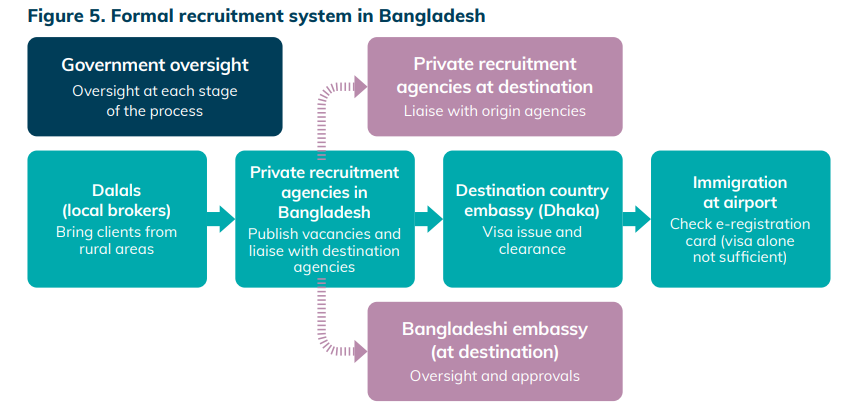
Most migration journeys in Bangladesh start with Bangladeshi agents, brokers and employment agencies. Recruitment is often described as "opportunistic" via casual encounters. Often local ‘Dalals’ brokers will say things like "my own son is in Italy" to encourage the idea that they have personal and trustworthy connections. Community reputation counts a lot for the recruiters at this level.
Bangladesh’s social structure, with often tight-knit family structures, means that migration decisions are often made collectively. Many of the journeys are self-financed or a family will take out a debt to send one or two members abroad. Others might follow once someone is established. MMC describes this as a "family project to secure long-term stability." For this reason, Bangladeshi migrants are seen as "gold" to smugglers, as these tight networks usually guarantee that a person will be paid to ensure they reach their destination.
These smuggling routes offer a much faster connection than the formal ones, where obtaining visas can take years. MMC authors found that many migrants would depart within one week to one month of them finding a broker. This short reflection period eliminates the potential that a migrant might find out more about the risks facing them, but also indicates an efficient system operating across all three countries.
The route, says Frouws, was originally designed for Syrians, who would fly via Cham airways from Damascus to Benghazi. Bangladeshis then started using this route more and more frequently, some even flying via Damascus first and on to Benghazi. Although now the route is so popular, the Damascus leg is not needed anymore.
Now, says Frouws, most Bangladeshis will transit through Turkey or the Gulf states.
Read AlsoBetween hate and exploitation: Migrant workers face rising risks in Romania
Labor exchange between Libya and Bangladesh
Another reason for the increasing popularity of this route in recent years, notes MMC, is an existing and reinvigorated labor exchange between Libya and Bangladesh.
In 2008, Libya and Bangladesh signed the first Memorandum of Understanding, enabling large-scale recruitment of Bangladeshis for the Libyan labor market. By 2009, public works in Libya created an even stronger demand. By 2010, around 40,000 Bangladeshis had arrived in Libya during the two previous years, until Libya imposed a recruitment ban in June 2010.
When Gadhafi fell and conflict began in 2011, there were large evacuations of Bangladeshi workers from Libya, and by 2012, Bangladesh had ceased sending any workers to Libya. This only started up again slowly in 2023, writes MMC, when a new MOU was signed and reopened the path for formal recruitment.
Read AlsoLeaving Libya: Syrian and Bangladeshi nationals fly back to their home countries
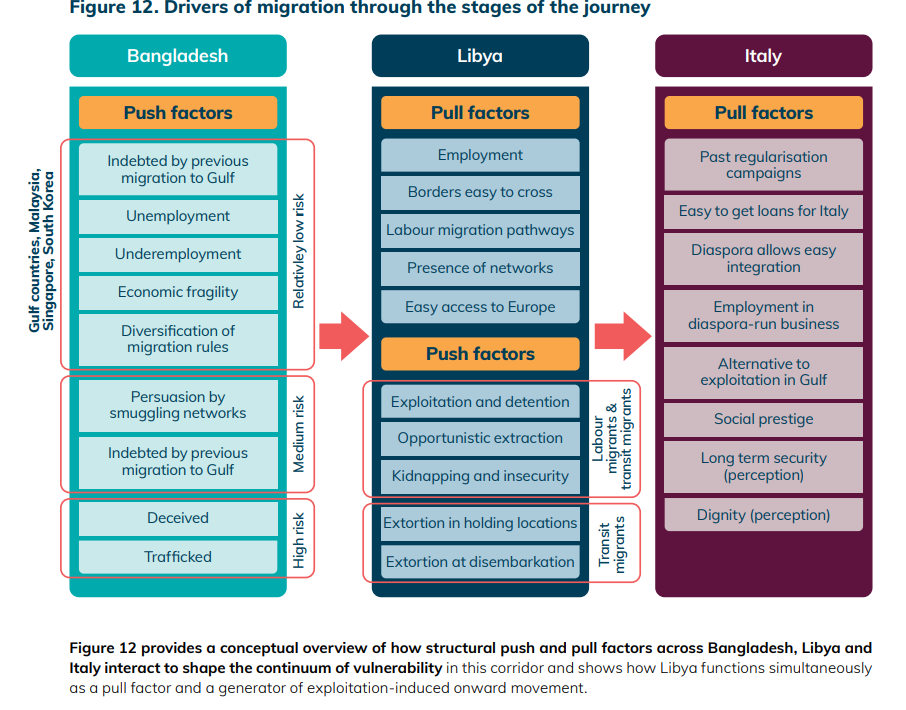
Complex interplay between push and pull factors
As with most migration journeys, the push and pull factors are complex, notes MMC.
Limited domestic employment, debt and underemployment in a saturated labor market can be seen as push factors. According to the European Union Agency for Asylum (EUAA), Bangladesh’s GDP growth fell from 5.1 percent in 2024 to 3.3 percent in early 2025. An unstable political situation further compounds these problems.
The "compelling narratives of success" coming from the Bangladeshi diaspora in Italy are a definite pull. Italy is also seen as a more humane alternative to Gulf countries, notes MMC, and its own history of unofficial power structures and 'off the books' work perhaps lends itself to providing plentiful work for undocumented migrants.
Many respondents told MMC that Italy's past regularization campaigns were also a key influence on their migration decisions. There are plenty of stories among the Bangladeshi diaspora of undocumented migrants who eventually obtained residence permits and secured stable employment.
When InfoMigrants reported from the region in October 2025, we met plenty of Bangladeshis who had been living and working in Italy for several decades. Some had obtained citizenship and they and their children were often bilingual and had established businesses and bought homes.
Read AlsoDenmark to tighten visa policy for students from Bangladesh amid concerns over misuse
Higher status of 'Europe migrants'
MMC also noted that loans for a migration journey are reportedly easier to obtain in Bangladesh if the destination is Europe. This, they write, is because "lenders view such journeys as more profitable and more likely to result in remittances. In this sense, Italy’s reputation enhances both financial access and social legitimacy for potential migrants."
Having a family member in Europe increases social standing and marriage prospects for both that migrant and to some extent his network back home, allowing for social mobility in a country where that is difficult to obtain.
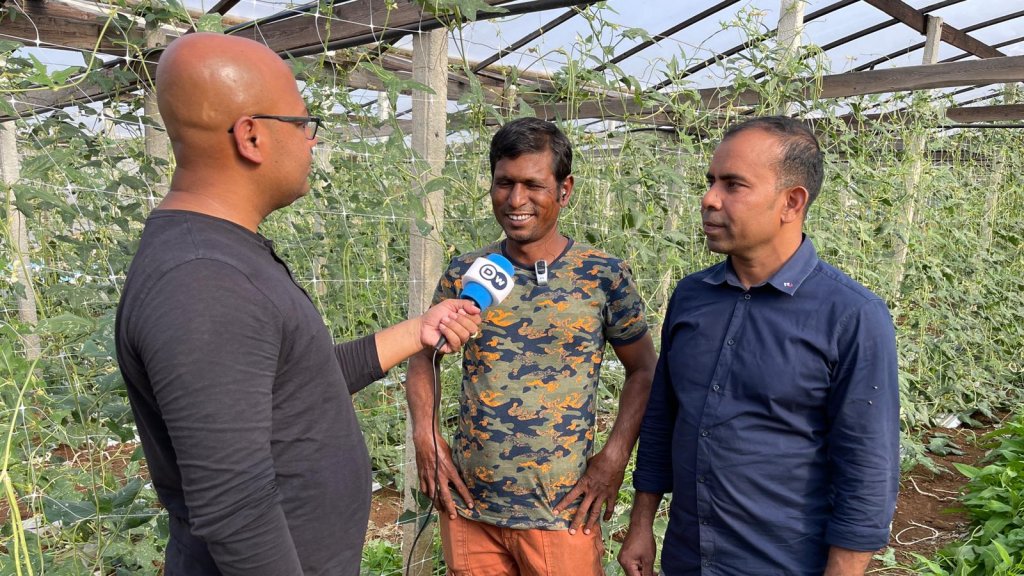
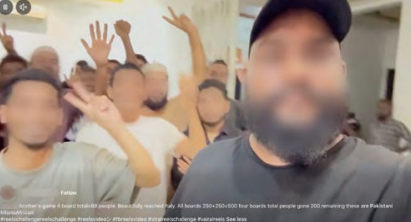
Coupled with this are advertising campaigns on social media platforms such as Facebook, which purport to show happy smiling faces of young men during their journey or on arrival.
The reality though is often very different. When InfoMigrants reported from northern Italy in October 2025, we had Bangladeshi migrants break down in tears as they talked of exploitation and disappointment en route.
Lack of money meant that they would spend weeks or months sleeping in the open or in unhygienic squats or abandoned buildings, and finding work even once a destination is reached is not easy.
Read AlsoRahim's tale: 'In Libya we spent 14 horrible months'
Prevention and the future
Stopping these kinds of routes is difficult, thinks Frouws. It is important, he thinks, to understand the factors that drive the migration are structural. "It’s the combination of a strong demand, a strong desire to leave Bangladesh and find work overseas. There is a strong pull, a strong demand for migrant labor in European destinations and an already established expert networks. Then there is the lack of legal pathways. Or at least,” admits Frouws, “the legal pathways that exist don’t properly accommodate, don’t really match in terms of volumes but also the skills."
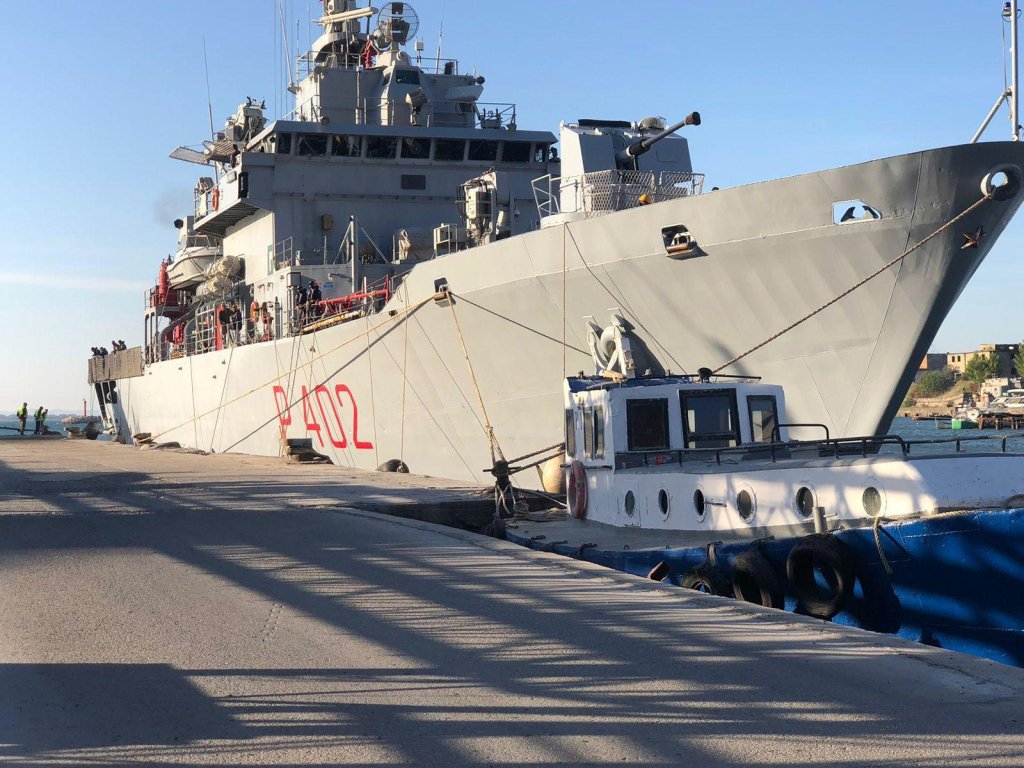
To move within the legal pathways, you often need a particular set of skills. Many of those who migrate along these routes don’t have those skills or education levels. Frouws thinks that arresting smugglers and facilitators doesn’t really do much to stop the route if the demand is still there for the migration.
He thinks that if European authorities really want to stop this, they need to look at labor demand and migration governance. If these 14,000 or 20,000 people per year were brought in via regular routes, they would, thinks Frouws, pay far less money to get there, would be in less debt and could work in regular jobs and pay taxes, so it’s a "win win situation for all concerned."
'There is so much risk of death on this road'
Today, Sohrab Hossain lives and works happily as a car mechanic in Modena, northern Italy, earning a monthly salary of 1,800 to 1,900 euros. He has a house, a wife, a daughter, and a car. But he lost his younger brother on the same route and warns against attempting to leave Bangladesh via irregular routes.
The pressure on him to support dependents both in Italy and Bangladesh remains high. He says he sends home around 30,000-40,000 Bangladeshi taka (between around 212-283 euros) per month to his mother, who is ill.
"I saw people beaten right in front of me. The brokers promise they will send you to Italy, in a grand style, on big boats. They tell you the Italian navy will just come and pick you up. But that is not the reality of the situation. They just pushed us out to sea on a fishing trawler. When we arrived in Italy, we faced all sorts of challenges. We couldn't speak the language. Without Italian, you don't get anywhere here. I spent three years in a camp, trying to learn. My own younger brother died four years ago, trying to follow in my footsteps. I never want to encourage anyone else in my family to attempt this route. If I had had the chance to come by a regular route, I would have leaped at the chance. I told my brother that when the Italian government allows me to sponsor you to come, I will apply, but he didn't want to wait. He fell into the trap of a broker, and set off. This journey is a matter of life and death. There is so much risk of death on this road."
Read AlsoEU urges Libya to combat Mediterranean migrant sea crossings
InfoMigrants Bengali approached the new Bangladeshi government for comment on this story. The State Minister for Expatriates' Welfare and Overseas Employment Nurul Haque Nur told us: "Traveling to Europe via Libya is risky. Often, migrant workers are cheated. We are trying to raise awareness about this problem. We are campaigning across the country and working in conjunction with the IOM to help return those who find themselves stranded in Libya. Those who return to Bangladesh via these voluntary return programs, then help raise awareness of the risks facing them in Libya, or when they attempt to travel to Italy.
We want people to travel via legal channels, also to protect our country's reputation and standing in the world. We don't want other countries to see us as causing chaos. We would remind our citizens that there are legal routes to Italy to find work.
We have set up skilled manpower courses via the Ministry of Expatriate Welfare and Foreign Employment and we are offering training courses. Often languages are being taught for free. We think in the future we can send a skilled workforce to Europe. In an overpopulated country like Bangladesh, we are forced to export our manpower and technical know-how.
We are looking to set up more MOUs with countries where we believe our manpower could be useful. We need migrant labor to survive, and we believe we can meet the demands of foreign countries in Europe too.
We are hoping to maintain good bilateral relations with Italy. We urge everyone to register with BMET (Bureau of Manpower, Employment and Training - is a government department responsible for the training and employment of Bangladeshis overseas. The Bangladesh government extends support to migrants who have BMET cards.)"
*Sohrab Hossain answered many questions during an interview with InfoMigrants. His answers have been summarised in a statement for ease of reading. So, while the sense and information remains accurate, the language he used has been modified to better tell his story.