
For International Women's Day, the NGO Solidarités International warned about the alarming situation of migrant women living in camps in northern France. The NGO denounces "massive deficiencies, health risks, gender-based violence, and the absence of appropriate public services." An interview.
InfoMigrants spoke with Pauline Pruvost-Czapek, spokesperson for the NGO Solidarités International, about a new report the organization published on March 5. The report is based on testimonies from migrant women and the work of field organizations.
InfoMigrants: What are the living conditions of migrant women in the camps of northern France?
Pauline Pruvost-Czapek: The living conditions of women on the northern coast are extremely precarious. They are completely invisible to the authorities and suffer double discrimination: first, because they are on the move, and second, because of their gender.
Through this "observatory" [the report "Water and Hygiene: The Invisible Emergency Experienced by Women in Exile on the Northern Coast" was published on March 5, editor's note], we want to shed light on the situation of these women. When we talk about March 8 and International Women's Day, we don't think about the situation of women on the move. Yet, like any woman, they have rights, and their rights to health, dignity, safety, and access to water are violated every day.
Their specific needs -- menstruation, conditions affecting women such as endometriosis or urinary tract infections, and the plight of victims of female genital mutilation -- are not being addressed by public authorities.
Read AlsoFrance: Migrants on northern coast 'live in great precariousness and lack everything'
IM: To compensate for the lack of specific support, women are developing "survival strategies." What do these strategies look like?
PPC: Since the end of 2025 in the Dunkirk area, some services have been implemented by the government following legal action by associations. Around 60 showers have been installed in the region [notably in the Loon-Plage camp where hundreds of people live, editor's note], as well as toilets. We welcome this, even if it comes too late.
In Calais, the average distance to a water source is 1.39 kilometers. This means that migrant women have to walk for about twenty minutes to get water, a vital necessity.
Thanks to aid organizations, some women can shower, but some go several days without washing, while others use water from nearby rivers.
Access to hygiene is extremely problematic, especially during menstruation. Buying sanitary pads or tampons is expensive, so most women use cloths, or sometimes nothing at all. Those who do have sanitary products can keep them in for several days.
The migrant women also say they are afraid to go to the toilet alone and risk encountering someone dangerous. Therefore, most of them refrain from going or even drinking.
Read AlsoFive years after the 'Calais Jungle', conditions for migrants continue to deteriorate
IM: What are the health consequences for migrant women?
PPC: The consequences are numerous. First, there are risks of infection. Keeping a sanitary napkin in for several days can be dangerous. With a tampon, toxic shock syndrome can occur.
Poor hygiene, such as menstrual stains, also affects dignity and impacts women's mental health.
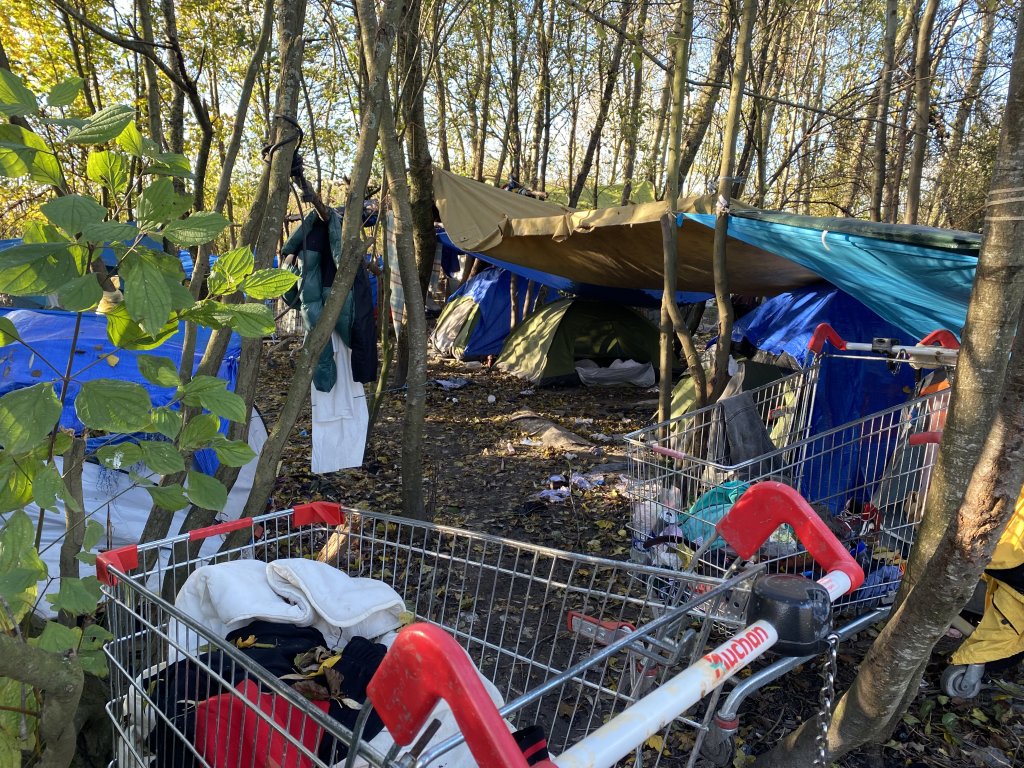
Many of the people we met spoke of feeling exhausted and stressed. Women with families have to meet their own needs and those of their children, which exacerbates their vulnerability. And most have experienced violence in the past, yet they receive no psychological support.
Read AlsoChild migrants struggle to survive northern France
IM: In northern France, does the authorities' "no fixed settlement" strategy, which involves dismantling any new migrant camp, further weaken women?
PPC: Yes, the successive dismantling of camps makes women even more vulnerable. For example, after an eviction, they may find themselves without a tent and end up sharing one with a man to avoid sleeping outside.
Their situation of dependence and control is exacerbated by camp evacuations.
IM: What are your recommendations for improving the living conditions of migrant women?
PPC: We need more infrastructure: more water points, safe toilets, gender-segregated toilets and showers, distribution of menstrual hygiene products… We must take into account the specific challenges that women may face.
Read AlsoForeigners increasingly turn to French courts to overcome administrative obstacles