
Conservative German leader Friedrich Merz has expressed apprehension that prolonged conflict in Iran could destabilize the region and send new migration waves toward Europe. "We do not want to see a Syrian scenario," he has said.
German Chancellor Friedrich Merz warned on Friday (March 6) that an extended war involving Iran could have severe consequences for the Middle East, Europe, and migration flows, particularly if it leads to the breakdown of the Iranian state.
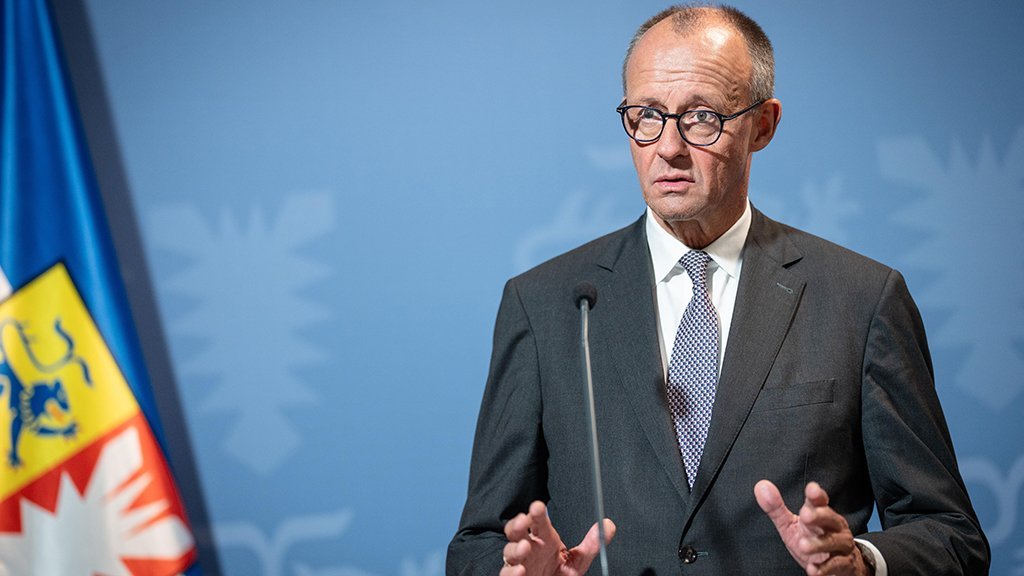
"A prolonged continuation of this war would not be in our interest. The same applies to the possible collapse of the Iranian state or proxy conflicts fought on Iranian soil," Merz said during a visit to the International Craftsmanship Fair in Munich. He said that the impact could spread far beyond the region.
"Such scenarios could have far-reaching consequences for Europe, including for security, energy supply and migration."
Merz stressed that Iran’s stability must be preserved to avoid chaos. "We do not want to see a Syrian scenario."
He added that Germany is pushing diplomatically for conditions that would stabilize the country and prevent further escalation. "We naturally have a strong interest in this ourselves in order to avoid new waves of refugees from the region," the conservative leader from the Christian Democratic Union (CDU) said.
Read AlsoEU asylum claims drop 19 percent amid Iran war warnings
Europe prepares for possible migration surge
European officials are already discussing how to respond if the conflict continues to intensify. Governments across the continent are preparing for the possibility of increased migration from the Middle East, according to the International Organization for Migration (IOM).
Amy Pope, director-general of the IOM, warned the Middle East conflict could lead to population movements if it drags on.
"We’re in a region where there’s already been a lot of instability ... you pile in on top of that the conflict that’s happening and the likelihood or the possibility that the conflict is prolonged, and we will start to see people moving," Pope told the Financial Times (FT) newspaper on March 5.
Europe previously experienced a major uptick of migrant arrivals between 2015 and 2016, when more than one million refugees from Syria and Afghanistan entered the European Union. Concerns are growing across the bloc whether the latest escalations in the Middle East could trigger a similar trend of Europe-bound migration.
Pope told FT that EU governments were now keen to "have a much more comprehensive approach early on, as opposed to waiting for the conflict to bleed over."
Read AlsoGermany: Top court rules deportation possible even for those holding protection in Greece
Germany boosts humanitarian support to reduce pressure for migration
The United Nations Refugee Agency (UNHCR) has already declared the conflict a major humanitarian emergency. Many civilians have begun fleeing their homes since strikes by Israel and the United States on Iran triggered wider regional fighting and instability, according to UNHCR.
Meanwhile, German Foreign Minister Johann Wadephul said Berlin is increasing humanitarian support to help people closer to the conflict zone and reduce the pressure for migration.
"The situation created by the war is dramatic in some respects," Wadephul said. "We are seeing a new dynamic and drama in Lebanon with many internally displaced people."
Wadephul added that Germany is looking to provide on-site assistance throughout the region, but that it is not considering delivering air-defence systems to countries attacked by Iran.
According to the German Press Agency (dpa), Berlin plans to provide nearly 100 million euros in humanitarian aid, including assistance for Lebanon, where thousands of people have been displaced by escalating fighting. German officials say providing aid in the region is essential to prevent significant migration flows to Europe.
With dpa and AFP