
Croatia has announced plans to build a migrant reception center located near the border with Bosnia Herzegovina. Meanwhile, the presence of Frontex officers in Bosnia has also been reinforced.
Authorities in Croatia announced recently that they are planning to build a migrant reception center on the site of a former military airbase not far from the border with Bosnia Herzegovina. Croatia and Bosnia Herzegovina are both frequent stops on part of the so-called Balkan route for migrants, traveling from Turkey, through Greece and on up through the Balkans.
Currently, according to data from the Croatian Law Center, published via the European Council on Refugees and Exiles (ECRE) and the Asylum Information Database (AIDA), Croatia has two reception centers for asylum seekers, one based in the capital Zagreb and another in Kutina. The total reception capacity is 900 places, 600 in Zagreb and 300 in Kutina.
The plans have been met with some opposition by local politicians and residents on both sides of the border.
Read Also100 Frontex officers arrive in Bosnia to boost border patrols
Protests against planned reception center
Last Sunday, February 22, according to reports on the Croatian news site HRT, a rally was held in the village of Korenica amid fears that the center could destroy local tourism. Some residents from neighboring Bosnia also reportedly joined the protests.
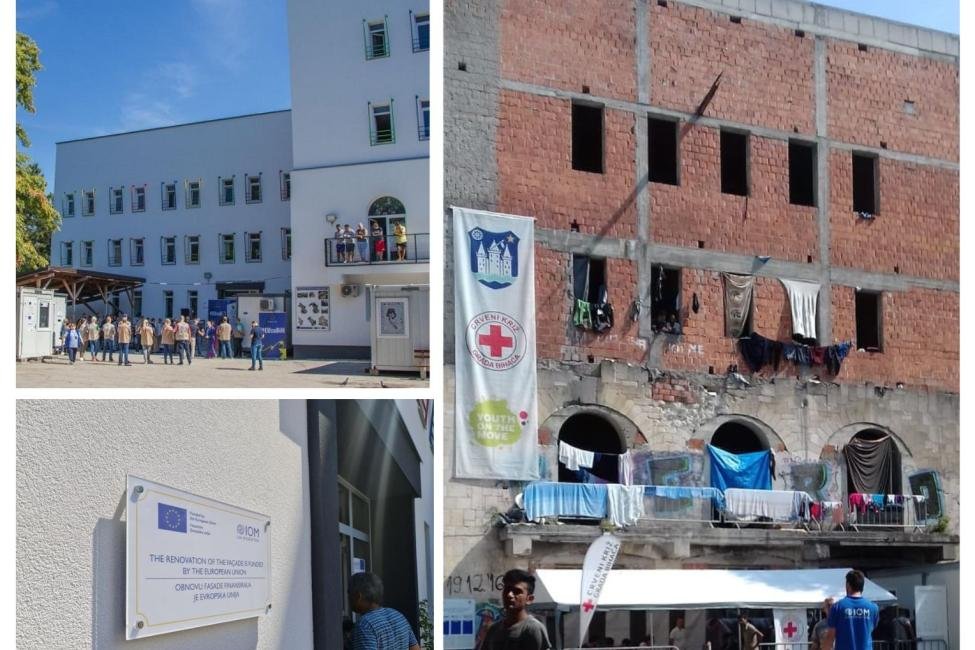
One man named as Igor Rogic from Bihac in Bosnia Herzegovina reportedly told HRT that he believed migrant reception centers had "not brought anything good to the city of Bihac. Having worked there for seven years now, I know how negatively it can affect the environment and the Plitvice Lakes."
The Prime Minister of Una-Sana Kanton (USK), Mustafa Ruznic, one of ten federal cantons within Bosnia Herzegovina, told local Bosnian Klix media: “I contacted representatives from Licko Petrovo Selo [the area where the planned center is meant to be built]. They told me that, as far as they are concerned, they will organize public protests and will not allow this when it comes to Zeljava. I sent them a letter of support on behalf of Una-Sana Canton. I also addressed the Ministry of the Interior of the Republic of Croatia regarding the Zeljava location, and I called on our Ministry of Security and Ministry of Foreign Affairs to stand in protection of USK."
Rogic said that when Bosnian authorities constructed a similar camp in Lipa near Bihac, the Croatian authorities also protested the construction. He said in the USK part of Bosnia, the migration management situation is "stable" at the moment, with around 300 migrants being accommodated at the Lipa camp.
Read AlsoChanges ahead for temporary reception centers for migrants in Bosnia
Frontex presence at Bosnia-Croatia border
This week, the European border agency Frontex announced that it would be further strengthening the presence of its officers in Bosnia and Herzegovina to help manage migration at this crucial crossroads on the Balkan route.
Frontex already deployed about 80 officers to Bosnia and Herzegovina after announcements of a stronger focus on that area last autumn. Now, according to the Brussels Times on Wednesday (March 4), numbers are due to increase to the full 116 officers.
The announcement was made during the visit of the head of the EU delegation to Bosnia and Herzegovina to the area. Ambassador Luigi Soreca visited the Bijaca International Border Crossing point alongside Bosnia's Deputy Minister of Security Ivica Bosnjak and Border Police Director Mirko Kupresakovic, reported Brussels Times.
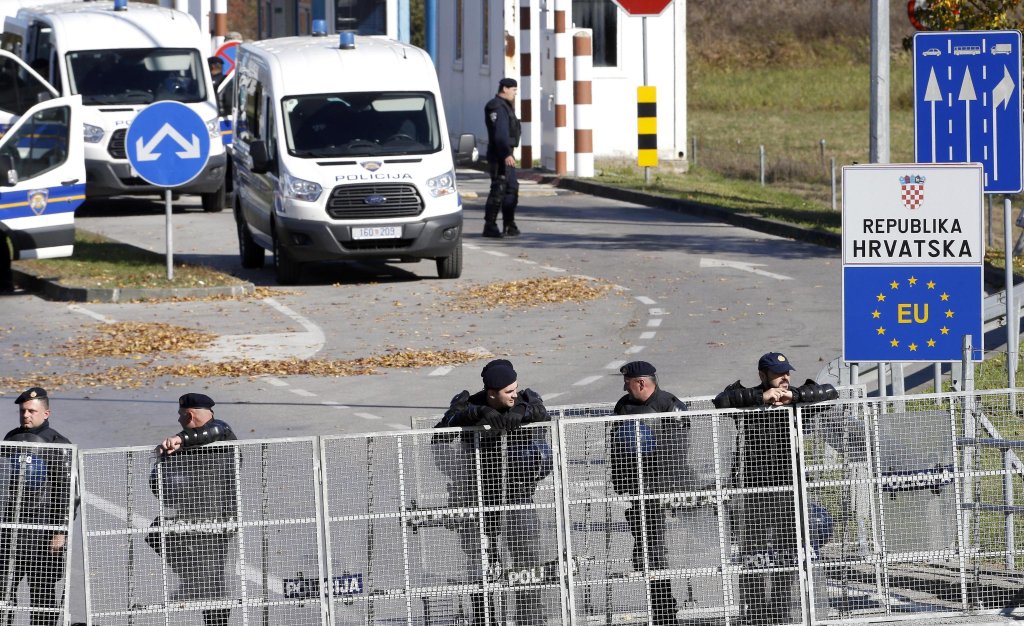
The trip was organized as part of a stronger focus being placed on integrated border management on the border between Bosnia and Croatia. Soreca was reportedly briefed on operational activities, including border surveillance, detection of document fraud and joint operations with Bosnia’s border police.
Deputy security minister Bosnjak stressed that Bosnia’s border police are working side by side with Frontex officers and that operational cooperation is at a "high level," particularly when it comes to "border control, tackling illegal migration and fighting cross-border crime."
Soreca also raised the possibility of the establishment of a national coordination center and promised further work on risk analysis and inter-agency cooperation mechanisms, reported Brussels Times.
Read AlsoFrontex: Irregular border crossings into EU drop by 25 percent in 2025
Cooperation with the EU
Bosnia Herzegovina is one of a list of EU accession countries and part of the EU’s enlargement and growth plan. On Thursday, Soreca underlined how crucial BiH is in terms of “geopolitical investment.”
In a post on the platform X, Soreca wrote, "we count on our BiH partners to do their part too, by undertaking the reforms needed to move forward on the EU path." Part of doing their part is helping the EU with migration management strategies.
Bosnia is crucial to this, as it shares a border with EU member state Croatia. Many migrants who make their way initially through Bosnia and then Croatia move on to Slovenia and into Austria and Italy with the intention of arriving in Western Europe.
Read AlsoFrostbite and amputations in Bosnia shatter migrants' dreams of reaching Germany
The Balkan route
At the end of December 2025, UNHCR data registered 1,402 refugees, asylum seekers and migrants present on Bosnian territory. The majority from a single distinguishable nationality were from Afghanistan, with nationals from Syria and Morocco following closely behind. However, 62 percent of all those traveling through the Western Balkans at the end of December were described as "others," indicating a wide range of different nationalities with no one country predominating.
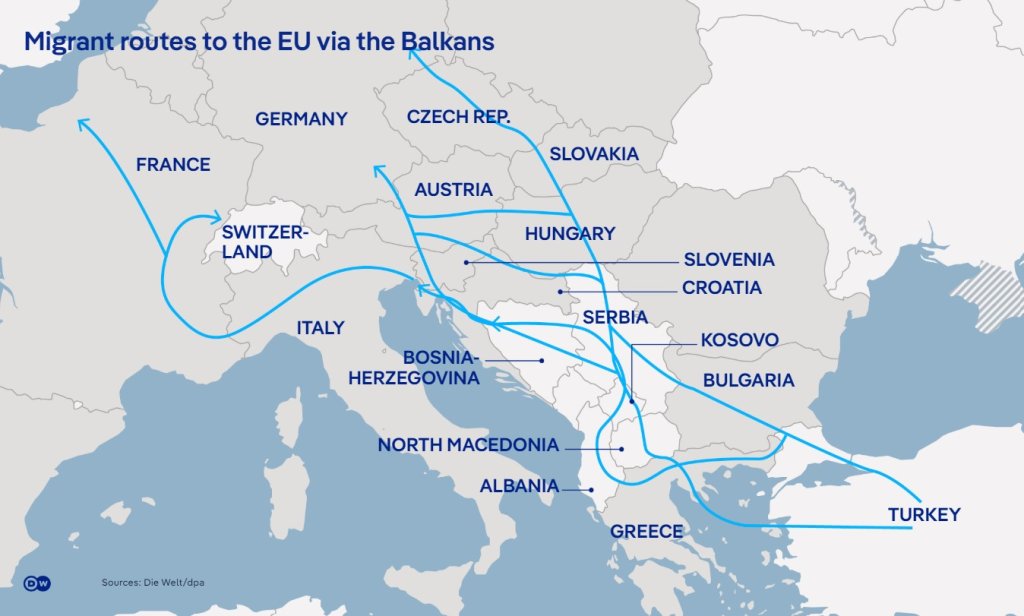
Frontex data also suggested a drop in the number of irregular border crossings detected on the Western Balkans route between data from January 2025 and January 2026. That data showed just 222 detections of irregular border crossings in January 2026, representing a 74 percent drop.
However, some organizations that work with migrants have told InfoMigrants that they believe that Frontex data no longer represent the true numbers of migrants traveling those routes, since smuggling operations have become slicker and tend to offer accommodation to migrants too, which means fewer migrants are registered at official centers or detected en route.
Frontex data also showed that crossings in the Eastern Mediterranean, towards Greece was the most active route, with nearly 1,900 arrivals recorded.
According to Frontex, Egyptians and Turkish nationals were the most frequent nationalities to be recorded on the Western Balkan route, and on the Eastern Mediterranean route, the most frequent nationalities recorded were Afghans, Sudanese and Eritreans.
Numerous NGOs, as well as the EU Ombudsperson, have recorded allegations of pushbacks practiced at the Croatian border -- allegations the Croatian authorities deny. In 2024, however, there was a decrease in the number of complaints on pushbacks to the Ombudsperson, the Croatian Law Center stated.