
Foreigners in France are increasingly resorting to legal procedures to overcome administrative obstacles. Alexandre Delavay, a lawyer specialized in foreigner’s rights, responded to InfoMigrants' questions on the "explosion" of appeals, which he attributes in large part to overwhelmed prefectures.
Legal cases involving foreigners resulted in "an explosion" in appeals in 2025, according to a union representing administrative court judges. A total of 154,314 appeals were filed with the French administrative courts that year. This represents a 27.5 percent increase compared to 2024.
InfoMigrants spoke with Alexandre Delavay, a lawyer specializing in foreigners’ rights in Paris, who accompanies foreigners making appeals before the administrative courts every day.
InfoMigrants: The number of appeals "exploded" in 2025, according to several unions representing administrative court judges. The increase is particularly high in litigation involving foreigners (27.5 percent higher compared to the year before). Why do foreigners appeal to French administrative courts so frequently?
Alexandre Delavay: These appeals which block the judiciary system mostly concern problems with the prefecture, notably because of the digitalization of immigration procedures. There are appeals linked to technical difficulties and the absence of responses [from prefectures, editor’s note].
It’s very clear that these appeals could have been avoided.
Read AlsoFrance: Migrants facing difficulties created by new digital registration system
In France, the ANEF (Digital Administration for Foreigners in France) oversees the digitalization of administrative procedures related to immigration. The platform is the go-to site for administrative immigration procedures. Yet with the glitches, the administrative blockages, and the absence of a human response, many foreigners in France report that using ANEF has become a nightmare.
Glitches in the platform prevent regularized foreigners from making an appointment at the prefecture, renewing their papers or even declaring a change of address or family status. Without these documents obtained within a specified timeframe, foreigners risk losing their jobs or social rights.
If we only had a functioning platform, we wouldn’t have to go to court to get something unblocked. This is the reality today: we are forced to go to court because of a button on the website that doesn’t work.
Sometimes someone moved and it wasn’t registered on the platform. These kinds of small issues can block the entire system.
The other problem is the absence of responses from the prefectures. After they have tried to contact the prefecture in every possible way, and they still haven't received a response, foreigners have no other choice but to take legal action. Going to court is never an easy decision.
The other appeals concern the slowness of the applications. The prefecture has a legal delay of four months to respond to most requests for residence permits. Yet today, the delay can drag on for months. We are thus required to file a case in court to obtain a response.
IM: Besides the longer delays, what other consequences are foreigners facing in France?
First, legal action is stressful and costly. Second, foreigners' lives are completely suspended during an appeal.
In France, for a foreign citizen to work, he or she needs to be regularized. The same applies to traveling abroad. A passport isn’t enough to be able to return to France –a valid residence permit is necessary. The foreigners making appeals therefore cannot travel and see their families.
Without proper regularization, someone’s entire life can collapse. It's impossible to sign up for health insurance because you need to prove you are regularized. Banks are also increasingly asking foreigners to prove they are regularized. In case of problems, they might not obtain a bank account.
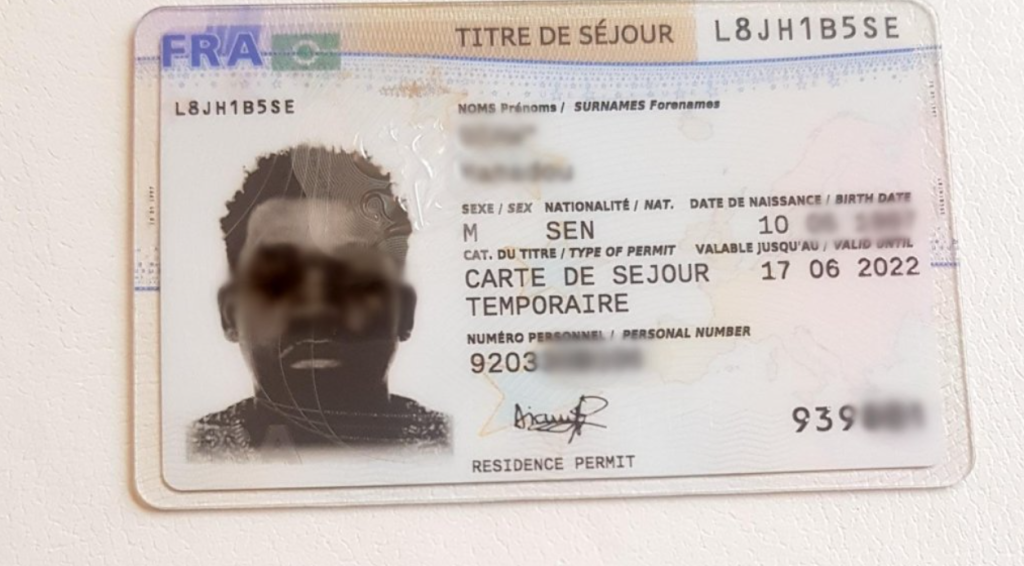
There are also regularized people who are unable to renew their residence permit. Suddenly their whole life collapses like a castle of cards because of their administrative situation. You can be a foreigner who is perfectly integrated in France, and lose everything over the course of several months because of a bottleneck at the prefecture and no intermediary.
IM: Does making an appeal always unblock the situation?
AD: As soon as we file a claim in court, they send our appeal to the prefecture. Sometimes that’s enough to unblock the situation. It’s a bit absurd; sometimes we don’t even have to wait for the judge’s decision. The prefecture receives our appeal and decides that perhaps something needs to be done.
The delays are long for classic appeals. People can sometimes wait between 12 and 18 months before receiving a response from the tribunal. Foreigners can see their lives suspended during this period.
Making an appeal often isn’t enough, because in overburdened prefectures, it’s difficult to enforce court decisions. Once the court orders the administration to do something, like issue a receipt or schedule an appointment, it still must be done.
Sometimes the same difficulty may persist despite a court order: a foreigner may continue to face the silence of the administration.