
According to a report by a coalition of European NGOs, more than 80,000 pushbacks took place at the European Union's external borders in 2025. This figure represents a 34 percent drop compared to 2024, which the associations attribute to the interception of migrants before their arrival at EU borders – such as the so-called pullbacks of migrants in the Mediterranean Sea by the Libyan coast guard.
"They threw us into the river at three in the morning. There were children with us, around ten years old. I saw them thrown into the river, injured and already shivering with cold." This is the story of a 21-year-old Egyptian man telling of his "pushback" -- a return to the border without giving the person the opportunity to apply for asylum -- and that of the 39 members of his group, including 12 minors. They were reportedly pushed back at the Bosnia-Croatia border, on the Balkan route.
This testimony was published in a report by a coalition of European organizations that documents the scale of pushbacks carried out at the external borders of the European Union (EU) each year. According to this report, at least 80,865 pushbacks took place at the EU’s external borders in 2025.
That figure is down 34 percent compared to last year. In 2024, the NGO coalition recorded more than 120,000 returns at EU borders.
A decrease linked to the externalization and management of migration
The NGOs believe this decrease is linked to the increase in interceptions before migrants arrive at European borders. They cite, in particular, the increase in interceptions in the Mediterranean Sea by the Libyan coast guard.
"At least 26,635 people were intercepted at sea and forcibly returned to Libya in 2025, according to the latest figures from the International Organization for Migration (IOM). In 2024, 21,762 people were intercepted at sea and returned to Libya. In 2023, the figure was 17,190," they report.
This number of interceptions shows that the EU "is placing a strong emphasis on externalizing and managing migration through agreements with third countries," the report explains, referring to the EU's new Pact on Migration and Asylum.
Set to enter into effect in June 2026, this Pact on Asylum and Migration includes numerous measures to toughen migration policy and externalize asylum applications.
It notably proposes the possibility for EU countries to open return centers – called "return hubs" – in countries outside the EU, where rejected asylum seekers would be sent. It also proposes returning asylum seekers to "safe" third countries with which the applicant has no connection.
'Continuing the dialogue with the Libyan authorities'
When questioned by InfoMigrants about the report and its allegations, the European Commission stated that "the Pact on Migration and Asylum is a major reform that establishes a solid legal framework for fairer and more effective migration management" and that the EU, "together with the Member States," "will intensify its efforts to increase cooperation" with international partners, "in full respect of fundamental rights and obligations under international law."
On the Libyan issue, the Commission reiterated that "it is imperative to continue efforts to help Libya establish a comprehensive, rights-based system of migration governance and management, as well as to strengthen the capacities of relevant Libyan actors in order to save lives and combat the smuggling networks that exploit the desperation of the population." The Commission added: "To improve the situation on the ground, it is necessary to continue the dialogue with the Libyan authorities in order to improve the humanitarian conditions of migrants and prevent deaths at sea and in the desert."
Pushbacks, 'a common practice in Member States'
Despite a decrease in pushbacks over the past year, NGOs remain vigilant. "Pushbacks at Europe's external borders have become a common practice in the Member States of the European Union (EU)," the NGO report states. And "the consistency of these practices indicates that they have become a systematic component of EU migration policy."
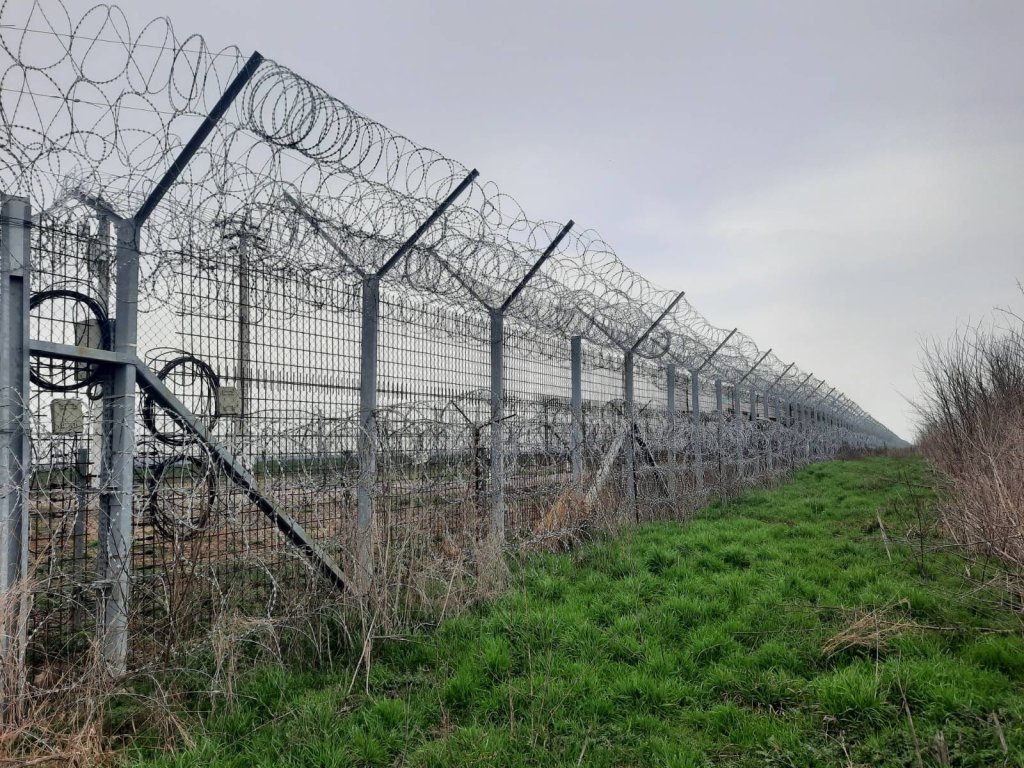
These methods of systematic pushbacks at borders are, however, illegal under international law. The "principle of non-refoulement" is enshrined in Article 33 of the Geneva Convention relating to the Status of Refugees. It is also specified in the Charter of Fundamental Rights of the European Union and the ECHR. This legislation stipulates that before any return decision, a specific examination of the migrants' situations (such as their asylum application) must be carried out and that no general expulsion measures can be taken.
According to the report, the majority of pushbacks take place at the European Union's land borders, particularly along the Balkan route. Citing figures from NGO reports, research groups, UN organizations, and government data, the report notes that most pushbacks were carried out by Poland, Bulgaria, and Latvia. These countries respectively pushed back 14,754, 13,568, and 12,046 people, according to the report. It should be noted that a person may have been pushed back multiple times.
In recent years, InfoMigrants has collected numerous testimonies describing these "pushbacks." “I tried to cross the border nine times. Some officers break our phones, beat us, or spray us with tear gas,” recounted Azzedine, a Sudanese man turned back at the Polish border in May 2024.
EU: 'Investigate any allegation of irregularities'
Greece is also mentioned in the report as having pushed back nearly 6,000 migrants in 2025. For years, Athens has been accused of violent pushbacks in the Aegean Sea and near the Evros River. The country was also condemned by the European Court of Human Rights (ECHR) in a case involving the pushback of asylum seekers. The applicant, a Turkish woman, was deported to Turkey on the very day she arrived in Greece -- then arrested and imprisoned by Turkish authorities. The ECHR ordered Greece to pay her 20,000 euros.
In 2023, in a report, the Greek Refugee Council (GCR) already stated that the "pushbacks of migrants were organized and massive." "People say that there are hooded individuals dressed in black who, at night, stop them and push them back towards Turkey in various ways," Lefteris Papagiannakis, the GCR's director, explained to InfoMigrants.
Papagiannakis said that "violence is part of the pushback." "The aim is to frighten people. A message is being sent to those who want to come to Greece: 'Don't come, you risk being violently pushed back.' The indirect message is very, very clear."
"The coast guard asked us to give them our jerrycan of gasoline. Then they threw us a rope. We thought they were taking us to Lesbos, but in fact they took us out into the middle of the sea. They left us there and sailed away," Samuel* told InfoMigrants in 2020. This migrant had been spotted during the night by the Greek navy as his boat approached the island of Lesbos.
On this point, the European Commission reiterates that "it is the responsibility of Member States to manage and protect their external borders" and therefore "that it is incumbent upon Member States to investigate any allegation of irregularities" at their borders.