
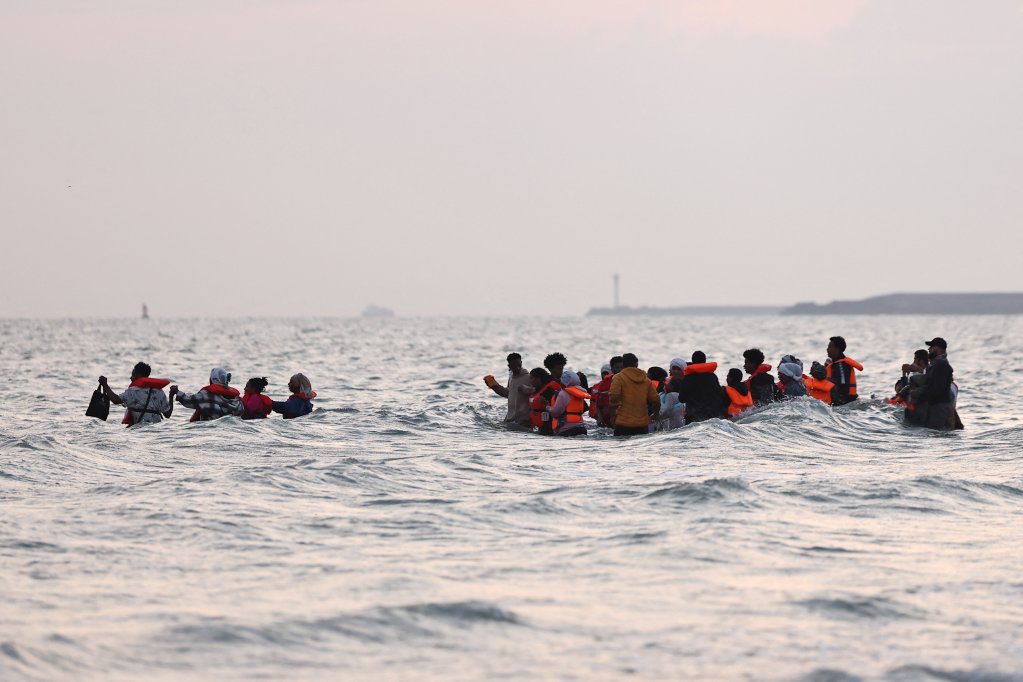
According to Belgian authorities, an increasing number of migrant boats are leaving the Belgian coast to try to reach the United Kingdom by crossing the English Channel irregularly. This new route is emerging as smuggling networks try to evade increased surveillance along the French coastline.
On February 24, a boat carrying 22 migrants left the Belgian beach of Oostduinkerke, about 10 kilometers from the French border, to attempt to cross the Channel and reach the United Kingdom irregularly.
The following day, 15 migrants were found near the Nieuwpoort harbor, not far from Oostduinkerke. "They were carrying an inflatable boat, an electric motor, and jerrycans of gasoline," Belgian police told the BBC. According to the investigation, this group "intended to reach the United Kingdom," police explained.
These departures from the Belgian coast are not isolated cases. While no boats were spotted in northwestern Belgium last year, at least five attempts to cross the English Channel have been recorded in the region -- off the coast of coastal towns including De Panne, Koksijde, and Nieuwpoort—since January 1st, 2026, Belgian police told the BBC.
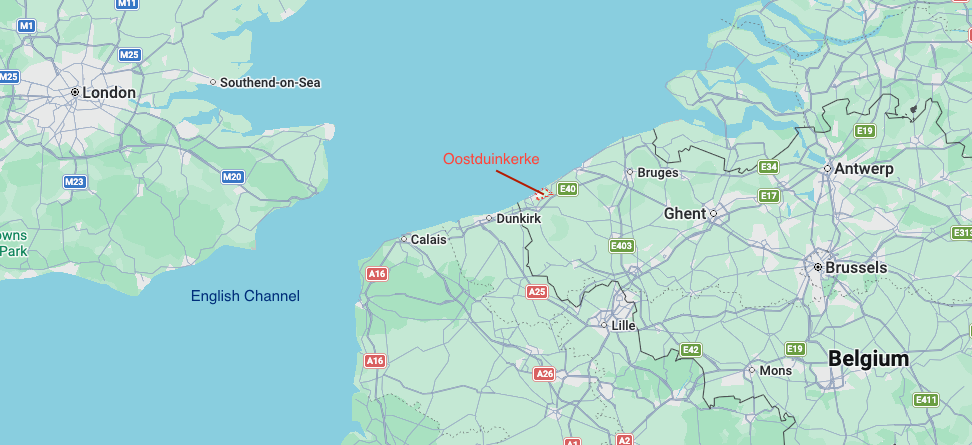
For years, Belgium has been used by traffickers as a holding area for migrant boats before they are launched in France. Until now, the country was not considered a departure point for England due to strong offshore currents and the longer distance to reach the British coast. Approximately 100 kilometers separate northern Belgium from the port of Dover (southern England), compared to 45 kilometers between Calais and the English coast.
Read AlsoUK: 605 migrants cross the Channel in one day
Measures to curb the phenomenon
Faced with this changing situation, the British government has allocated 1.3 million pounds (nearly 1.5 million euros) to Belgian authorities to try to stem the crossings.
And Brussels has already taken measures to prevent dinghy departures: obstacles, such as reinforced concrete blocks, have been installed on the coast to make it difficult for vehicles with trailers transporting small boats to access the dunes and beaches.
Belgium has also emphasized the use of night vision and thermal imaging equipment during police patrols to intercept as many migrants as possible heading for the UK.
The Belgian federal police also announced that they are reinforcing their patrols, both on land, at sea, and in the air, thanks to the deployment of aircraft from Frontex, the European Border and Coast Guard Agency.
This new route is causing concern because authorities fear that the significant distance to travel from Belgium to England could lead to more deaths.
Read AlsoUK: 'Major changes' to asylum system announced
540 million euros paid to France
This is not the first time that smuggling networks have tried to adapt by finding alternative routes and thus evading police surveillance.
The deployment of police officers in northern France, as well as the use of drones, thermal cameras, and Frontex aircraft, had already prompted smugglers to consider other locations for launching boats, in canals in the region but also dozens of kilometers further south, in the Somme. In response, the department's authorities have also increased police surveillance measures there.
For years, London has allocated significant sums of money to Paris to control irregular Channel crossings by migrants. Between 2023 and 2026, the United Kingdom paid 540 million euros to France for immigration management.
Laurent Touvet, head of the French Directorate General for Foreigners (DGEF), questioned last week by a parliamentary inquiry into the Touquet Agreements, estimates that 85 percent of the total funds are allocated to security missions and 15 percent to social, health, and humanitarian missions, including sea rescues.
According to official figures from British authorities, 41,472 people irregularly reached the United Kingdom in small boats in 2025. This figure is the second-highest since these crossings began in 2018. Furthermore, at least 29 migrants died at sea in 2025, according to an AFP tally based on official French and British sources.
Read AlsoFrance cracks down in attempt to stop migrant boat departures