
EU asylum applications dropped nearly 20 percent in 2025, but the war in Iran has European officials bracing for possible refugee outflows via Turkey and the Balkans. With new EU rules set for June and Greece tightening scrutiny on Iranian claims, agencies warn of rights risks amid stable borders so far.
EU asylum applications dropped nearly 20 percent in 2025, the bloc's asylum agency said Tuesday (March 3) -- warning however that a crisis in Iran could result in refugee movements of "unprecedented magnitude".
"With a population of approximately 90 million, even partial destabilization could generate refugee movements of an unprecedented magnitude," the European Union Agency for Asylum (EUAA) said.
Read Also Fleeing Iranians speak of violent repression at the Turkish border
Sharp decline in applications
The 27 EU member states plus Norway and Switzerland (EU+ states) -- recorded around 822,000 asylum applications in 2025, down almost 20 percent on the previous year. That followed an 11-percent decrease in 2024. The 2025 drop was largely driven by fewer applications by Syrians, Bangladeshis and Turks, the agency said.
Syrians filed just 42,000 requests (down from 151,000) since the ousting of Bashar al-Assad in late-2024. In a report written before the outbreak of the US-Israel war with Iran, the EUAA stated that the reason for this is hope for a better future in the country. Bangladeshis lodged 37,000 (minus 15 percent), Turks 33,000 (a reduction of 40 percent).
In the EUAA report, Germany topped recipients with 163,000 applications -- minus 31 percent versus 2024. BAMF counted 168,000 total, including 113,000 first-time applications (these figures differ slightly due to different counting dates).
The following five countries, which handled 80 percent of all claims, also saw a decline in applications. Spain saw 143,000 (a reduction of 15 percent), Italy 134,000 (16 percent lower), Greece 62,000 (minus 16 percent) and France 152,000 (stable).
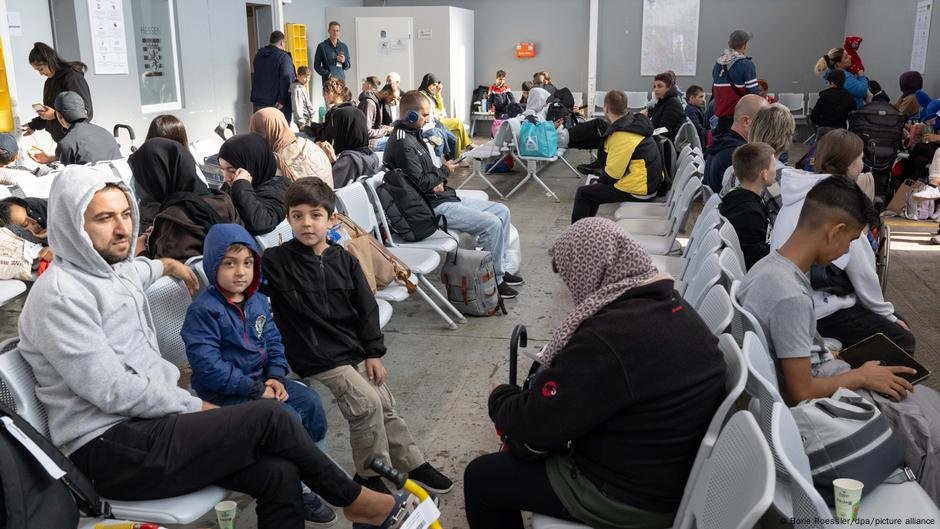
EU Migration Commissioner Magnus Brunner attributed the trend in part to "a central factor being our consistent engagement in countries along the migration routes," via strengthened ties with Egypt and Libya.
Afghans accounted for the most requests, filing 117,000 applications -- a 33-percent increase on the previous year -- followed by Venezuelans, with 91,000. The latter rise ties to tighter US immigration rules and visa restrictions in Latin American neighbors.
Iranians lodged only 8,000 requests in EU+ countries in 2025, making them the 31st largest group of applicants. So far, Iranian displacement has remained limited, the EUAA said.
Read AlsoGermany: Plans for 'faster route to work' for asylum seekers
Iran as a potential flashpoint
Turmoil in the Islamic Republic risked upending a downward trend in requests for protection, the EUAA said. Citing mass protests against Iran's clerical authorities and last year's US-Israeli strikes on its nuclear facilities, the agency described the country as a "potential flashpoint" in a highly volatile global environment.
"The decline in applications should therefore be interpreted with caution," it wrote. Its report said displacement of just 10 percent of Iran's population would rival the largest refugee flows of recent decades, albeit cautioning that the scenario remained "highly speculative".
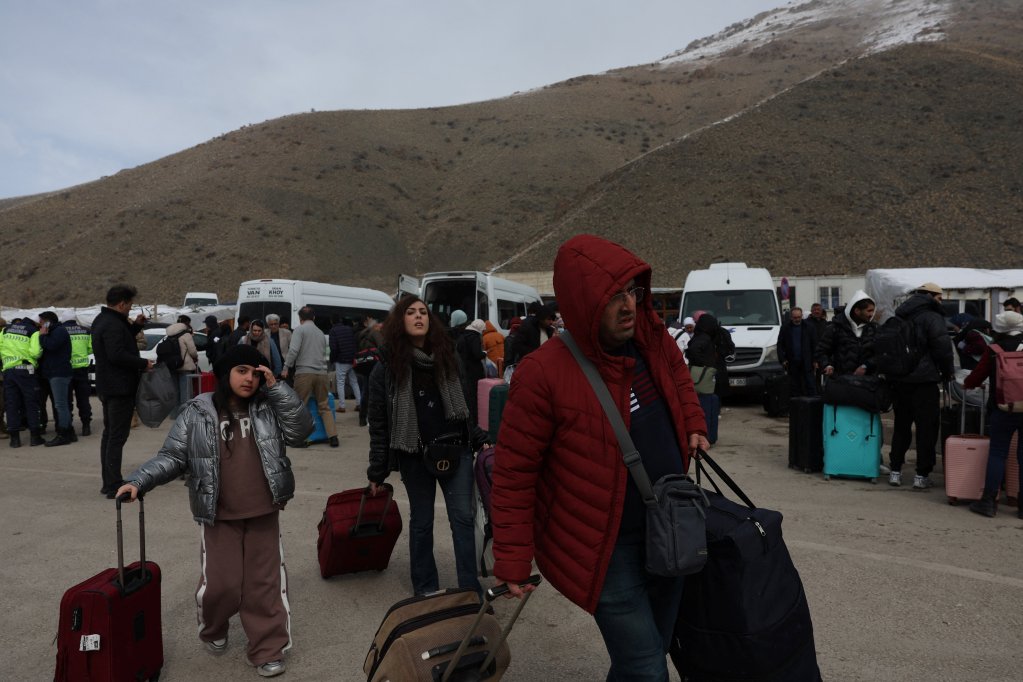
Iran is among the world's top hosting countries for refugees. The country is home to about 2.5 million refugees, mainly Afghan nationals, according to the UN Refugee Agency (UNHCR).
Commissioner Brunner said on Monday: "We are not currently observing any major movements at Iran's external borders." The commission is monitoring the situation and is in close contact with partners in the Middle East and international organizations, he added.
In addition, the European Commission said it was "enhancing preparedness through closer monitoring" of the situation and reinforcing cooperation with relevant United Nations agencies and partner countries.
Read AlsoIranian athlete granted refuge in Italy: 'We athletes will be the voice of the people'
UNHCR response in the region
Meanwhile, staff at UNHCR are mobilizing from Iran and Afghanistan to Lebanon and Syria as the regional crisis intensifies. The agency, with a presence in Iran since 1984, reports stable crossings at Türkiye-Iran, Afghanistan's Islam Qala and Armenia borders, but urges countries to keep borders open to avoid refoulement. Iran hosts 1.65 million refugees, mainly Afghans already strained by inflation, deportations and job limits.
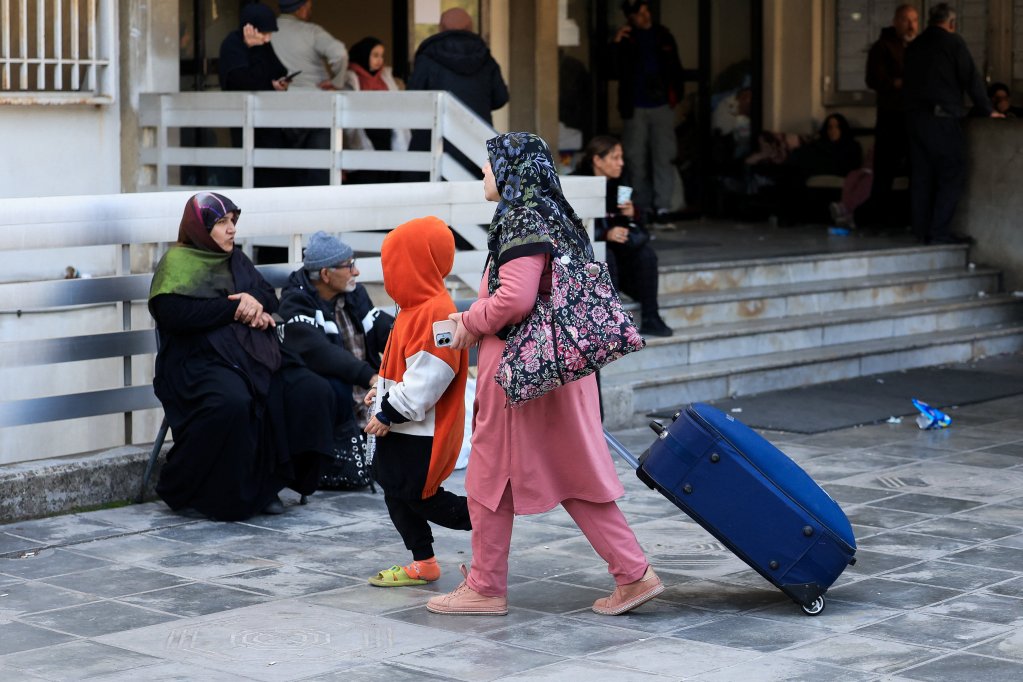
In Lebanon, over 30,000 people have sought shelter following Israeli airstrikes on Hezbollah positions linked to the Iran conflict, with many more sleeping in cars or stuck in traffic after evacuation orders for 53 southern villages, Bekaa and Beirut suburbs. UNHCR reports around 11,000 crossed into Syria Monday -- over 20 times the daily average of 500-600 -- straining Syria's borders as Lebanon, hosting 1.5 million Syrian refugees, faces growing pressure.
Read AlsoMore than 11 million people will be affected by UNHCR funding gaps, UN warns
Greece and Turkey prepare for potential flows
Migration Minister Thanos Plevris announced stricter and closer monitoring of Iranian nationals applying for asylum, citing potential security and migration risks stemming from the ongoing military operations against Iran.
Speaking on ANT1 television on Monday, he stressed that it remains "too early to talk about significant migration flows" from Iran, explaining that large-scale movements typically emerge only after prolonged instability. "Such issues arise when there are prolonged situations. A prolonged situation will create a problem for Europe as a whole," he said.
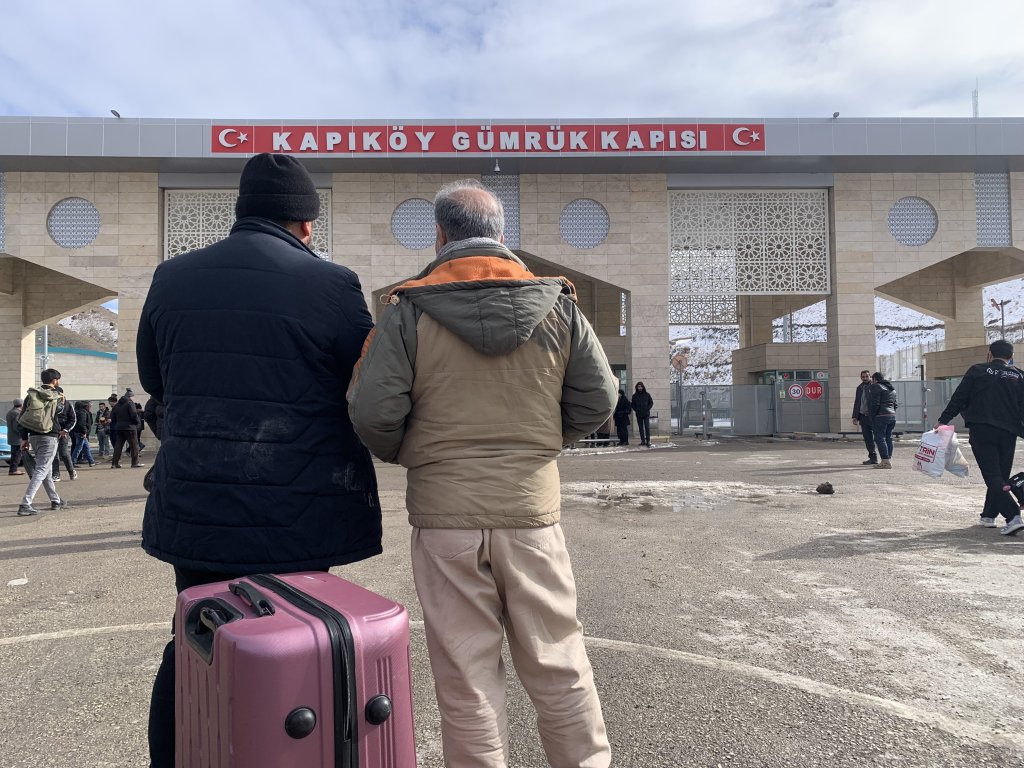
He acknowledged that the conflict could affect migration patterns due to Iran's border with Turkey. "Iranians will obviously turn toward Turkey. When someone ends up there, they then aspire to reach Europe," Plevris noted. "We believe, however, that such a discussion belongs to a later stage.
We do not know the depth of the operations or their duration, but flows increase when a situation becomes entrenched and remains volatile for a long period of time." The minister confirmed that, to date, there has been no formal communication from Turkish authorities regarding migration issues related to the crisis.
Read Also56 NGOs ink statement condemning Greece's proposed amendments to immigration code
Heightened border security
Turkey, sharing a 560-kilometer border with Iran, has reinforced security measures including walls, ditches and drones along the frontier, particularly in Van province. Turkish Interior Minister Mustafa Çiftçi held crisis meetings on Sunday to assess potential migrant scenarios, with crossings currently suspended. This reflects concerns over both Iranian nationals and Afghan refugees already transiting through Turkey toward Europe, building on the framework of the 2016 EU-Turkey Statement.
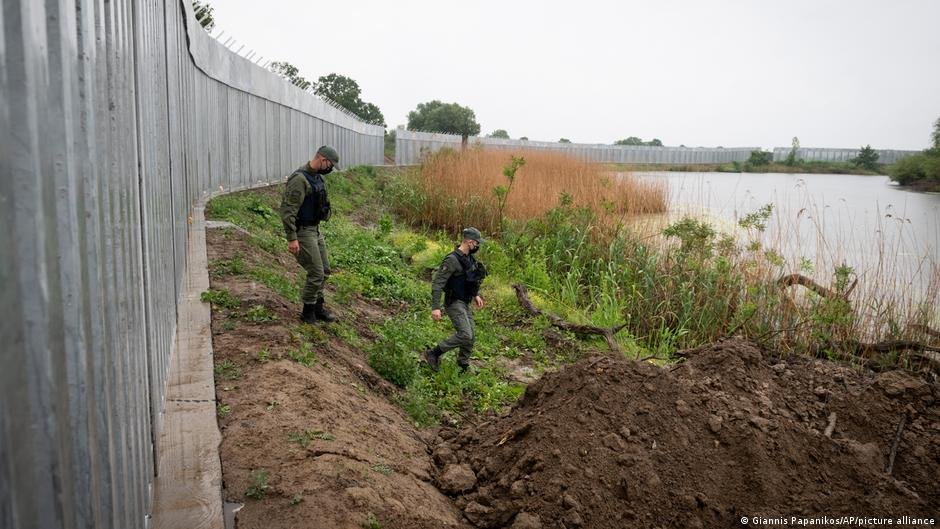
Greek officials have heightened border vigilance along the Evros River frontier with Turkey, a primary entry route for irregular migrants from the Middle East and Asia. The government has indicated readiness to reinforce pushback policies and accelerate asylum processing reviews if refugee pressures increase. No immediate surge in arrivals has been reported, but authorities are preparing contingency measures in coordination with Frontex and EU partners.
The Iran war compounds pressures on Afghans, who form most of Iran's 2.5 million refugees. UNHCR reports over 232,500 Afghan returns in 2026 so far (86,253 from Iran, 146,206 from Pakistan), adding to 5.4 million since October 2023 -- many forced by tighter residency controls and economic conditions worsened by conflict. These returns heighten protection needs and risk further regional instability, including onward movement to Europe.
Read AlsoGreece: Suspected migrant smuggler detained near Turkish border
New EU rules from June
"With the new rules for a common European asylum system, we have created a clear crisis mechanism so that Europe is prepared and can act quickly," Brunner said. The European Union's asylum reform comes into force in June and is intended to improve the distribution of asylum seekers in the EU and enable faster asylum procedures at its external borders.
A crisis mechanism provides for increased cooperation between member states in the event of mass arrivals. EU states with a high number of arrivals, such as Greece, are to receive particular support.
The prospect was discussed at an extraordinary meeting of the bloc's foreign ministers on Sunday, according to diplomatic sources. And the issue will be on the agenda as the EU's 27 interior ministers meet in Brussels on Thursday.
Asked for a fresh assessment as the Iran war spread across the region, the EUAA said it was "not in a position to comment on any impact the ongoing hostilities in the Middle East may have." Emphasizing that the "situation remains very fluid and it would be irresponsible to make any hypothetical or predictive statement."
Read AlsoEU Council gives final greenlight to new EU asylum measures
EU role in wider Iran context
The EU has maintained close monitoring of the situation without direct involvement in US-Israel military operations against Iran. European Commission President Ursula von der Leyen called for a "credible transition" in Iran while EU foreign ministers urged restraint and respect for international law.
Individual member states have expressed varied positions, with some condemning the strikes and others emphasizing diplomatic solutions. The focus remains on preparedness for potential migration flows through coordination with Turkey and regional partners.
Read AlsoEU parliament to harden its stance on asylum seekers
With AFP and dpa