
Despite over 500 lawsuits and harsher Taliban laws, Germany's government refuses to reinstate admission promises for around 1,150 Afghans in Pakistan -- even as courts side with plaintiffs in most cases.
Despite a significant increase in lawsuits from Afghans before German courts -- coupled with increasingly draconian Taliban laws targeting critics -- the German federal government shows no intention of reinstating revoked admission promises to former local staff and opposition figures stranded in Pakistan.
This stance emerges from the Federal Interior Ministry's written response to a parliamentary query by the Left Party in the German parliament, as reported by the Neue Osnabrücker Zeitung (NOZ) on Tuesday. The ministry explicitly states that no change to current practice is "intended," even as the number of legal challenges against decisions by the Federal Office for Migration and Refugees (BAMF) has climbed to 501, with nearly 90 now pending in appellate courts.

Left Party migration policy spokesperson Clara Bünger sharply criticized the approach in comments to the NOZ, calling it "shabby" that "hundreds of Afghan people from Pakistan have to turn to German administrative courts for help and painstakingly sue the Federal Government to honor this promise."
Courts frequently rule in Afghans' favor: Berlin Administrative Court granted 32 out of 64 urgent visa cases to plaintiffs by September 2025 (50 percent success), with the appellate court upholding most; Ansbach court saw 90 percent wins in around 30 revocation challenges, according to Die Zeit.
While some affected individuals have successfully won their cases, Bünger stressed that "when it comes to keeping one's word, the government must not leave the decision to the courts." She demanded that all original promises -- issued during the prior center-left coalition government -- be implemented "quickly and without complications," urging an end to what she termed the government's "juridical attrition tactics."
Read AlsoGermany winds down Afghan admissions, 280 waiting in Pakistan
Escalating dangers from new Taliban laws
Bünger underscored the growing peril with reference to fresh Sharia-oriented penal codes recently enacted by the Taliban, which prescribe the death penalty for any Islamic interpretation deviating from their rigid doctrine, alongside harsh punishments for oppositional attitudes.
These measures further entrench women's disenfranchisement, prompting deep concern from UN Women about heightened risks of violence and arbitrary justice in a January 2026 decree that tiers society into classes, enabling spousal "corrective" violence and family visit bans without male consent -- legalizing discrimination per rights groups.

Enforcing these rules is Taliban Interior Minister Sirajuddin Haqqani, who oversees the morality police and special forces in a system that reportedly enables class-based self-justice and practices akin to modern slavery. "I can't believe the government wants to throw these people -- to whom admission was firmly promised -- to the Taliban as prey anyway. That's irresponsible," Bünger warned, particularly for politically active opponents now facing acute threats.
This comes amid Pakistan's 'open war' declaration on the Taliban last month, escalating border clashes. This further raises the stakes for stranded Afghans fearing being caught in the crossfire.
Read AlsoMost Afghans in Pakistan reject German cash offer in lieu of resettlement
Shift under new government
These promises stem from the chaotic aftermath of the Taliban's August 2021 takeover in Afghanistan, when the then-governing center-left coalition in Germany extended admission assurances to individuals who had worked for the Bundeswehr or other German institutions. This also applied to those deemed especially vulnerable -- such as women's rights activists and human rights defenders.
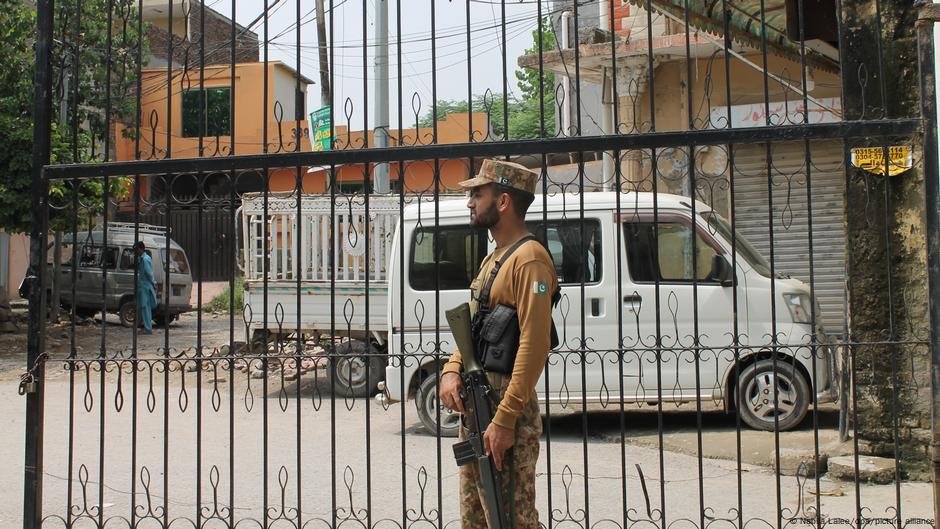
Many fled to neighboring Pakistan, only to find themselves trapped there after Berlin's political landscape shifted with the formation of the new black-red coalition (made up of the center-right CDU/CSU and the social democratic SPD) in May 2025.
The current government has since revoked nearly half of the promises for the 2,308 Afghans in Pakistan -- despite around 37,652 total arrivals via programs since May 2021 and 788 from Pakistan post-May 2025 (410 pending) -- citing a lack of ongoing political interest. This aligns with the governing coalition agreement's "repatriation offensive," which ends voluntary admissions as much as possible, expands detention, cuts deportee aid, and resumes flights to Afghanistan.
Read AlsoGermany: Afghanistan's consulates pose threat to refugees
Non-binding 'intentions'
The Interior Ministry justifies revocations under section 22 of the Residence Act (grants temporary residence permits for admission from abroad on international law/urgent humanitarian grounds), maintaining that promises were non-binding "intentions" open to security reviews. Only three percent failed BAMF interviews, although policy shifted after the change in government.
Since 2021, Germany resettled around 37,652 via different programs, yet the coalition government continues to prioritize returns, offering cash (around 5,000 euros per family), which was rejected by the vast majority (90 percent) of recipients.
The human rights organization Pro Asyl decries this as breaching "guarantor duty -- potentially criminal," warning Pakistan's (over 1 million) deportations since 2023 funnel people into Taliban persecution.
Read AlsoBroken promises: Raid on Kabul safe house highlights deepening humanitarian crisis in Afghanistan
With AFP
Correction note: This article was updated on March 11. The original version stated that the German government refuses to reinstate admission promises for 2,308 Afghans in Pakistan. This is incorrect -- only half of the 2,308 admission promises were revoked in the first place.