
Britain's Home Secretary Shabana Mahmood announced a new 30-month asylum claim review on Monday among other major changes to the asylum system, which she described as "existential" to the country’s survival.
People granted asylum in the UK will have, in the future, to review their refugee status every 30 months, instead of every five years, which is what is currently in place. That’s the latest declaration from Britain’s Home Secretary (Interior Minister) Shabana Mahmood. The Home Secretary has called her approach "firm but fair."
In a written statement to parliament, Mahmood promised that the UK would "always provide sanctuary to those fleeing war and persecution. But we must also ensure our asylum system is not creating pull factors that draw people on dangerous journeys across the world, fueling and funding the human traffickers."
At each review, anyone from a country which has at that time been declared safe will be expected to return home, explained Mahmood in her announcement on Monday (March 2). Changes to UK visa and settlement rules are expected to take effect from April 2026, announced the government last week.
'Biggest overhaul of legal migration model'
In general, the government hopes that refugees who wish to remain in the UK long-term will be encouraged to move into alternative immigration routes, including new work and study visa pathways, which are designed to support integration and make contributions to the economy.
Read AlsoDenmark moves towards enacting law to deport criminal foreigners more easily
Family reunion arrangements will also be tightened and subject to financial and integration requirements. Any route to settlement on the core protection route will require ten to 20 years of residence. The reforms will apply to new asylum claims made, with transitional provisions ensuring that existing claims will be considered under the current framework. Unaccompanied children will continue to receive five years’ leave to remain for the time being, pending further policy decisions.
Immigration lawyer Nick Rollason called these and other changes, including already announced tweaks to the visa system, "the biggest overhaul of the UK’s legal migration model for 50 years." A vote to bring these changes in is not needed, confirmed a paper from the House of Commons library last week, since changes to visa and immigration rules can be done through a "statement of changes" which takes effect automatically.
'Callous announcement'
Pro-migrant organizations have criticized the move. Asylum Matters declared it is "a dark day for anyone who believes in sanctuary in the UK." And the Human Rights charity Praxis urged people to "take action in the mass lobby for migrant rights" to be held on March 11. They complained that the new rules would mean "migrants and refugees will have to continually ‘earn’ their right to stay in the place they already call home."
Meanwhile, Safe Passage International sent InfoMigrants this comment: "During a weekend of volatile conflict, this callous announcement is totally out of step with the realities of fleeing war or persecution," declared Gunes Kalkan, head of campaigns at Safe Passage International.
“From our work, we know there is very little understanding of the rules and systems that await people who need protection. Instead, people are driven by reuniting with family and having the best chance of rebuilding their lives through language or cultural ties," continued Kalkan. "These changes will only create more barriers for refugees, including children, and more chaos in the broken asylum system -- deliberately keeping people in limbo and forcing them to live under the constant threat of being uprooted all over again."
Safe Passage International said they are "challenging the refugee family reunion suspension in the Courts with a judicial review, as we argue it is unlawful by breaching the UK’s duties to safeguard children. The Government must stop its attack on refugee rights, and open genuinely accessible safe routes to protection."
Read AlsoDenmark discourages foreigners from coming, creating a 'negative environment' for those present
Reducing pull factors and 'incentives' to migrate
Mahmood said it was important to "reduce the incentives that draw people here at such scale."
Speaking ahead of the announcement to the BBC, Mahmood said that she believed the reforms she announces are "existential for us as a country." Mahmood said that Britain has a "real problem with the lack of control of our border system, and what that is doing to public trust in confidence and politics, but also in the ability of the state to just do anything at all."
The problem of migration has dogged successive governments for years, and the rhetoric coming from the ruling Labour party has changed significantly on this issue since they took office in July 2024. Now, politicians like Mahmood are beginning, like their Conservative predecessors, to say the "system is broken."
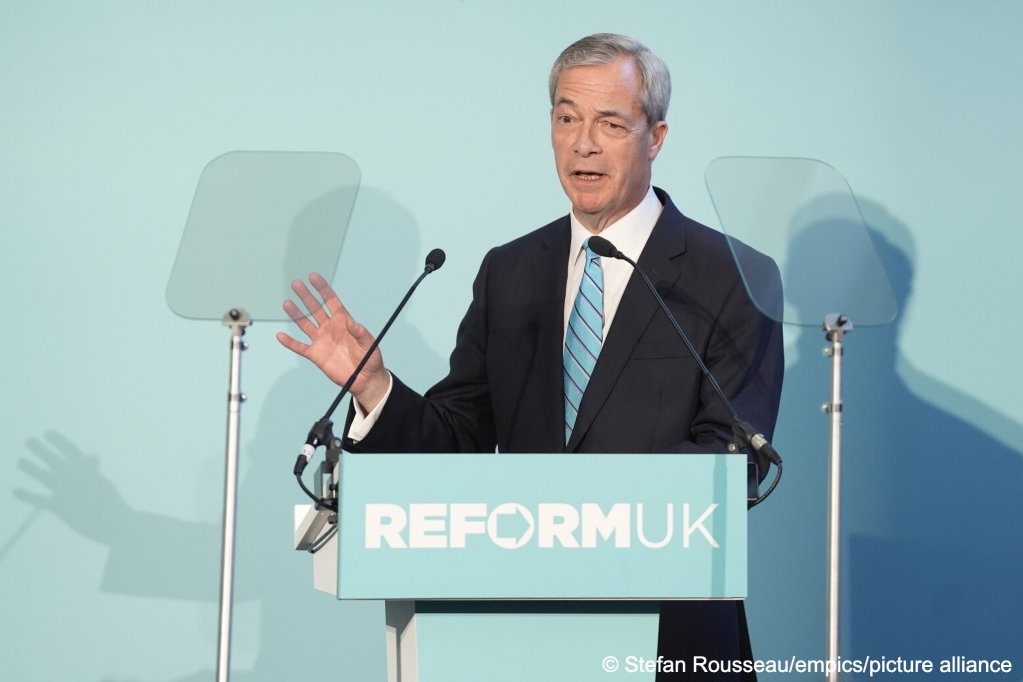
Mahmood denied that her tougher measures were in response to a surge in support for the right-wing and anti-migrant reform party, and were all about addressing the "very serious problem we are facing [in Britain.]"
The Home Secretary claimed that she wasn’t thinking about how to boost her party’s ratings with the public, but rather whether her policies "are going to work? Are they going to restore order and control to our borders?"
Read AlsoDenmark, Sweden: Stricter immigration policies lead to historic low migration
Inspired by Denmark
Mahmood’s latest policies come just a week after she visited Denmark and are widely being hailed as modelled on the Danish approach to immigration. Denmark, although ruled by a social-democratic-led coalition, has one of the toughest asylum and immigration systems in Europe.
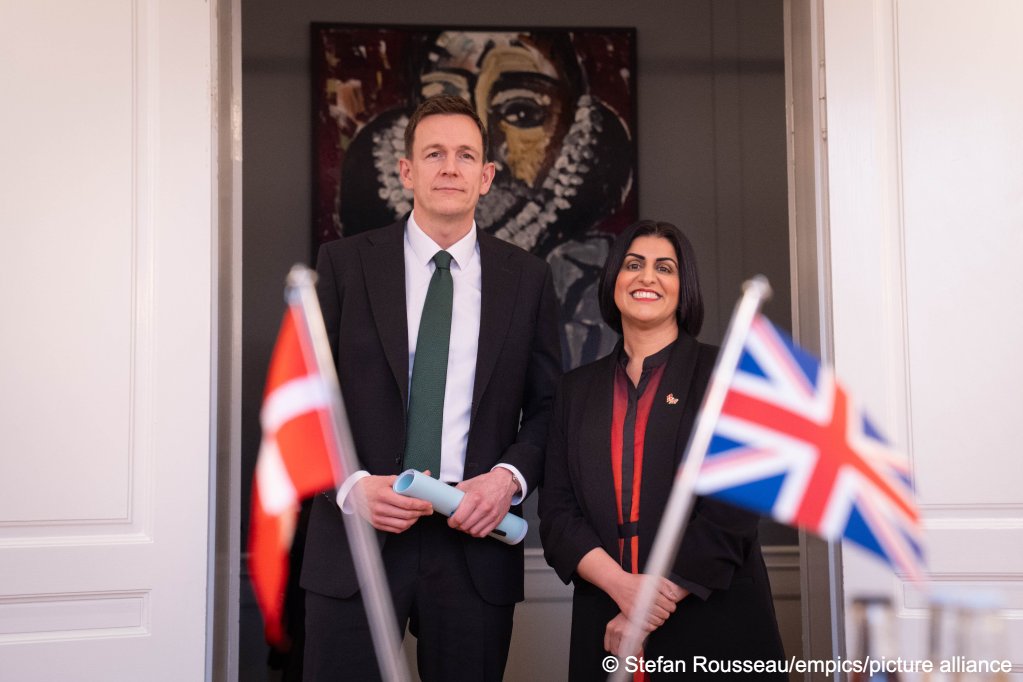
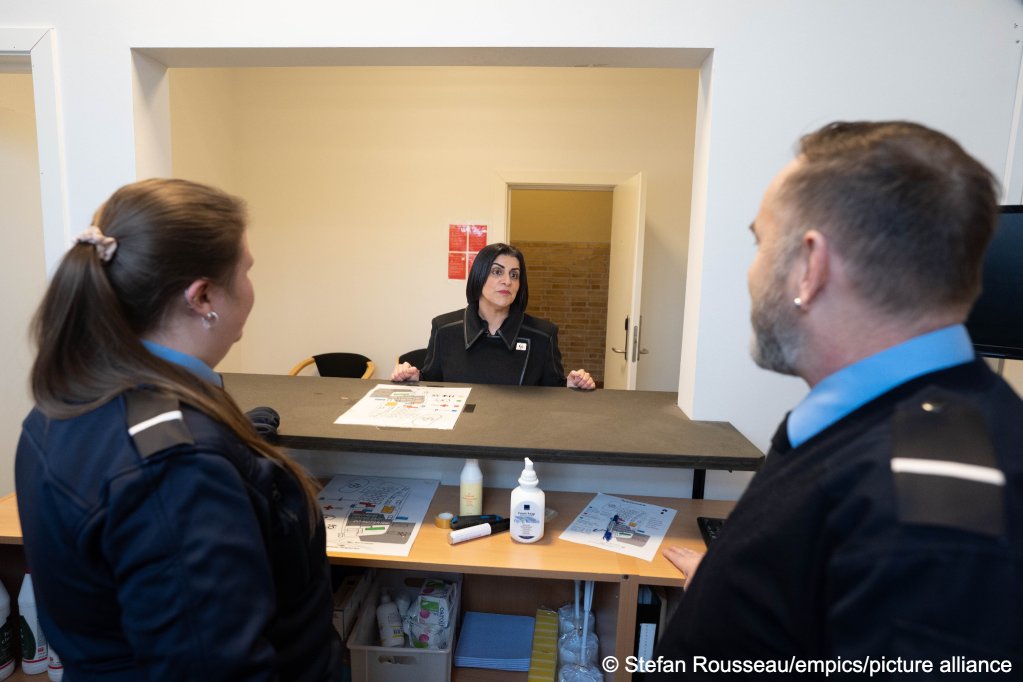
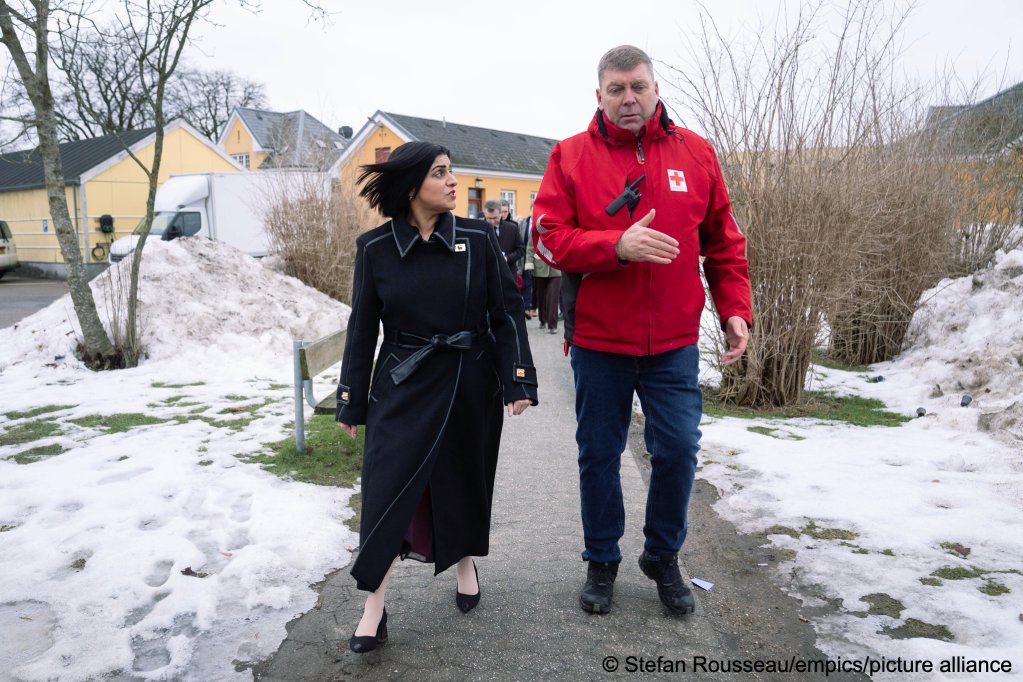
In Denmark last week for two days, Mahmood was pictured visiting a Danish deportation center at Sjaelsmark on the outskirts of Copenhagen. The center, housed in a former military barracks, houses men and women who have no right to remain in Denmark.
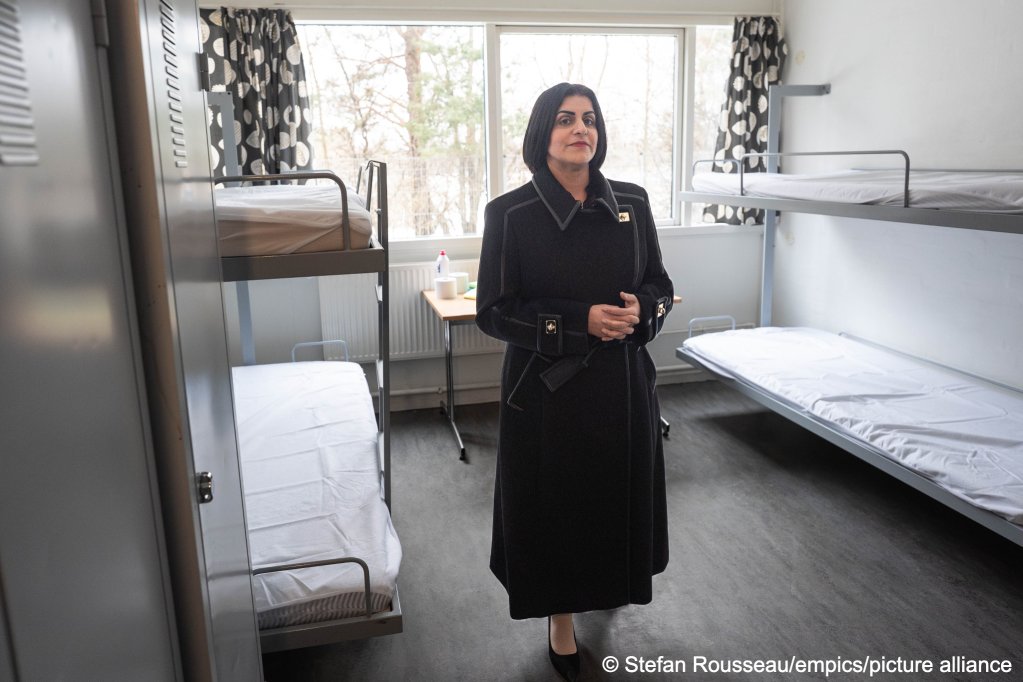
Centers like Sjaelsmark have been criticized by pro-migrant organizations as "open prisons." The center, reports the left-leaning Guardian newspaper, houses people in rooms of up to ten at a time. Those accommodated at the center must sign a contract saying they will help clean the facilities and stick to strict curfews or face fines, imprisonment or deportation.
On paper, rejected asylum seekers are allowed to leave the barracks, but the center is surrounded by high fences, CCTV cameras and has a single entrance and exit point, which means few choose to do so, according to staff, reported the Guardian.
Also in Denmark, refugee protection is granted on a temporary basis and as soon as that country is declared safe once again, people will be told to leave.
Read AlsoEU court says Denmark’s 'ghetto law' could breach anti-discrimination rules
Will new measures discourage integration?

While at Sjaelsmark, the head of asylum at the Danish Red Cross, Anne la Cour Vagen, told Mahmood that the temporary refugee status can interfere with the success of integration. La Cour Vagen said that temporary stays led to "uncertainty" which can impact for instance whether someone chooses to learn the language.
Mahmood acknowledged that a similar thing could happen in the UK as a result of her measures, telling the Guardian, "I do care about integration, but I also want to change the calculus of people that are about to pay money to people smugglers, or get on a dangerous boat in the Channel."
Despite Mahmood’s protestations, Britain’s Labour party is also hoping that it can use the Danish-style immigration policy to defeat the populist right in Britain in the upcoming local and regional by-elections scheduled for May this year.
'Broken system'
Speaking last week to the Guardian newspaper, Mahmood acknowledged that she believes the British public has "legitimate grievances" about the unfairness of allowing people to arrive in small boats and the strain on public services from excessive immigration, reported the Guardian.
"There are many more people who are frustrated with the broken system, who feel a tremendous amount of resentment because they can see their communities under pressure. Public services are under pressure. People break the rules and they stay in this country," said Mahmood.
The politician went on to say: "We’re paying for people who’ve got no right to be in this country. Billions of pounds is spent on a system that is fundamentally broken. That resentment is real, and it does have a real-life impact." Mahmood said she believes, "the job of responsible politicians is to recognize human nature and resentment and to say: ‘I don’t really want that to turn into something worse."
More safe and legal routes
In conjunction with the tough reforms, the British government has promised to open more new safe and legal routes, "with community sponsorship becoming the new norm." In her statement to parliament, Mahmood said that the government’s entire approach was "designed to shift the asylum system in Britain away from dangerous, illegal crossings and high levels of applications from those without legitimate asylum claims."
Towards the end of the statement, Mahmood acknowledged that her measures are "inspired by Denmark’s success," saying that she hoped Britain’s asylum offer will "encourage those wishing to build a life in the UK to do so via legal routes and reduce the pull factors driving illegal migration."
Mahmood said that while Denmark had cut its asylum claims to a 40-year-low, Britain had seen a 13 percent increase in the year to September 2025. Across the EU, underlined Mahmood, asylum applications fell by 22 percent over the same period.
The new measures build on the announcements from autumn last year, which included making sure that refugees will have to wait 20 years for settlement, unless they switch to a 'core protection' system, to be implemented later this week.
Read AlsoUK and Danish leaders call for reinterpretation of ECHR