
The organization Amnesty International has accused the Egyptian authorities of instigating sweeping mass detentions of refugees and migrants, forcing some into hiding for fear of being caught up and deported home.
Fear appears to be spreading among refugees from Sudan in Egypt. This is because, according to the human rights organization Amnesty International, the Egyptian authorities have been carrying out sweeping mass detention initiatives since at least late December last year.
On February 16, Amnesty released its latest statement about the situation. Amnesty said that "in recent months, the Egyptian authorities renewed their campaign of arbitrarily detaining and unlawfully deporting refugees and asylum seekers solely on the basis of their irregular immigration status in blatant violation of the principle of non-refoulement and Egypt’s own asylum law."
The UN and other organizations working with refugees in Egypt believe that mistreatment of some groups of refugees and asylum seekers in Egypt has been going on for even longer, since 2024 and throughout much of 2025.
The Sudanese and South Sudanese refugee community seems to be particularly affected. Some have taken to posting on social media, warning of arrests and arbitrary detention. This particular community fears being targeted because of their skin color. This has prompted some schools to close and others to go into hiding.
Read AlsoOver 1.5 million Sudanese fleeing war now in Egypt
Huda's tale
Huda* a 35-year-old refugee woman from Sudan, fled the war in her country for Egypt. She told InfoMigrants Arabic that she suffers from heart disease and has a pacemaker. Because she is separated from her husband, she cares for her two children alone. Because of her heart condition, she needs to take several medications each day, including blood thinners.
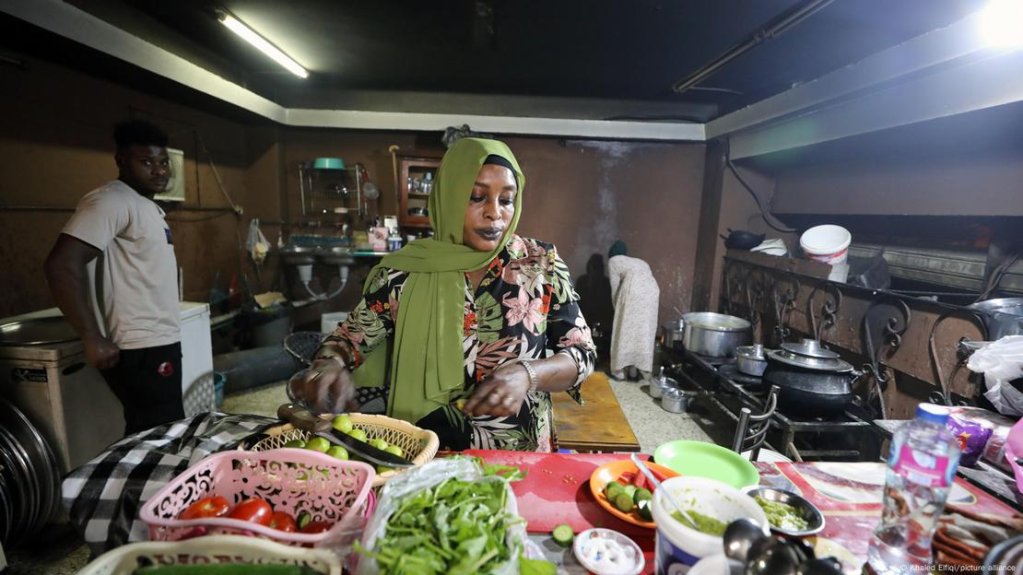
Huda is registered with the UNHCR in Egypt and says her card is valid until December 2026. She also has UNHCR appointments for renewal in 2027. All this, she says, makes her status in Egypt completely legal, but that didn’t prevent Huda from being arrested at a police station.
Fatima* an English teacher living in the Egyptian capital Cairo and Huda’s cousin said she recently received a call from Huda saying she had been arrested. Huda asked Fatima to bring her medication to the police station and to make sure that her daughters were ok.
Fatima told InfoMigrants Arabic that she carries the same card and so was scared to enter the police station herself, but instead asked an Egyptian man to deliver her cousin the mediation. She explained that Huda told her the police station where she had been arrested was "extremely crowded" and that many were forced to stand while waiting for questioning.
"We are imprisoned in our homes. If my cousin hadn’t received her medication, she would have died. It’s what keeps her pacemaker functioning. These campaigns target Sudanese people only. The Sudanese government wants us to return, claiming the war is over, but the situation is still terrible and unsafe. I’m from western Sudan and there is no medical care [there]."
Read AlsoWar in Sudan: 'In Darfur, some people have been displaced for the third or fourth time'
'Unlawfully deported, arbitrarily detained'
Amnesty confirmed that those registered with UNHCR and carrying cards like Huda and Fatima are among those being "unlawfully deported or arbitrarily detained pending deportation."
According to Amnesty, police officers in plain clothes have been arbitrarily rounding up nationals of Syria, Sudan, South Sudan and other sub-Saharan African countries from the streets, their workplaces in cities, following identity checks. Even those carrying UNHCR cards, claims Amnesty, were driven away in "unmarked vans" if they were found to be without a valid residency permit.
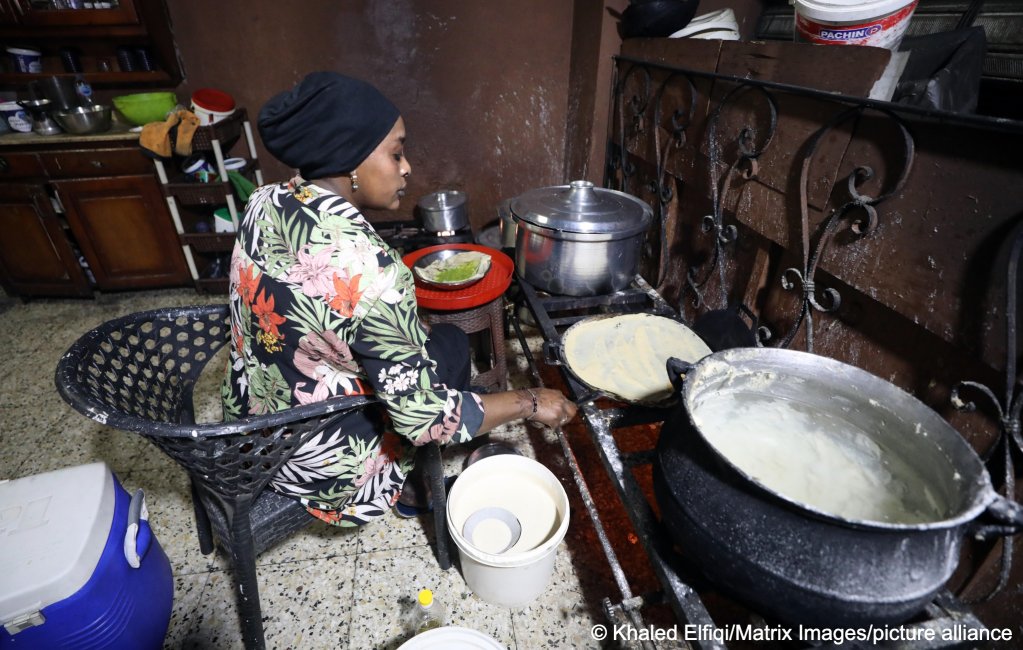
Mahmoud Shalaby, Amnesty International researcher on Egypt and Libya, stated: "Fearing arrest and deportation, families have been forced into hiding at home, living in limbo and unable to access work or education. Many are struggling to survive after the primary breadwinner of the family has been detained or deported."
Amnesty calls on the Egyptian authorities to "immediately release all refugees and asylum seekers arbitrarily detained solely on immigration grounds and halt deportations of anyone entitled to protection under international law."
'We don't know if he's dead or alive'
Between late December and February 5 this year, Amnesty says they have documented the arbitrary arrest by security forces of at least 22 refugees and asylum seekers, including one child and two women. Some were taken from their homes, others from the streets or at security checkpoints, says Amnesty. Fifteen of this group were also registered with UNHCR, says Amnesty.
The French news agency Agence France Presse (AFP) published the story this week of a man they are calling Abu Amin. Amin, they say, left for work one day more than two weeks ago and his family has not seen him since.
Amin, his family told AFP, worked in a restaurant in Egypt. "We don’t know if he’s dead or alive," his wife told AFP. The family believes Amin was detained during a morning sweep of their neighborhood, a place where many Sudanese live.
Amin had been living in Cairo with his wife and three children since 2022. "He is the sole breadwinner, I don’t know what to do now," his wife told AFP. "He never went anywhere without his UNHCR card."
Read AlsoEU presents blueprint for new pact for the Mediterranean to address causes of migration
Some asked to pay for flights back home
While trying to secure her husband’s release, Amin’s wife says she was told by the Sudanese embassy that he could be returned to Sudan if they paid around 13,000 Egyptian pounds (around 260 euros), a sum she can’t afford.
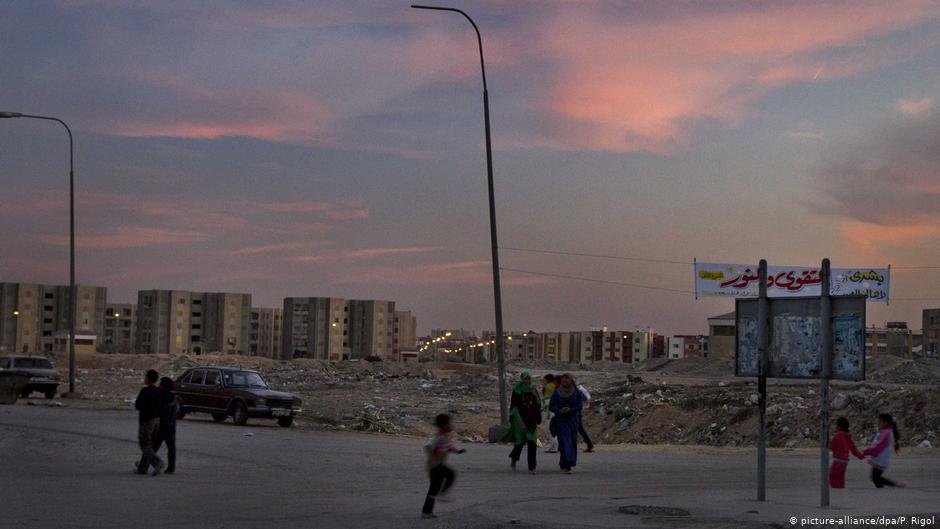
The Syrian embassy authorities in Egypt have also confirmed that this appears to be happening to some members of the Syrian community in Egypt as well. They advise all Syrians to carry their relevant residency and refugee documents with them at all times.
One Syrian refugee who was detained just six days before his appointment to renew his residency was told that "unless his family purchased him a flight ticket to Syria, he would remain indefinitely detained," his lawyer told AFP.
There are more than one million refugees registered with the UNHCR in Egypt and even more awaiting official registration.
Read AlsoLibya deports hundreds of Egyptian and Bangladeshi nationals
Difficulty obtaining appointments forces irregularity on some
Amnesty have said that appointments to renew or register at UNHCR and with the Egyptian Immigration Authority are now being scheduled in 2027 and 2029, creating a kind of "forced irregularity," where people will be forced to live without permission for some months or years, until their appointment date arrives.
Amal Rahal, the founder of a Sudanese charity in Egypt, told AFP that many members of the Sudanese community were only leaving their homes for "absolute necessities." Volunteers are delivering free meals to families who are too scared to leave their homes. Some have stopped going to work or sending their children to school.
Karim Ennarah, head of research at the Egyptian Initiative for Personal Rights (EIPR), told AFP that his charity had counted around 5,000 refugees being brought to overcrowded police stations in just a two-week period recently. Ennarah claimed that these detentions had already led to two deaths, including that of a child.
Another NGO, Human Rights Concern Eritrea, told AFP that around 3,000 Eritrean nationals are currently being detained in Egypt, with some testifying to mistreatment.
The Egyptian authorities declined AFP’s request for comment.
Read AlsoSouth Sudanese families arrive in Germany after legal challenge over resettlement
'A hostile environment for refugees'
Ennarah told AFP he believes the crackdown is aimed at "creating a hostile environment for refugees," also in order to deter new arrivals. This could be because Egypt itself is struggling with an economic crisis.
Ennarah also said he thought that the growing anti-migrant policies being pursued in Egypt could be strongly linked to the "European Union’s support for Egypt on migration," following the latest deal signed between the EU and Egypt. That deal promised 7.4 billion euros in aid for Egypt, in return for much tighter management of migration.
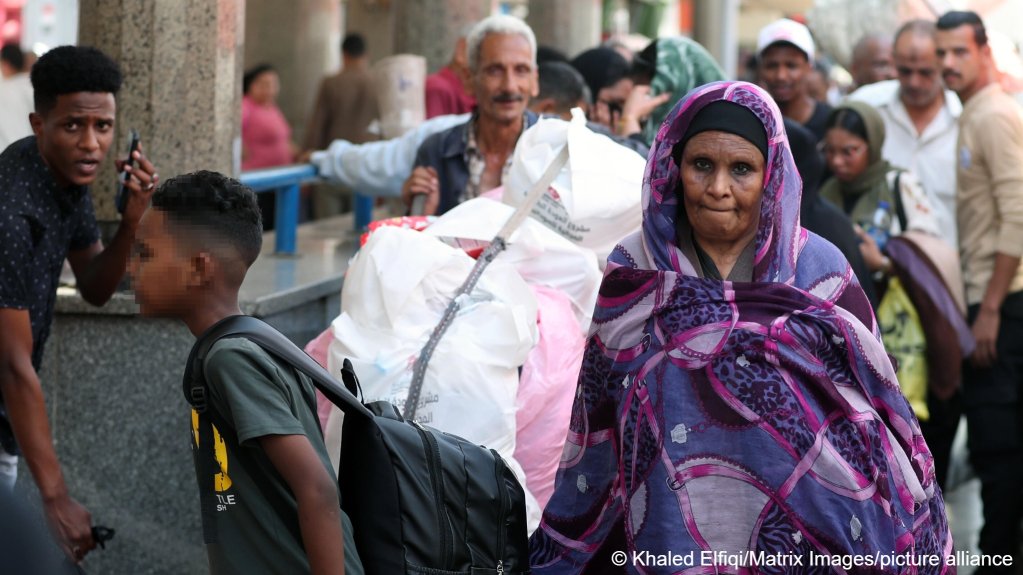
At the end of January, the Sudanese ambassador to Cairo confirmed at a press conference, reported Amnesty International, that 207 Sudanese nationals were returned from Egypt in December 2025 and a further 371 in January 2026. He didn’t clarify if these were deportations carried out by the security forces, or whether they were individuals compelled to return home via programs coordinated between the Sudanese embassy and the Egyptian authorities. The Sudanese ambassador added that at the end of January, around 400 Sudanese nationals were detained in Egypt, without clarifying the grounds for that detention.
Read AlsoMore than 100 Sudanese refugees dead or missing in shipwrecks off Libya
Amina's tale
One Sudanese single mother, 49-year-old Amina, told Amnesty that she had resorted to begging on the streets to support her two daughters after the family breadwinner, her son Moaatz, was detained in a recent crackdown.
Amina said that Moaatz was detained on January 28, despite him being a UNHCR-registered asylum seeker. The police said he was street vending while lacking a valid residence permit. His renewal had been scheduled for 2027.
Amnesty has called on the European Union to urge the Egyptian government to adopt "concrete and verifiable measures to protect the rights of refugees and migrants." They also said the EU and other states must expand "resettlement opportunities and create safe and regular pathways for people in need of international protection, including humanitarian visas, labor and student mobility schemes and community sponsorship initiatives."
*Not their real name, changed to protect them
Read AlsoSudanese sisters die in Mediterranean crossing
Additional reporting by Nada Faroog Abdalfatah Gaber