
Rescue services in Spain picked up at least 200 migrants on Tuesday (February 24) and the early hours of Wednesday off the coast of the Balearic Islands in the Mediterranean. The migrants were on board at least ten different small boats.
Spanish rescue services intercepted at least ten small boats carrying more than 200 migrants over the past two days, according to Spanish media reports.
On Wednesday (February 25), Spanish news site Ultima Hora reported that 54 migrants arrived in the early hours of Wednesday. A first rescue took place at around 2:30 am about 44 miles from the island of Ibiza. On board this boat were 30 migrants from sub-Saharan African countries. Later, around 15 people from North Africa were discovered around the pier on Formentera after they disembarked.
Earlier on Tuesday, the Spanish news agency EFE had reported the arrival of 156 migrants. The majority came originally from North Africa. Around 100 of the migrants were from the Maghreb countries and 56 migrants came from sub-Saharan African countries, confirmed EFE.
Read AlsoOver 3,000 people died while trying to reach Spain in 2025
At least 621 migrants arrived on the Balearics since the beginning of the year
Migrants kept arriving all day on Tuesday too, added Ultima Ora and ABC, saying the last boat on Tuesday night was spotted at around 10:19 pm off the coast of Mallorca with 24 people on board.
Tuesday's and Wednesday's arrivals followed the arrival of five small boats on Monday (February 23), when 86 migrants reached the Balearic Islands, EFE reported.
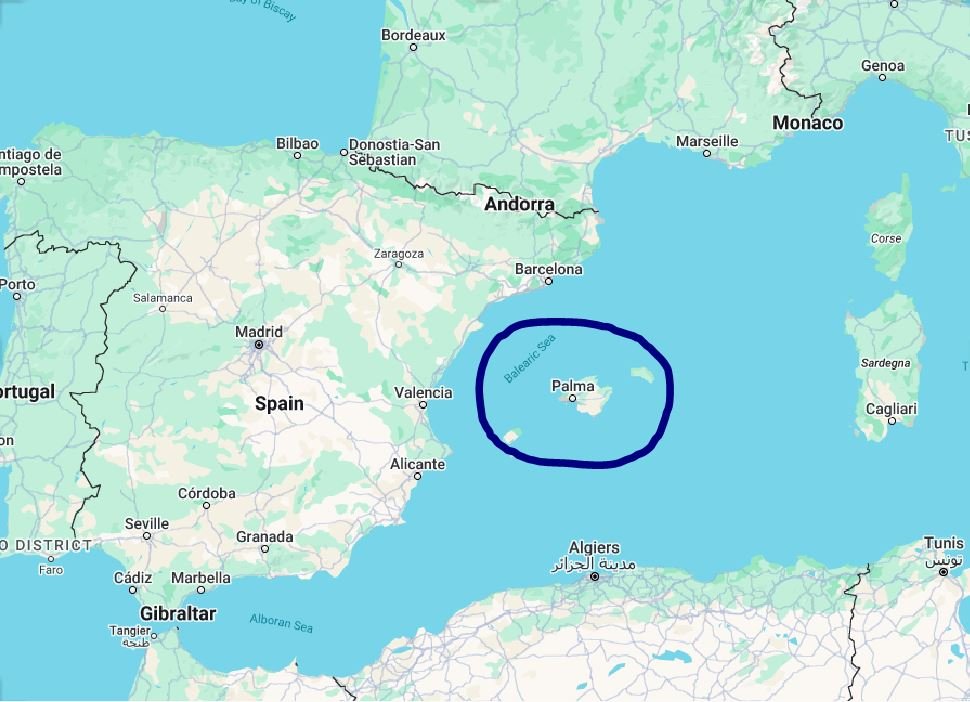
Since the beginning of 2026, a total of at least 621 migrants have arrived on the Balearic Islands in 34 small boats, interior ministry data shows. Last year, 7,321 migrants arrived on these islands, on 401 small boats.
The number of arrivals in 2025 on this route represented a 24.5 percent increase in the number of arrivals in 2024 and a 15 percent increase in the number of small boats arriving, meaning that each boat is being loaded even more heavily than before.
Read AlsoMorocco-Algeria border: 9 migrants perish in freezing temperatures
Drop in arrivals towards the Canary Islands
The increase in crossing attempts towards the Balearics is in contrast to a reduction in the number of crossing attempts towards the Spanish Canary Islands archipelago in the Atlantic Ocean. In 2025, the Atlantic route registered a 60 percent drop in the number of arrivals.
This may be linked to agreements between Spain and the EU and several governments on the West African coast -- like Senegal, Mauritania and Morocco -- aimed at stepping up controls along their coasts and preventing people from setting off on the dangerous crossing.
However, perhaps as a result of the increased controls on crossing points closer to the Canary Islands, it was reported that more and more small boats were setting off from countries like Gambia and Guinea further south in an attempt to avoid the controls along the Senegalese, Mauritanian and Moroccan coasts.
This, however, results in an even more dangerous crossing, with migrants often spending more than a week at sea and some attempting to go further away from the coast sooner to avoid patrols, but putting them more quickly at the mercy of the currents and winds in the Atlantic.
Dangerous journeys
Reports from migrants who survived the crossing suggest that many pass "ghost ships" along the way; some may still have bodies of migrants on board, others are just floating, lost somewhere in the Atlantic.
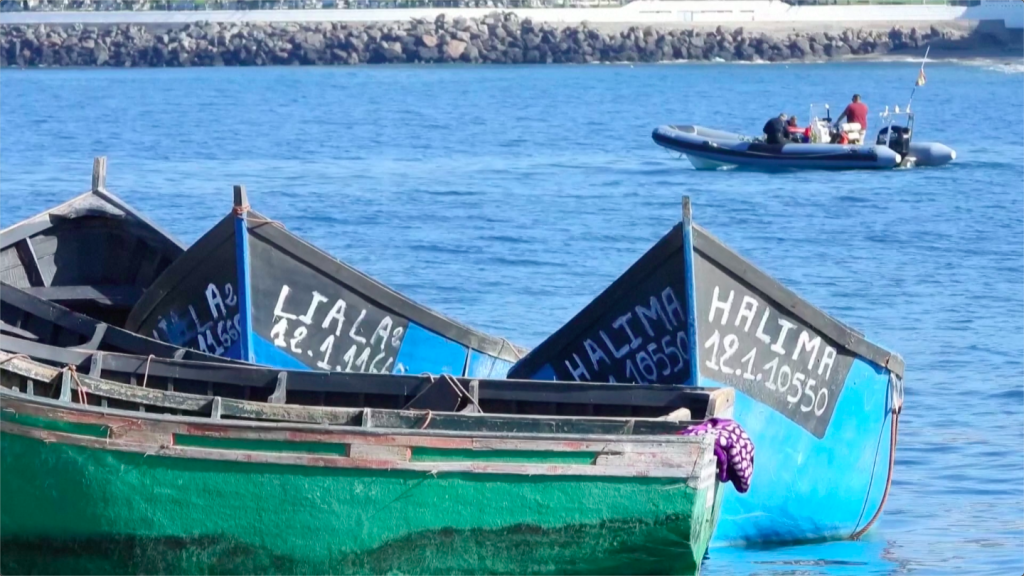
Most who do survive the crossing report that some people who set out with them were not able to withstand days without fresh water or food at the mercy of the elements. Often, the engines or the boats themselves begin to give out before the crossing is completed.
There is still very little surveillance on the Atlantic routes from the sky, since the potential crossings traverse such a wide area. The NGO Humanitarian Pilots has been running a pilot project to monitor the area. However, they only launch their plane when they hear that a boat might be in trouble.
NGOs like Caminando Fronteras (Walking Borders) believe the lack of surveillance is why tens of thousands of people may have died en route to the Canary Islands over the years. The exact number is difficult to quantify, since most departures are not registered and there is no official passenger list. Some may hide their departure from their friends and families, preferring to contact them if they arrive successfully.
Caminando Fronteras estimates that 3,090 migrants died while trying to cross Spanish borders in 2025. That includes, they estimate, 1,906 on the Canary Islands route across the Atlantic and around 1,037 towards islands like the Balearic Islands in the Mediterranean. A total of 139 recorded deaths occurred on the route between Morocco and southern Spain, 3 on the crossing towards the Spanish enclaves Ceuta and Melilla, and 5 on the so-called Alboran route, connecting the coast of Morocco with eastern Andalucia.
Read AlsoHundreds of migrants rescued at sea while trying to reach Canary Islands, Mallorca