
The German government announced this week that it would be instigating plans designed to fast-track asylum seekers into the workplace. In future, asylum seekers should be able to start work within three months of making their application without first needing to apply for permission.
Germany’s Interior Minister Alexander Dobrindt, from the conservative union party CSU, told the tabloid newspaper Bild am Sonntag on February 22: "Migrants who come to Germany should be working and it should happen quickly."
Dobrindt was announcing what he called the "faster route to work" plan ("Sofort-in-Arbeit-Plan”).
Under the plan, asylum seekers would be permitted to take up a job after three months in Germany, even if their asylum procedure has not yet been completed, and regardless of where they live.
Currently, asylum seekers need official permission if they want to start working after three months at the earliest. Those who are required to live in a first reception center are generally not allowed to work. As a result, many migrants currently have to wait a long time to take up work. These limitations would be dropped under the new plan.
Dobrindt believes that integration is best practiced via the world of work. "The aim is to have participating members of society through their occupations," he told German media. However, work will not be made mandatory.
The plans, which have also been welcomed by the social democratic coalition partner SPD party, were part of the coalition agreement between the two parties. It is hoped that once the plans are up and running, asylum seekers will be able and encouraged to enter the world of work within three months of their application.
Read AlsoGermany to extend border checks by six months
Those excluded from the new system
Those who will be explicitly excluded from the new rules are asylum seekers whose applications have already been rejected, as well as anyone who refuses to cooperate with the authorities, for example, by concealing their identity or lying about their reasons for fleeing.
Working asylum seekers would generally be allowed to keep their earnings, the spokesperson told BILD. "If they receive social benefits, their earnings will be taken into account, for example for housing."
However, the asylum application process would go ahead independently of whether someone was working or not.
"The new rules do not change the process or outcome of the asylum procedure," a spokesperson for Dobrindt underlined, reported AFP. "Whether someone works or not has no influence on the final decision regarding protection or rejection."
"Anyone who is refused asylum must still leave the country," confirmed a spokesperson for the interior ministry. They underlined that employers also needed to take into account that a person they employed might later lose the right to work if their asylum application is refused.
Read AlsoGermany: Top court rules deportation possible even for those holding protection in Greece
Reducing costs
More recently, the German government has been taking steps to reduce the amount of welfare it is paying out, particularly to asylum seekers. Many politicians and economists in Germany have pointed to the fact that Ukrainian refugees, who hold special status across Europe and are actually allowed to work in Germany, were not finding employment in Germany as often as in neighboring countries like the Netherlands, where both the barriers to work and the expectation of work were in favor of employment.
Dobrindt’s plans are in fact not a completely new idea. In the eastern state of Thuringia for instance, the local CDU leaders in the Saale-Orla municipality have been making sure that asylum seekers contribute to the working world for a while now. In March 2024, Christian Herrgott, the General Secretary of the CDU in Thuringia and the leader (Landrat) of the Saale-Orle area in a TV interview told the Phönix channel, also part of the state broadcast network, that making work mandatory both in and outside the asylum-seeking accommodation was important.
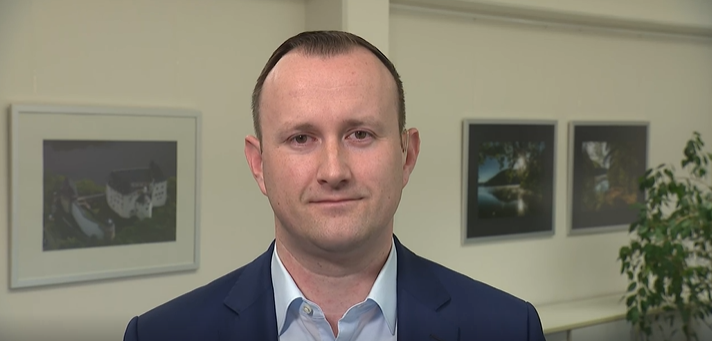
"We make sure that people in asylum seeker accommodation are not just participating in the cleaning of the communal spaces, in and outside of the asylum seeker home, but we are also looking to engage them in work for the municipality. We try and offer them simple tasks, like cleaning, cutting greenery, that they can carry out even without much knowledge of the German language or many specific skills or qualifications."
Herrgott said that the social workers who were employed in the asylum seeking accommodation centers were then working in conjunction with local councils and associations to find suitable job openings for the asylum seekers in their area.
The CDU politician admitted that the idea did take "special effort" since it wasn’t just about finding suitable work, but then transporting people to the jobs. But they found the effort worth it. At the time, they were employing 150 people who were all adults and living in special accommodation centers.
Read AlsoMajor dip in resettlement places and humanitarian admissions in Germany
Speeding up integration, through work
Herrgott said that the majority of the group had reacted "very positively" to the plans and wanted to participate. At the time that he gave the interview, the asylum seekers could not start work for the first three months after arrival, but Herrgott said he and the authorities in his region thought that working was an "important step towards integration." He added that their aim was not to "hold these people in these kinds of jobs forever, but to give them structure and meaning to their days and provide the first steps into the real job market."
The politician added that through the work, some would be able to begin learning German through contact with German-speaking colleagues. Herrgott added that many of the asylum seekers had told him they are keen to work, and his and his party’s aims are to make sure that people are independent of social welfare benefits as soon as is feasibly possible.
Over the last few weeks, the German government has received a fair amount of criticism over its decision to cut language and integration courses. Many critics have pointed to the fact that these courses are the key to better language skills and possible integration. The German government underlines that integration through work is an even better and faster route and that getting asylum seekers into work more quickly will only serve to strengthen overall integration.
Up until now, according to data from the Federal Ministry of Labour and Social Affairs, most asylum seekers have to wait at least six months before they are able to work.
Read AlsoEU asylum policy: What changes for refugees in Germany?
Correction note: This article was updated on March 3. The initial version stated that asylum seekers living in initial reception centers would continue to be banned from accessing work. This is not the case; the new rules are meant to apply to all asylum seekers regardless of where they live. Those excluded are asylum seekers whose applications have already been rejected and those who refuse to cooperate with the authorities.